

You Take the Cake
Amy Stacey Curtis
James Parker Foley
Julie K. Gray
Ken Greenleaf
Lisa Holly Kelly
Garry Mitchell
Vivien Russe
Kate Russo
Andrea Sulzer
September 24 – October 30, 2022
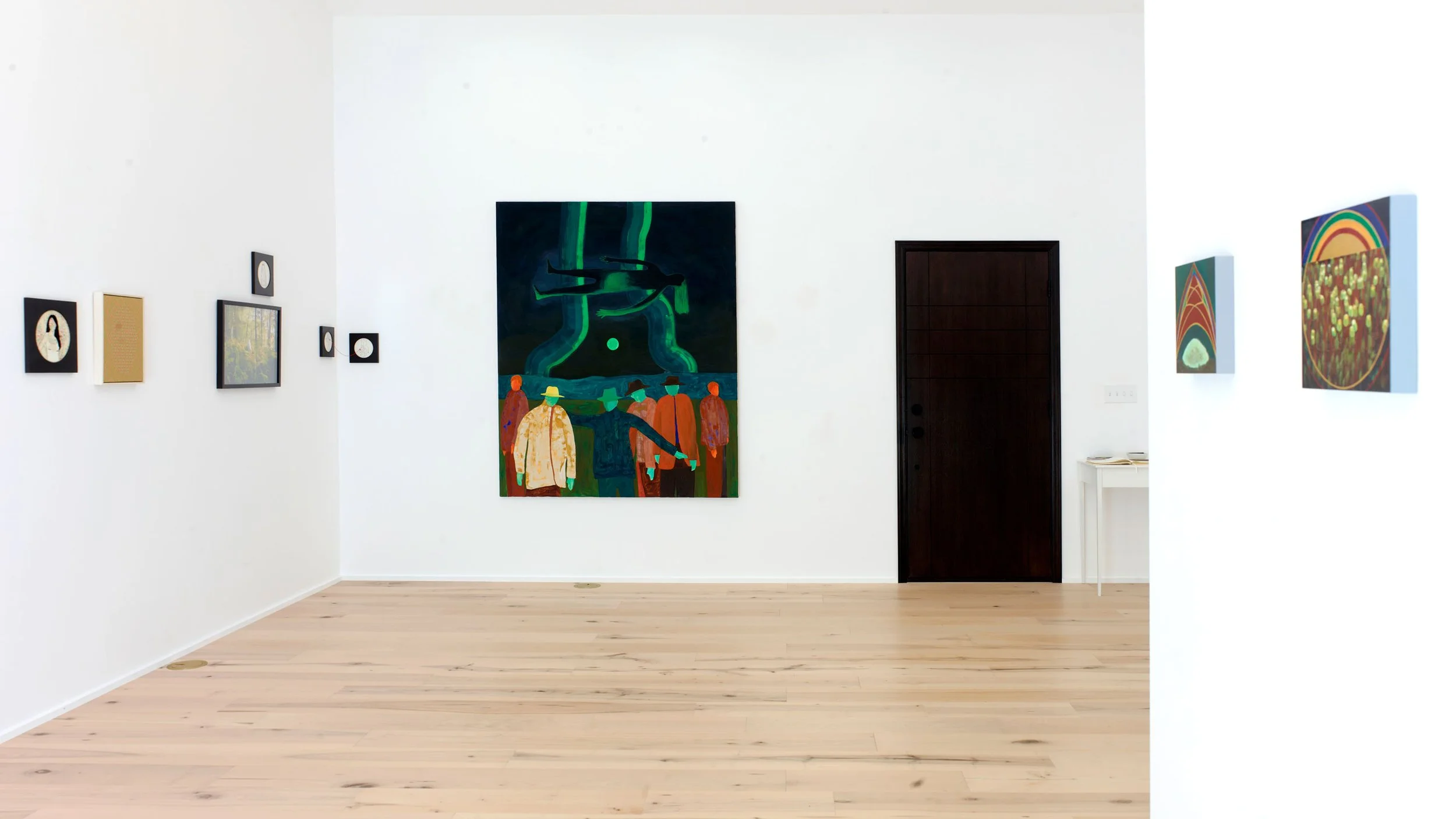
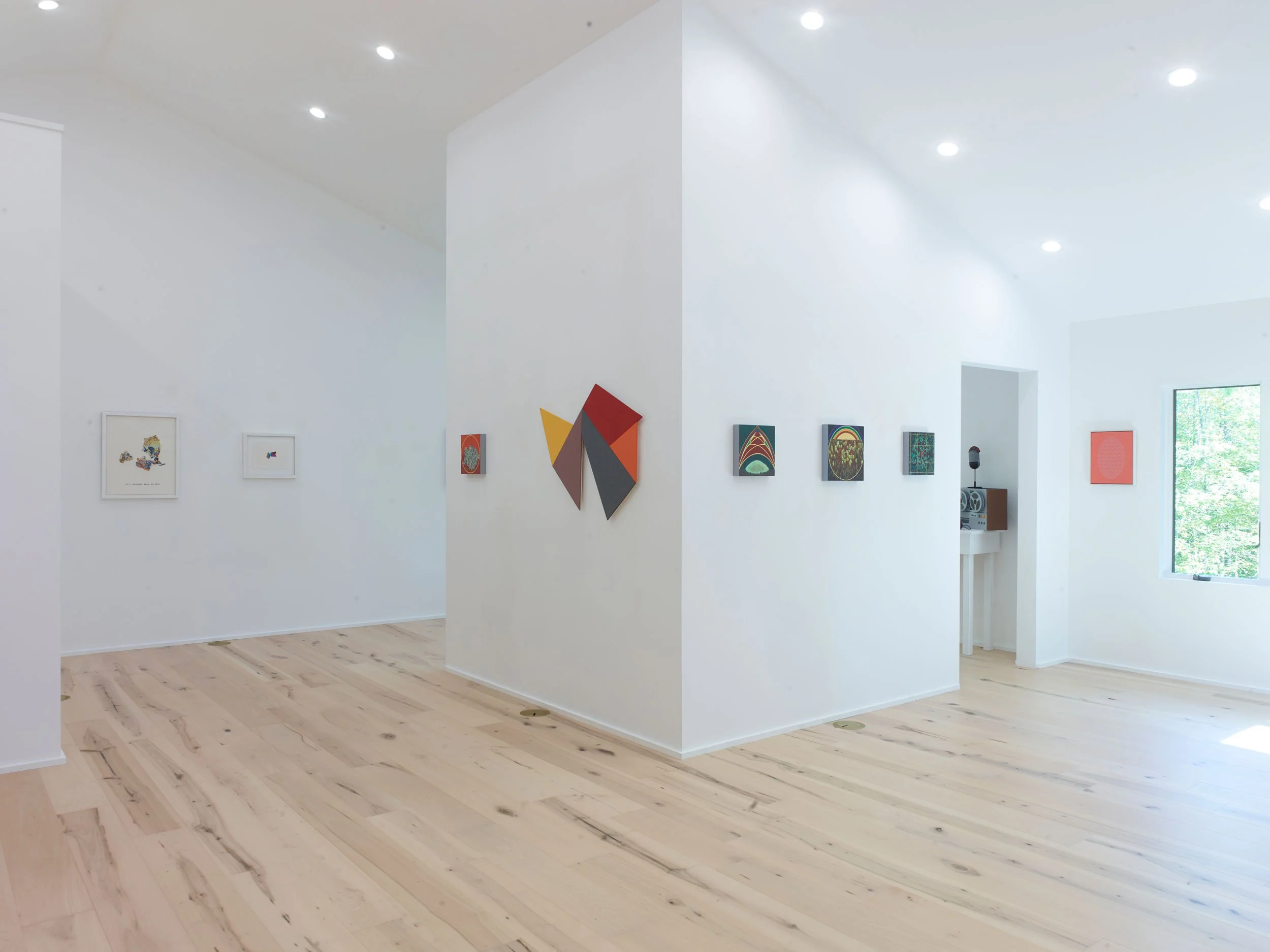
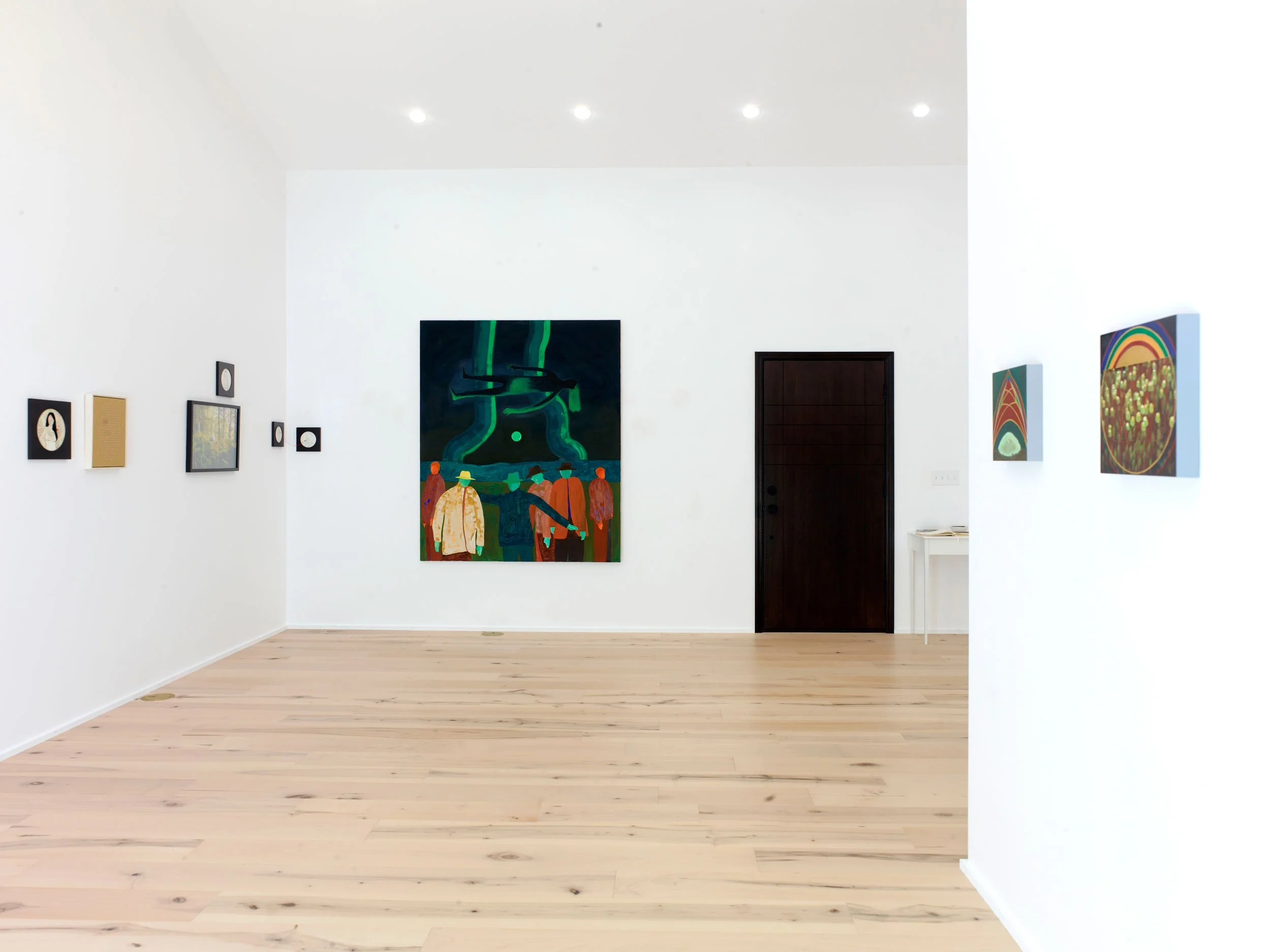
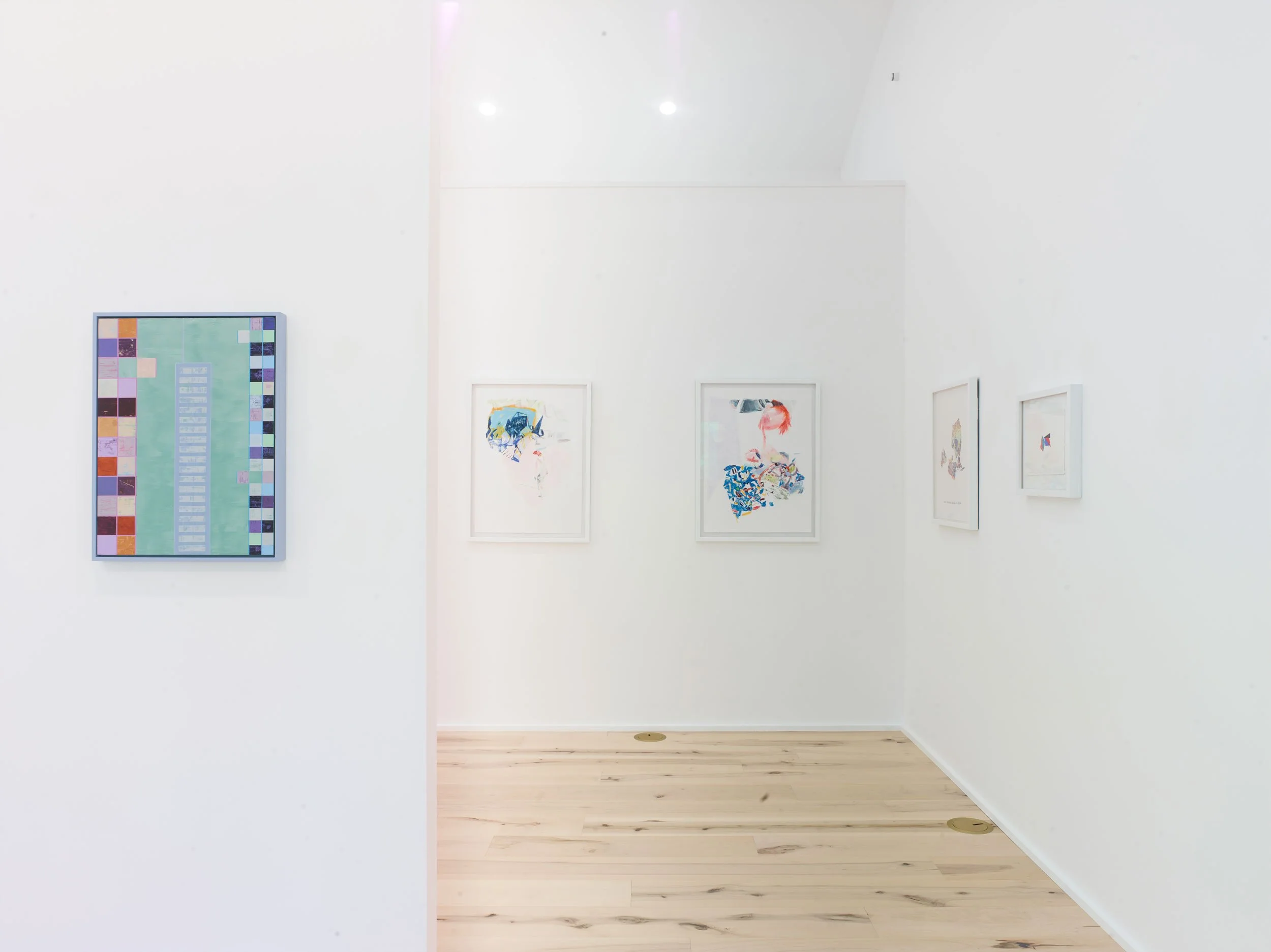
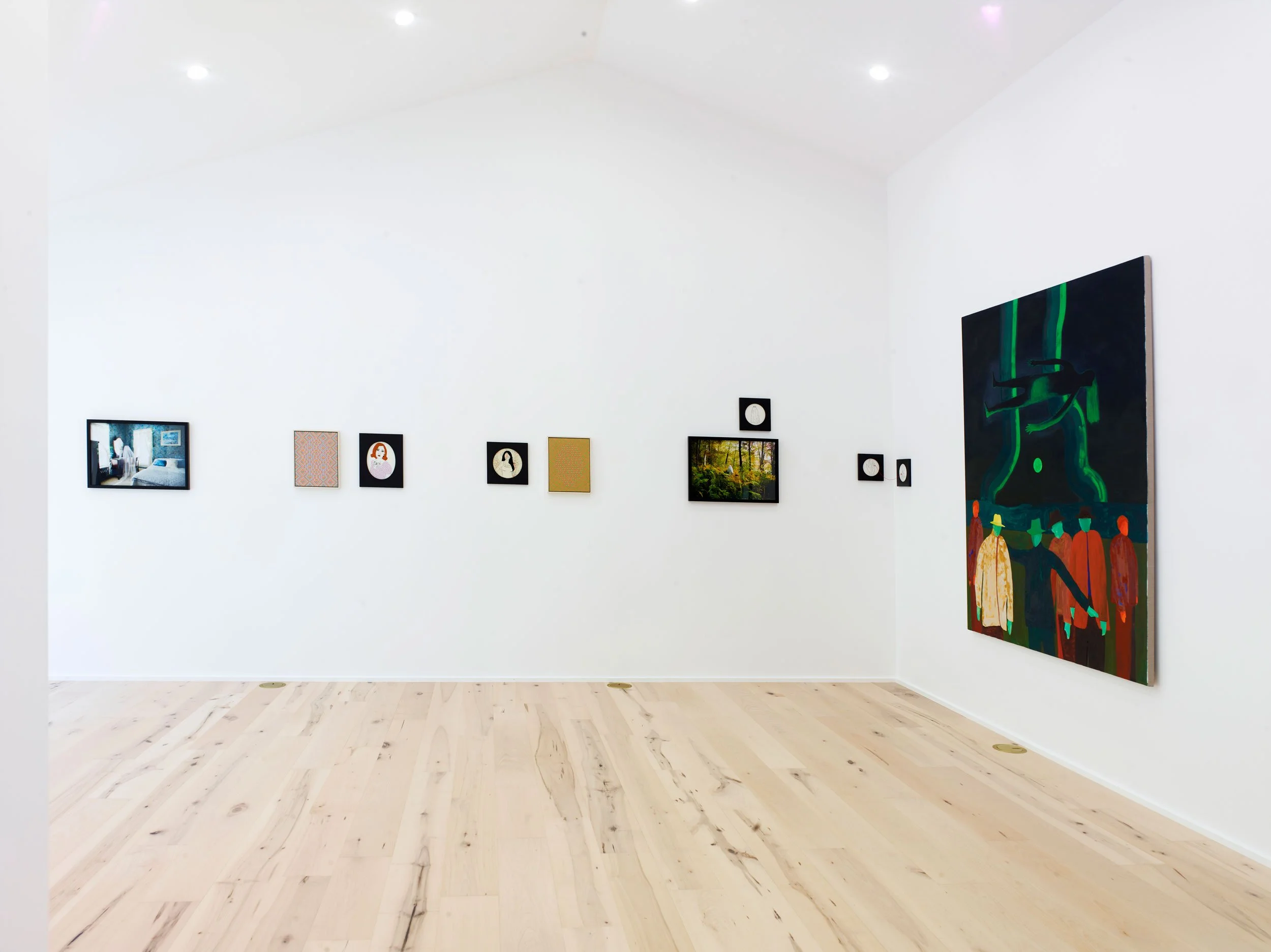
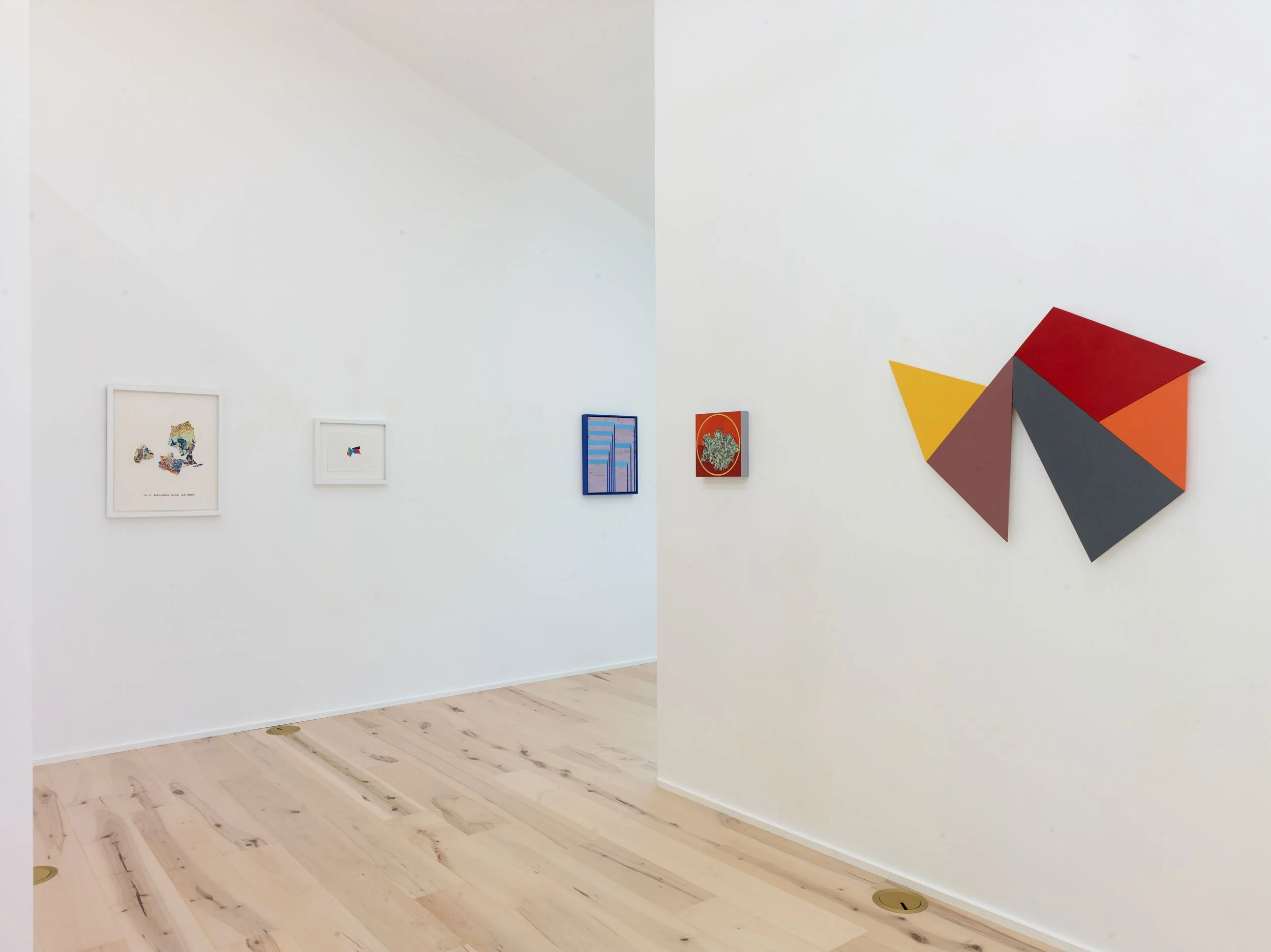
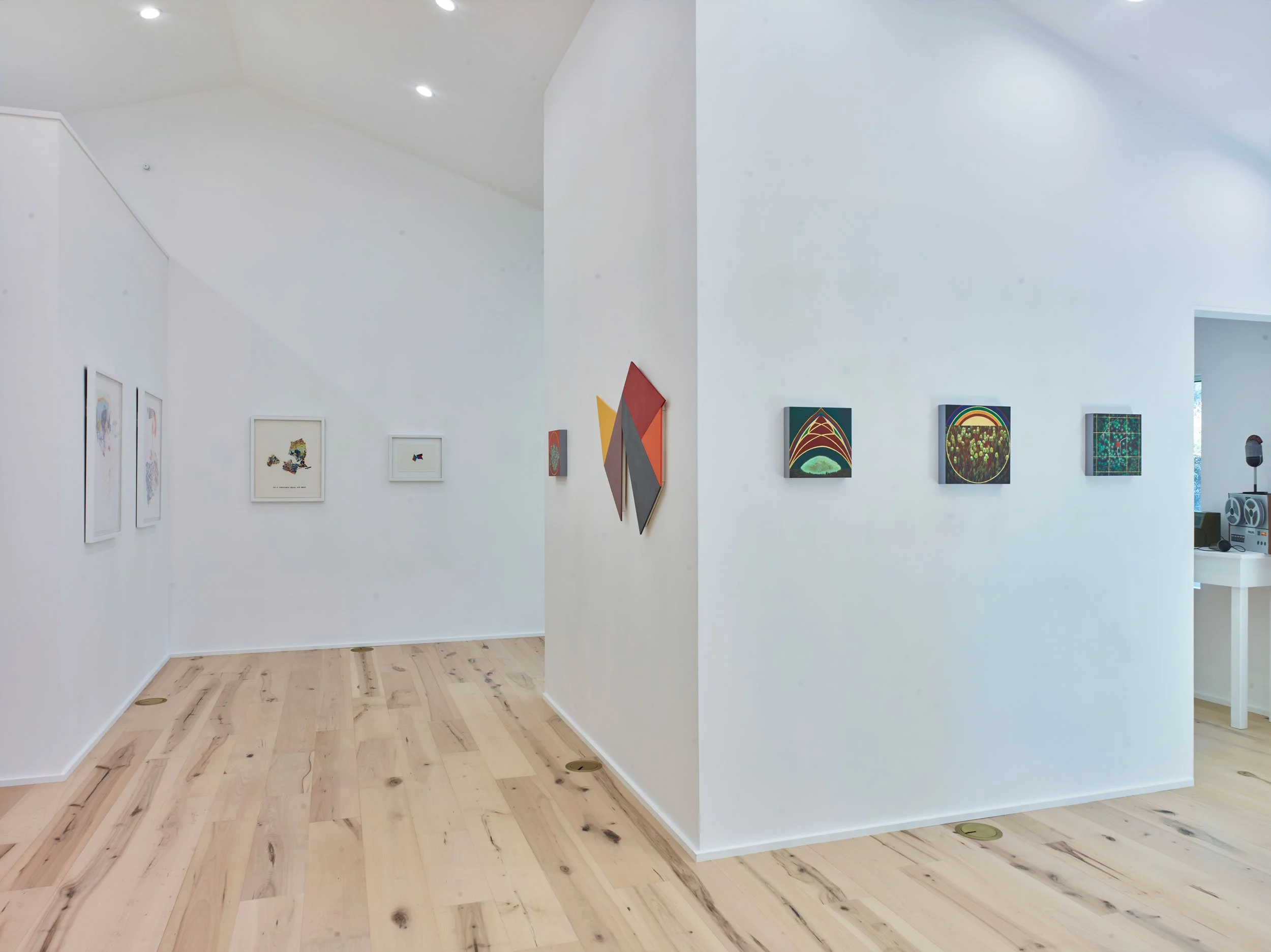
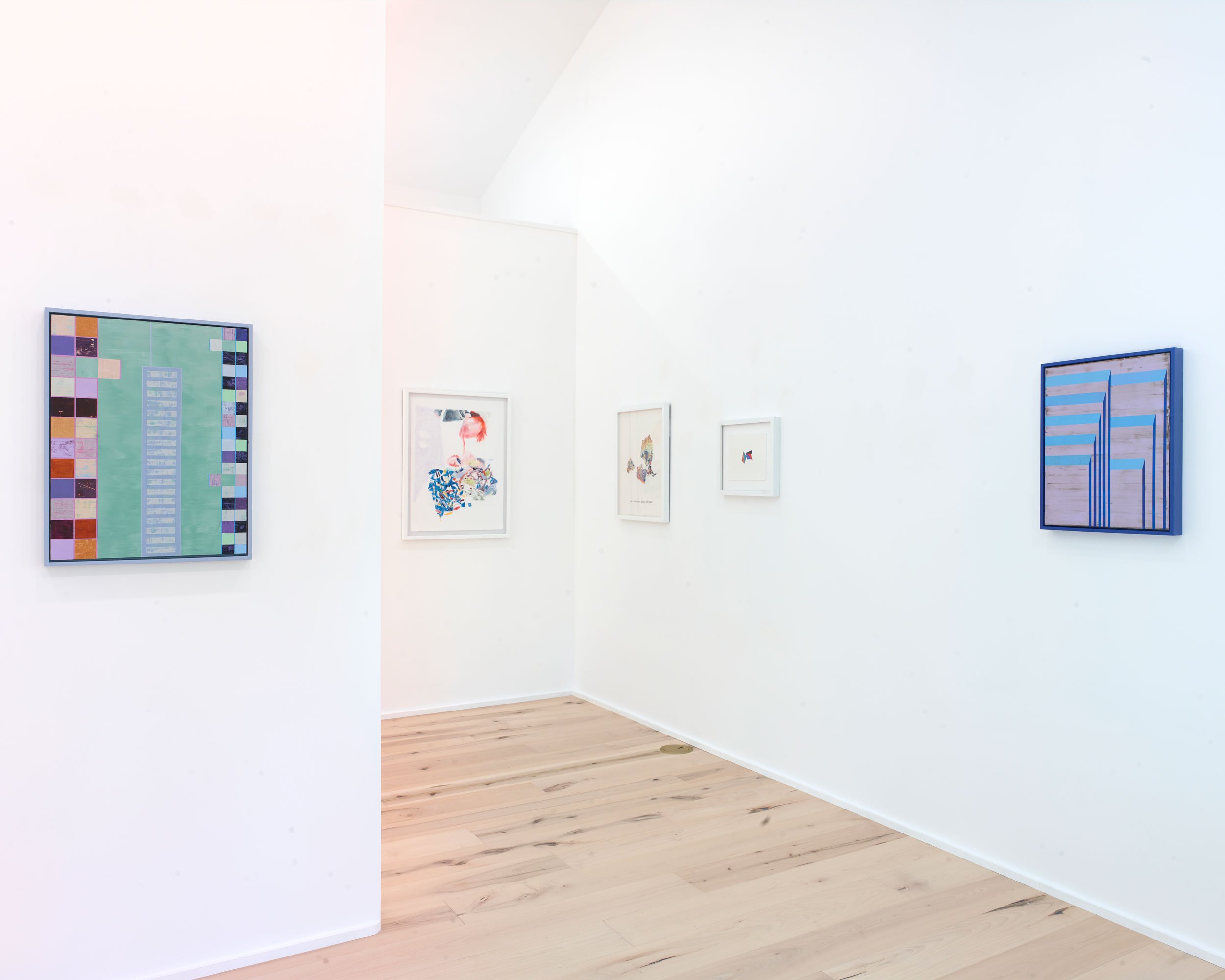
Fall in Maine is one of the most vibrant times. The landscape awards us with a stunning pop of color before retreating into the dormancy of Winter. For the final show of its inaugural season, Sarah Bouchard Gallery presents a group exhibition titled You Take the Cake, a playful exploration of life in layers. Mimicking Nature’s Fall hurrah, this exhibition bursts with color, energy, and spectacle.
You Take the Cake includes cerebral fireworks by Amy Stacey Curtis from her MEMORY exhibition; provocatively eerie paintings by James Parker Foley; downright playful photography and sculpture by Julie K. Gray; gorgeous shaped color studies by Ken Greenleaf; intricate stitch-work by Lisa Holly Kelly; brand new geometric abstractions by Garry Mitchell; stunning paintings by Vivien Russe that combine geometry with nature and a hint of architecture; bright checked portraits by Kate Russo; and a beautiful suite of conceptually considered work by Andrea Sulzer.
Amy Stacey Curtis
-
From Curtis’s book Drawing Memory —
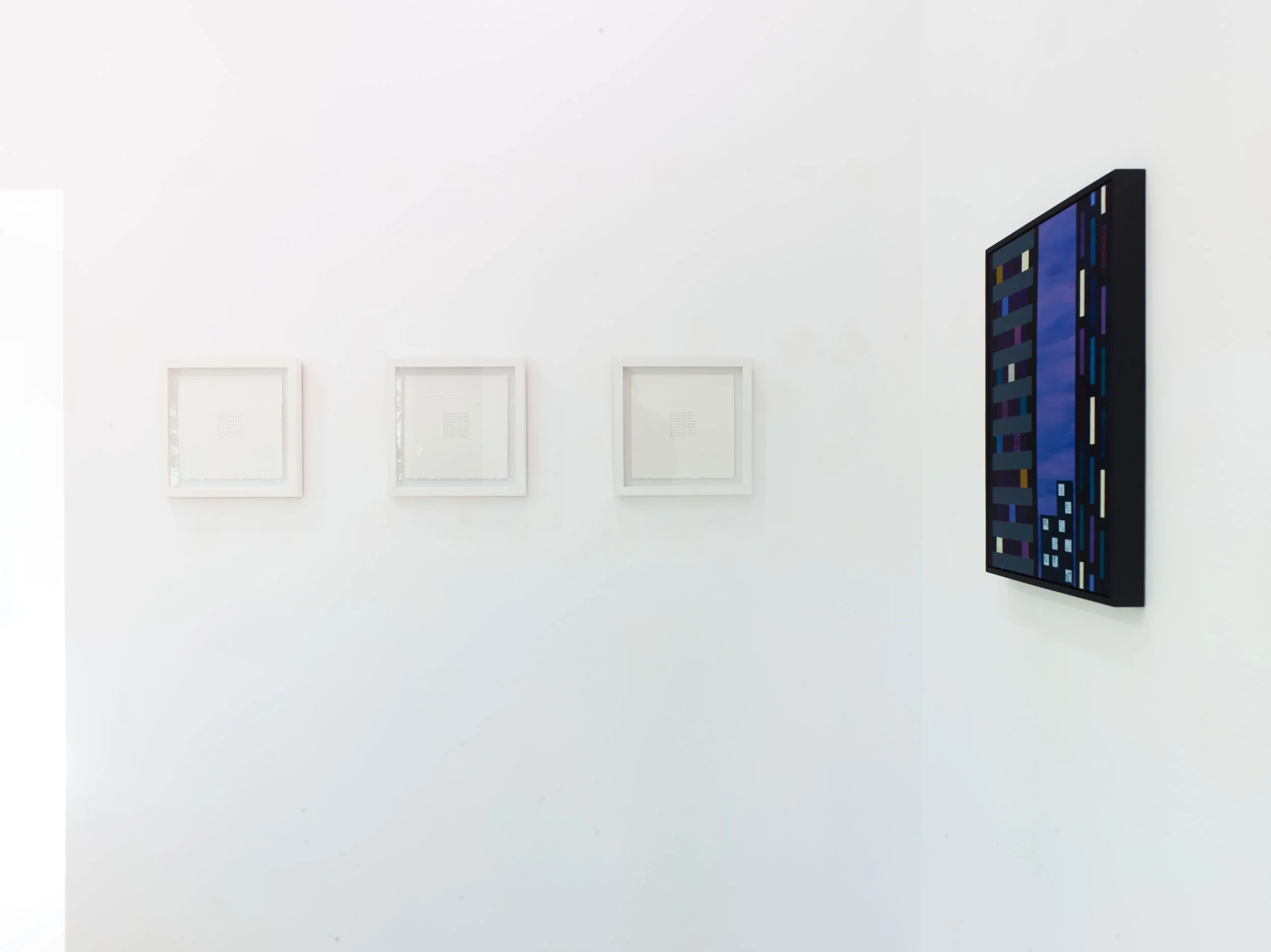
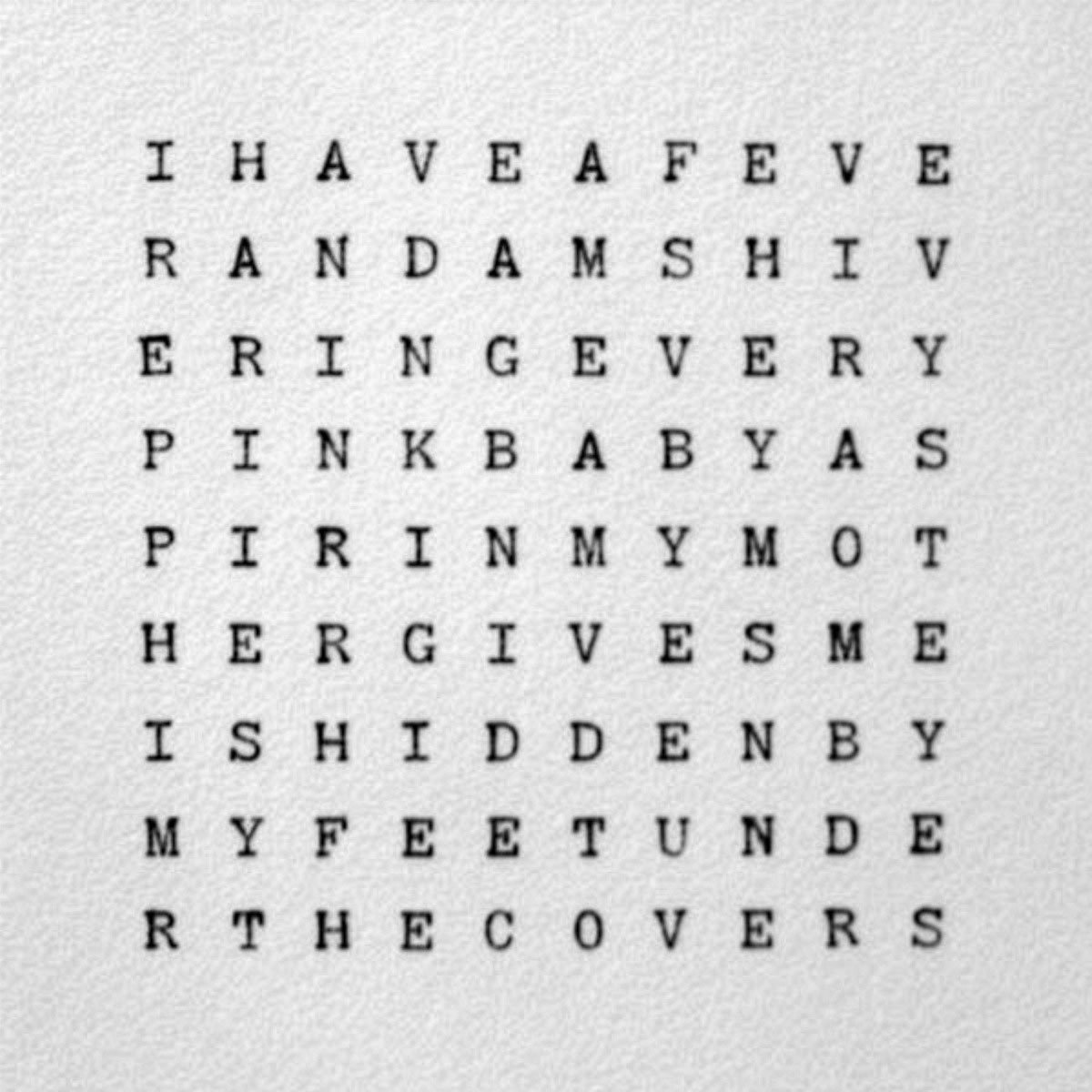
To support my 9th and final solo biennial of interactive installation, MEMORY, I wrote down 99 memories in my life from earliest to most recent, with the intention of drawing them. I set out to write and draw 50 benign memories, and 49 bad memories.
Before I did this exercise, only my bad (traumatic) memories and my “best” memories (for example, my first date with my husband Bill, our wedding day) had prominence in my mind. My bad experiences no longer overwhelm me, but they make as much of an impression in my mind as my most wonderful memories, still sitting behind my eyelids as if on a rolodex, always there to pull from.
By pulling benign memories forward in my mind, adding them to the wonderful memories I have, and drawing them, I am adding them to my rolodex, giving them just as much prominence as the bad memories already there.
Why not try to write and draw 99 benign memories? Why write any bad memories at all? Because all memories are part of me. Therefore, all are part of this work.
-
When I sat to write my 99 memories, I wrote my 49 bad memories first to get them out of the way, to make space for the good memories to come forward.
I wrote down my earliest bad memory and worked my way forward in time until I had 49.
The only way I could bring to the front 50 benign memories, was to imagine myself in various places and spaces I’ve lived and been since birth. Once I pictured myself outside and inside these past rooms, I started to remember various benign things that happened.
It took a morning to write my bad memories and 2 months to write the not-that-bad-to-good memories I came to.
Finding my benign memories was much like an excavation, digging first into a time, then into a place, then into a room, then deeper still, concentrating on specific objects, furniture, wallpaper...
If I was having trouble with the dig, I spent time preparing for drawing the memories I had so far. For each memory, I determined a sans-punctuation, 90-character array, switching out words, rephrasing, so the text still comprised a complete sentence or sentences.
Each memory’s 90 letters are imprinted by hand one letter at a time.
Each impression with an inked letter becomes a mark, 90 marks (letters) per memory. I pressed each letter with my finger and thumb, one after the other, into ink then onto the paper.
To make more of an “impression,” I traced over the ink once it dried with graphite. I like that these works are now more like drawings, rather than the prints they would have been, had I used a letterpress.
The act of editing each benign memory, then marking it on the paper, one letter at a time, pressed the memory more firmly into the forefront of my brain, stamping it to its spot in my rolodex.
I also drew objects and shapes from these memories and others, from earliest to most recent.
My intention with my bad memories, once I determined their 90 characters, was to randomize the letters before I drew them. I would literally scramble the 90 letters making up the array before committing them to ink.
I didn’t feel comfortable presenting my traumatic memories in a way people could plainly read; and, I wanted to protect my audience.
However, as I edited each bad memory into the arrays, each becoming more focused upon my rolodex as I concentrated on it, I realized I didn’t want to impress them into paper, at all.
Even though these bad memories would be impossible to read (unless one took time to unscramble), I didn’t want people taking them into their homes. I wanted to do something more akin to letting the bad memories go.
At MEMORY, I will draw my bad memories side-by-side on a long white pedestal, each memory’s 90 characters randomized as planned. Instead of stamping, I will stencil all 4,410 letters, a 9-by-490-character array.
Each participant will erase 9 letters of his or her choice. Once all the letters are erased, the installation will be complete.
James Parker Foley
-
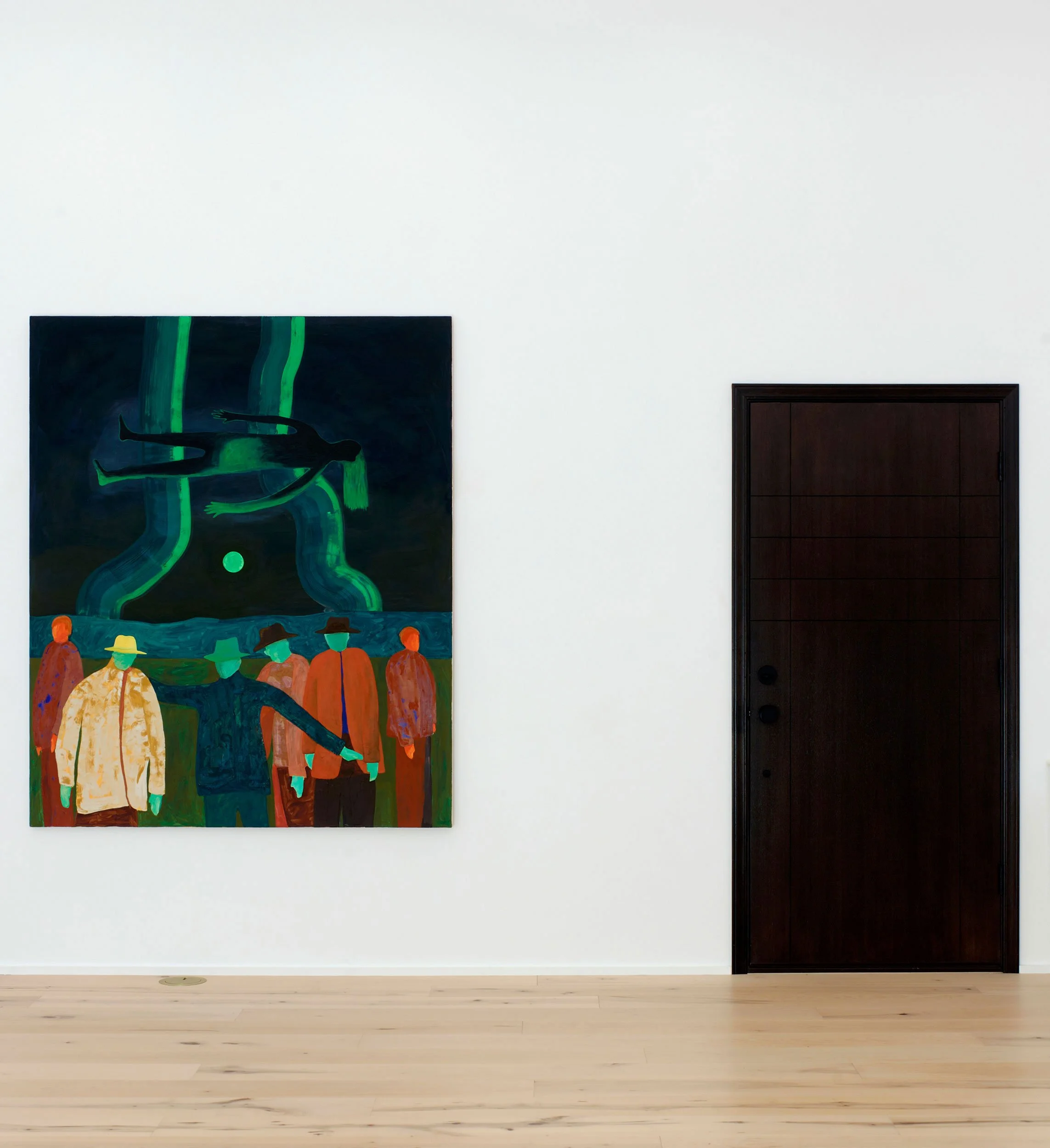
A woman in a painting is a figure.
I have a note-to-self from a few months after I began making figurative paintings, which reads, what if they had purses? Once the women in my paintings had purses, they had careers. People with careers aren’t figures.
I gave them boats — so that they could escape their careers, and I gave them binoculars to go birding, so they’d have a hobby. Clad in crop tops, they set loose, rampaging around the landscape. They smacked one another with their purses, let each other dangle from cliffs, and strangled any man who came onto them. And, at the end of the day, they simply piled into their dories and set out. Their lives were full of all the things human lives are full of.
I began to expand their world, which is a sort of utopian version of my own home in Maine. It is an otherworld which lies slightly beyond ours — not a world without struggle or tragedy — rather, a world in which the governing forces are slightly altered. Within this world, there are scenic attractions: cliffs, seascapes, trees — but also traffic cones to control who goes where, and the secret service to preside over important events. Now all my paintings — even those without women — are set in the otherworld, the world that the purse ladies built.
At some point, many of the people in my paintings find themselves — while on a path, or in the shallows — startled to turn and see their doppelgänger. These works show the uncanny moment when someone looks in the mirror and sees themselves exactly as they expect themselves to be and exactly as they are, with complete neutrality and total comprehension. Since making these works, I’ve found the paintings themselves — occasionally — gaze back toward me.
Julie K. Gray
-
After experiencing a near-death incident in 2009, much of my artwork engages motifs of mortality, mourning culture, and the psychological space of “limbo” thematically. In order to address these intangible subjects, I have come to use symbolic means, humor, cultural signposts and varied media (primarily papier-mâché, beading, photography, needlepoint and childhood craft) to become more accessible to the audience, and to perhaps open up dialog about mortality and spiritual inquiry — subjects typically deemed “taboo” in contemporary North American society. Whether a person believes that we return to the dust from which we came, we go on a journey to Heaven or Hell, or our souls continue in a similar trajectory (simply leaving our bodies behind), this is absolutely a critical time to have these conversations, as many of us have been touched by death more so in recent years.
-
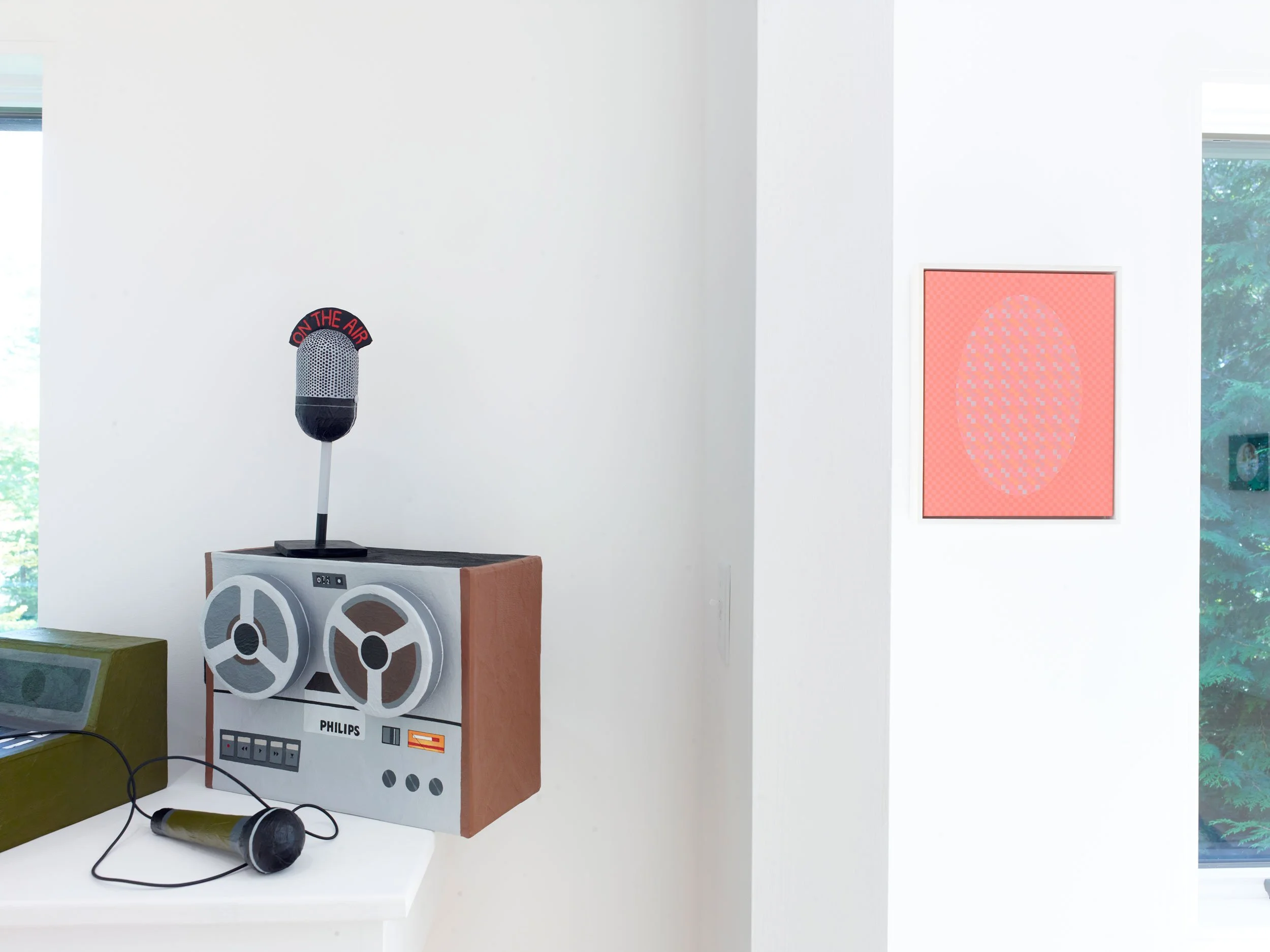
EVP Recording Equipment Statement —
EVP (or Electronic Voice Phenomenon) are sounds found within recordings that can be interpreted as coming from Spirit. Typically, Spirit will modulate the white noise inherent in the recording equipment and form it into words and voices that can be distinguished by the human ear upon playback. While these sculptural EVP recording devices clearly aren’t functional, I wanted to pay homage to this practice of Spirit communication/investigation as well as the temporal quality associated with the medium of papier-mâché. While these pieces are indeed quite archival, traditionally papier-mâché is still used for masks in ceremony and sculptural offerings in family altars (or left at graves) in many cultures…often disintegrating back into the earth from which the materials came. These EVP recording devices speak to the desire to contact other realms-to know things beyond our physical, human experience. Most of the time the results of such searches are unproductive, but I acknowledge that we are temporal bodies with eternal, searching souls.
Ken Greenleaf
-
Crop Rotation
Sometime around twenty-five years ago, I realized that the work I had been pursuing for the previous decades had come to an end, and that whatever I undertook from that point forward would be something else entirely. I had started writing reviews for a Maine newspaper and with a little practice and some good editors I got pretty handy with it. Forty-odd reviews a year gave me plenty to think about. Most of what I saw was not especially engaging, but it made me consider why that was so.
I came to realize that some of the basic fundamentals that had driven my own efforts were actually pretty empty. Especially the idea that abstraction was a useful means of expressing an inner life. Motherwell and Rosenberg had got it wrong. That lode had petered out under the shallow overburden of an apparent need for self-expression. The good work that came out of, say, American abstraction of the 1950’s was just that — good work. Not a path to deeper understanding of the philosophical necessities of individual artistic identity. To recycle a phrase gleaned from an AJ Liebling footnote, the way to make art is to do it well, and how you do it is your own business.
I found myself continually questioning what I wanted to get out the whole process of making art. My distance from the art world and its conversations and mutual interactions helped me go wherever I wanted and could technically and materially handle. I thought about the artists who had survived my mental housecleaning and came up with damned few. Art history, and particularly modern history, is, I realized, fractal rather than linear, so there are no special imperatives. There are plenty of good, powerful, and even admirable artists, but my direct interest list was cooked down to what I care about for my own purposes. The top range of my list in my lifetime included Sol Lewitt, Robert Smithson and Ellsworth Kelly.
-
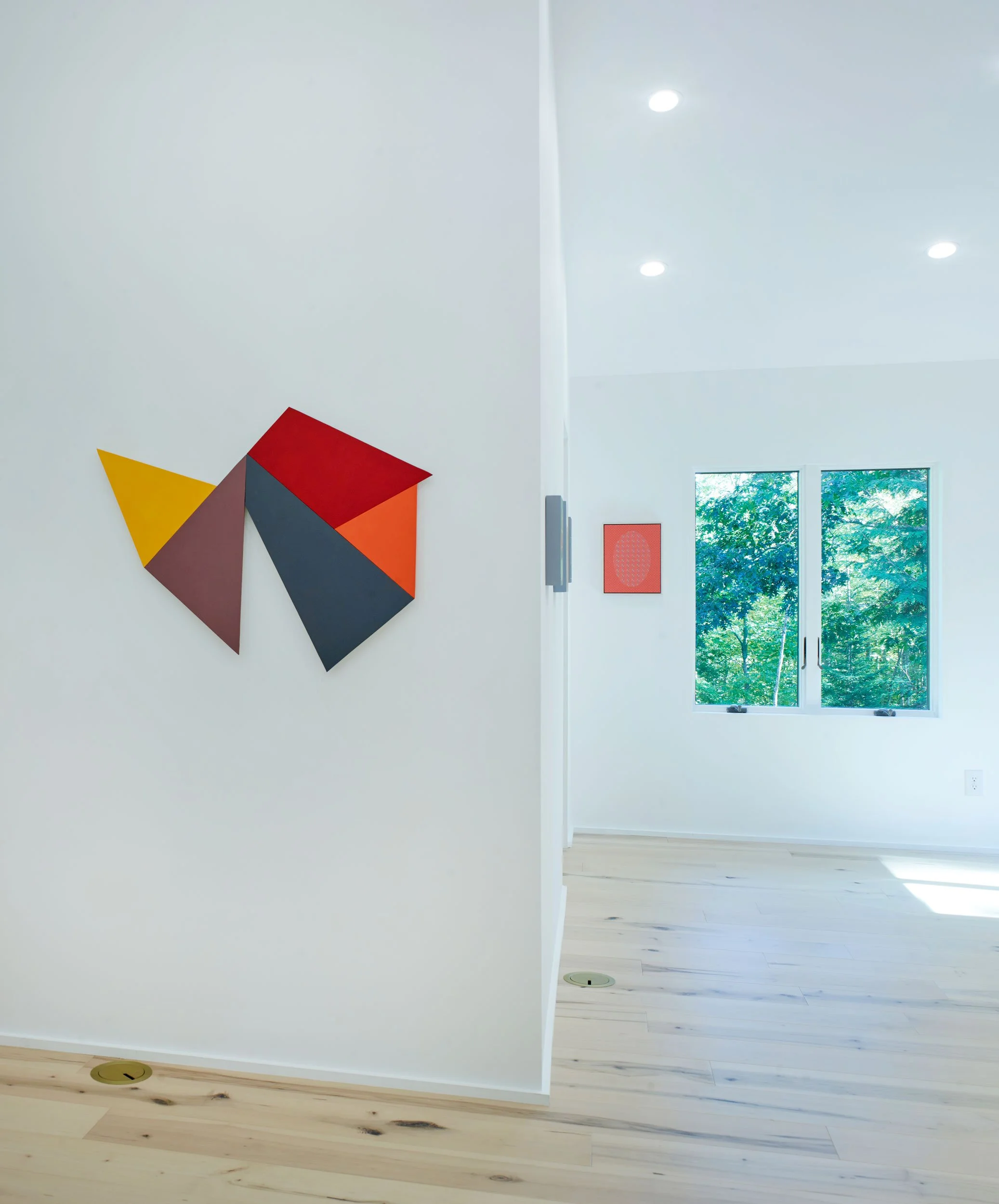
As I thought about it, I came to realize that my (or anybody’s) work was not about me but about the viewer. Art is abstract by nature, and how it is experienced is determined by the viewers and their expectations. For me, now, what I do is simply what I do, make of it what you will.
That led me back, directly, to Kasimir Malevich. And the black square. He had taken the entire enterprise to its deepest philosophical nature, devoid of all content except the experience of the encounter by the viewer. He had defined the core. And I think it scared him. Of course, he lived in a scary time in Russia. He had to back off — Lenin hated abstract art and Stalin liked to shoot the avant-garde… literally. But Malevich had engendered a group of some amazing artists. Like Lyubov Popova, who in her short life made paintings that could find a place anywhere in the 20th century. And he left an important conceptual legacy.
So now I’m finding that some of the things I make don’t look a lot like the other things I make. That feeds my uneasiness about the solidity of my enterprise, but there it is. My attention moves around in ways that I no longer (usually) try to understand, fed by things I have read, thought about, seen, or just got interested in. I can’t tell whether there’s a consistent thread that would be apparent to a viewer. I can’t say that I’m not uneasy about what may be inconsistencies, but I do what seems right when I’m doing it. That’s enough.
Lisa HOlly Kelly
-
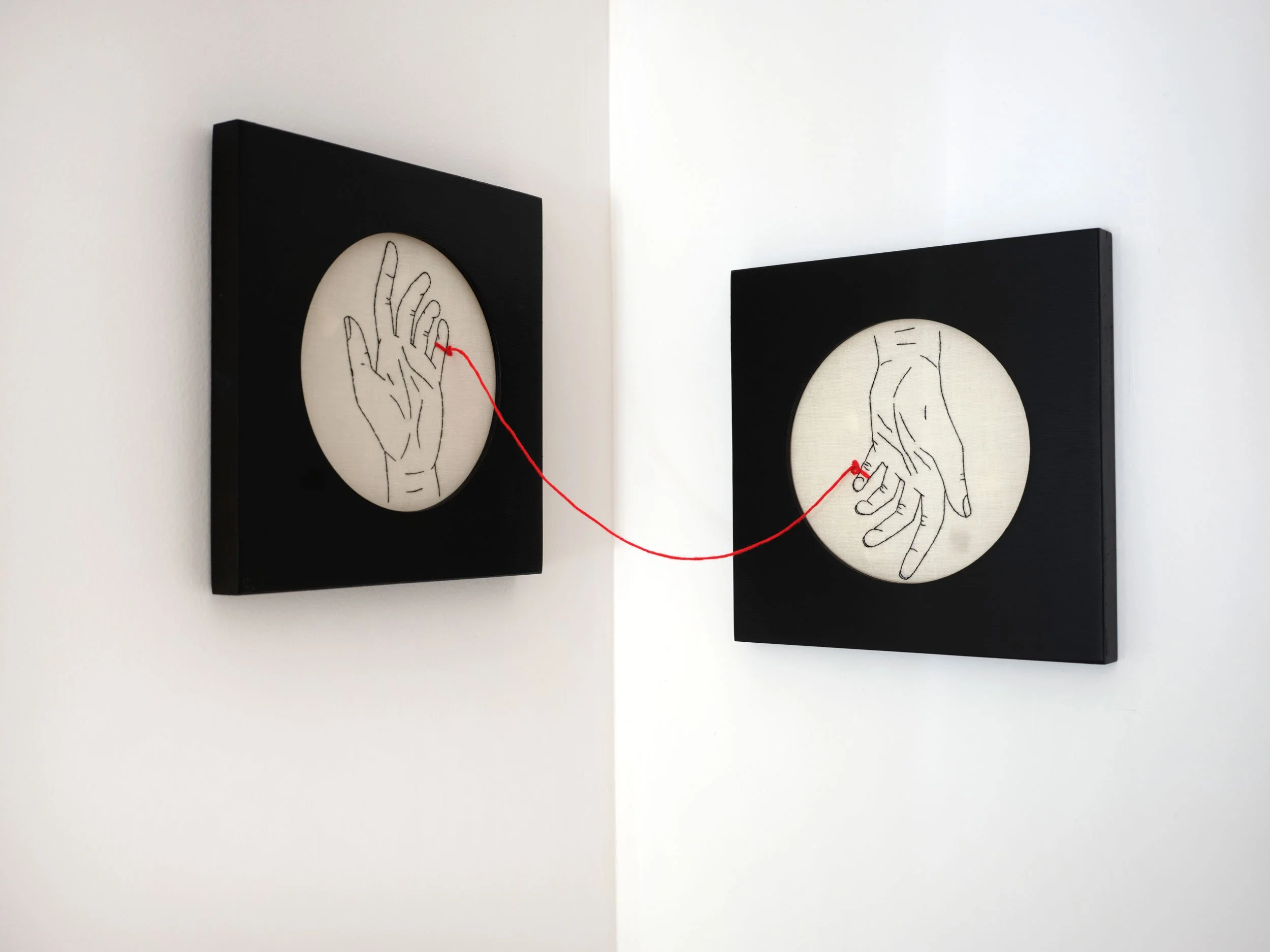
Conventionally, the use of needle and thread are seen as a means to make and mend clothing, “but what if an image were to be created with the help of a sewing needle, rather than pencil or paint brush?” The thought first entered my mind 5 years ago, during my A-Level studies. The process of sewing each tiny little stitch may appear monotonous, but I find it to be meditative and rhythmic.
I use my experience as an autistic woman who lives with chronic illness, to influence and narrate my work. As someone who is very meticulous, a large part of my process is utilized in conceptualizing, while the other portion is spent bringing the vision to life. I am particularly taken with portraiture and body language, these themes taking on the form of delicate embroidery line art, upon a “canvas” of cotton fabric in my work.
The viewer’s experience is ever present in my mind while I stitch, storytelling being a strong component throughout my work. Although my embroideries are open to interpretation, I place strong emphasis on emotional impact. I invite the viewer to connect with the work, to walk away with a sense of reflection, perhaps a better understanding of themselves or how their own experiences may interplay.
Embroidery is a powerful tool to express taboo topics, but I also believe in having a bit of fun with it- stress relief. Some of my more playful pieces were formed after impulsively deciding on ideas, that went a little something like “screw it, let’s embroider a ghost today.”
Garry Mitchell
-
For me painting is a language. It’s a technique for thinking, and my hope is to provide a thought that is clear and embodies feeling. This requires a vocabulary of forms that are repeated, emphasized, and manipulated. It’s a process of putting something onto a surface and then reacting to it, then putting something else down and reacting to the changing relationships again and again, editing as I go. In this this way I am slowly constructing a painting.
Vivien Russe
-
In recent years I’ve been able to participate in some USM travel trips, going overseas to France and Italy, as well as to locations here in Maine, Schoodic Pennisula in Acadia National Park and Monson. The Renaissance paintings I saw in Italy were especially inspirational.
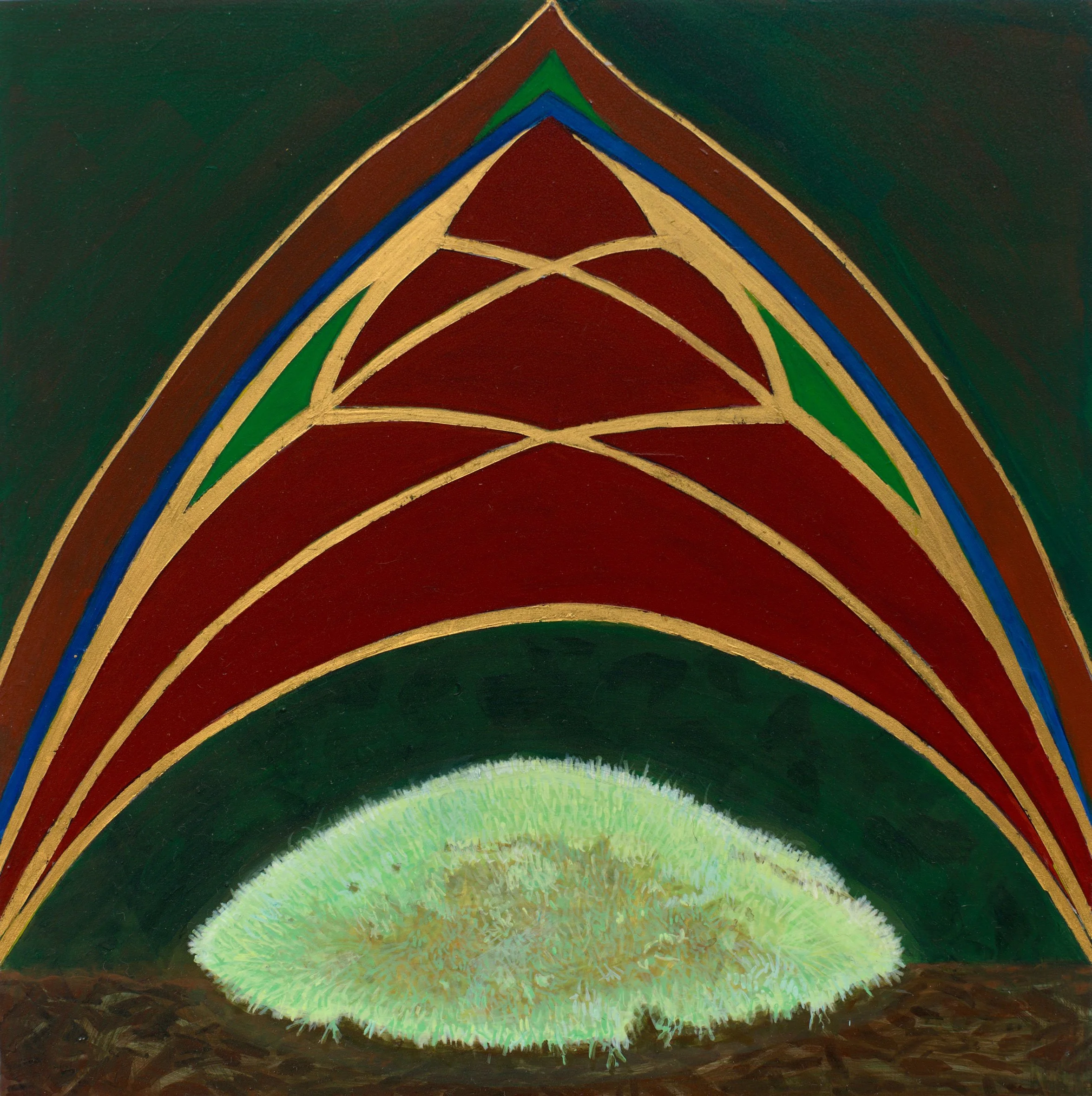
When a friend asked about my recent painting, I explained, “I was interested in how gold leaf was used in religious paintings to elevate the subject and to suggest holiness or sacredness. It seems to me, especially with impending climate change, our natural world needs to be given that sanctity in everyone’s mind and I chose some of the simpler, older plant forms to include in this thought, mosses, lichens and ferns. I’m influenced by the work of the late E.O. Wilson who has advocated so strongly for species protection.”
In this work, the Italian Renaissance meets the Maine Woods.
Kate Russo
-
Statement for Abstract Personalities —
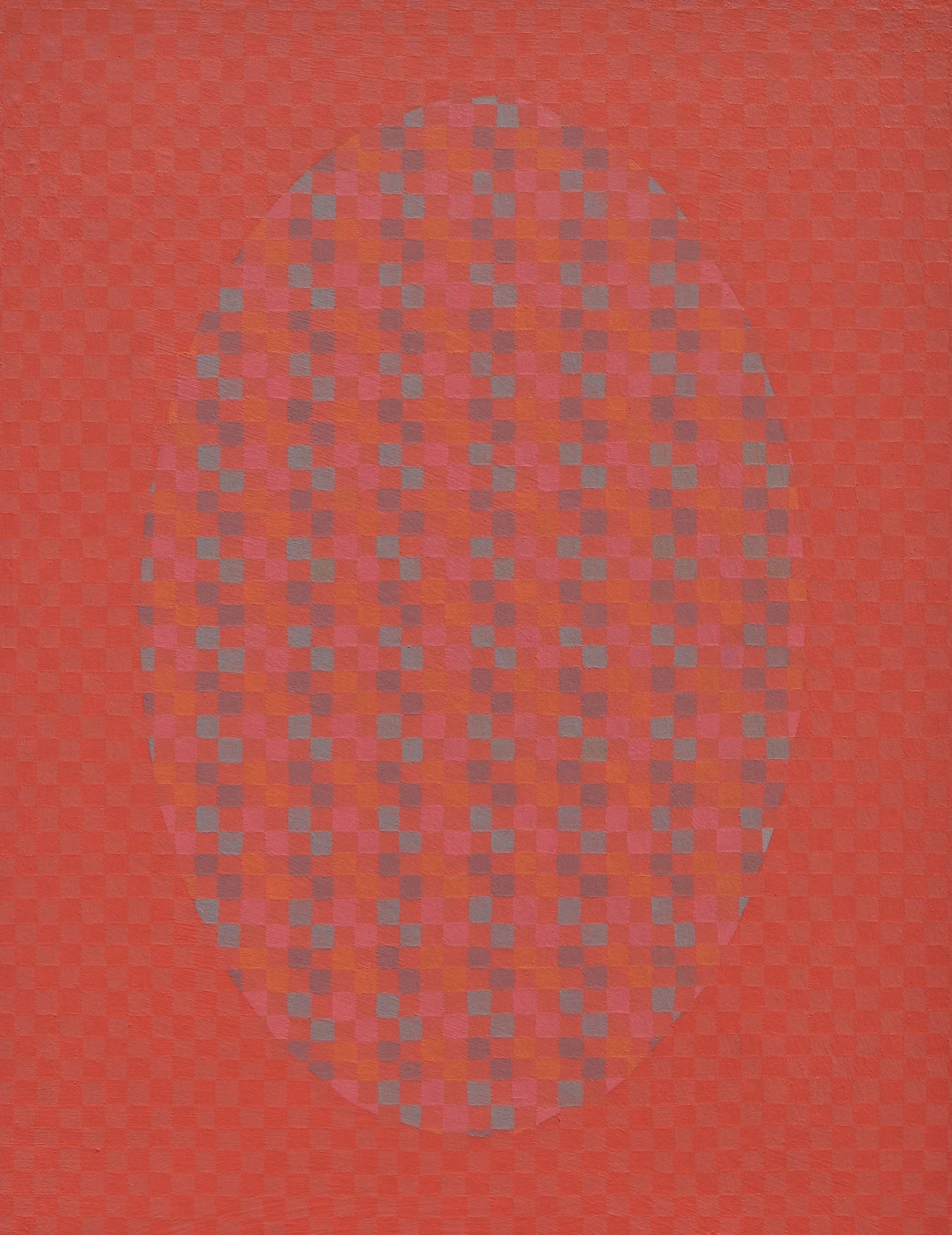
My painting is about color above all else. While many painters are concerned with color as light or color as cosmetic, I choose to explore color as narrative. I consider color’s ability to tell a story, create a character, atmosphere, or dialogue. With the grid as a backdrop, I employ repetitive mark making to compose oil paintings that speak to the relevance of color in personality, place, and memory. The prevalence of the oval in my work is a nod to a growing intimacy with my patterns. Each oval is considered a portrait of that unique color and pattern arrangement.
Andrea Sulzer
-
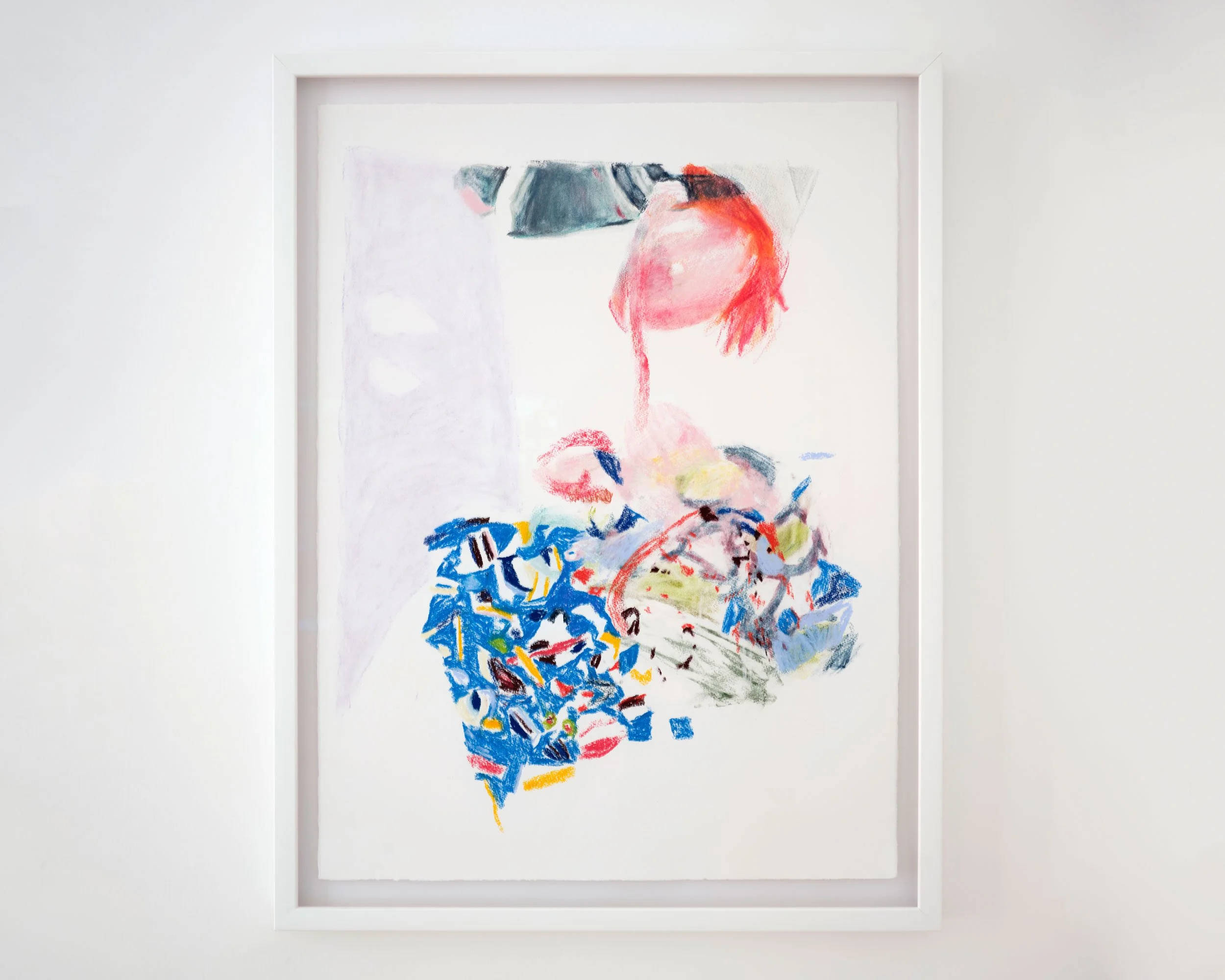
From my studio overlooking the Androscoggin River in Maine, I make drawings, prints, and paintings. Sometimes these morph into objects.
A desire to build a history with material, form, and ideas, alongside a determination to maintain an openness and freedom within this search, drives my work. It’s a constant pull between building a foundation and dismantling it, always trying to get closer to finding the underlying impulse for making things.
Selected Works
Amy Stacey Curtis
Fever
13.375 x 13.375 inches (framed)
Graphite and ink on 140lb. archival paper
2015
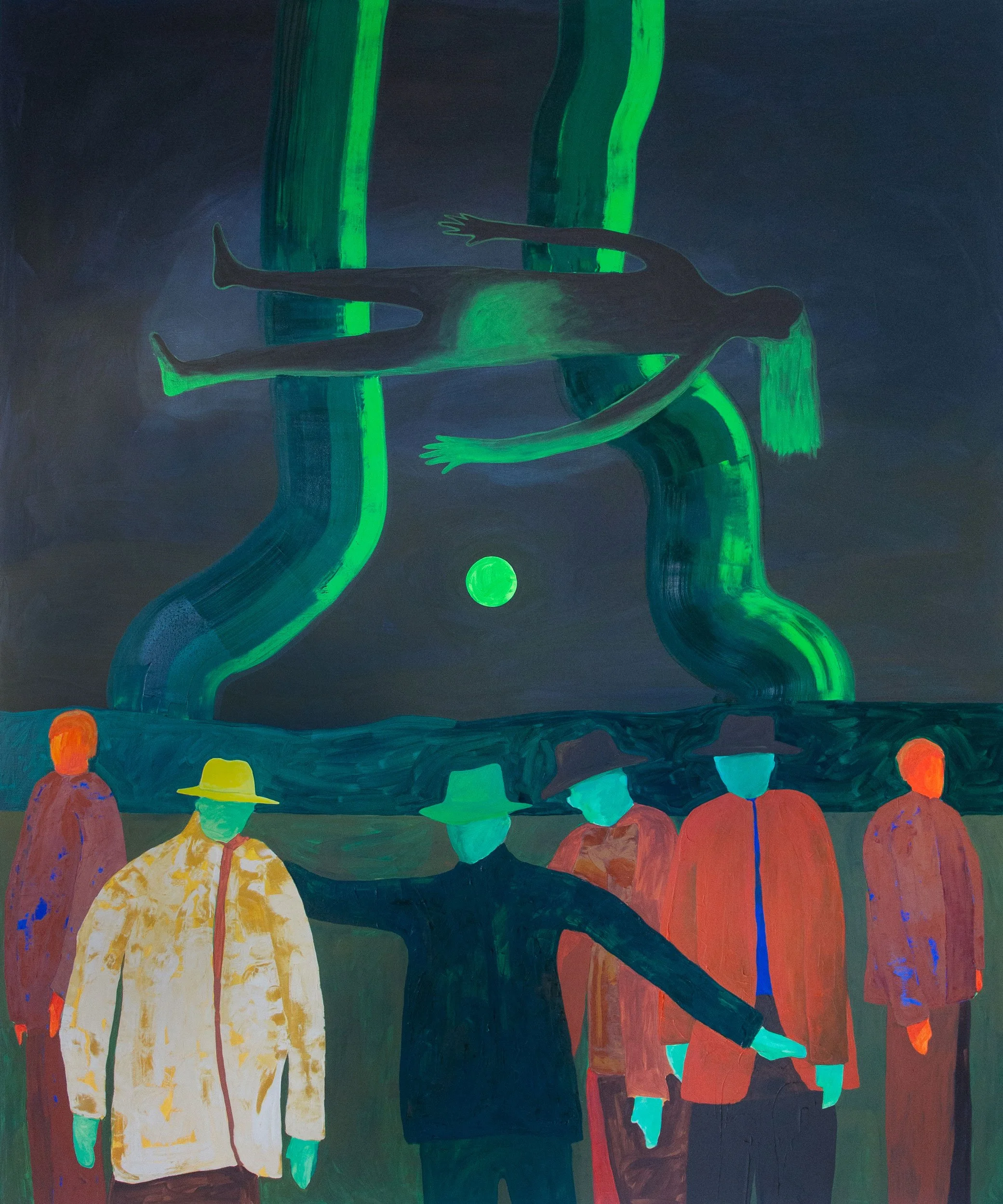
James Parker Foley
Conference Beneath Suspended Woman
72 x 60 inches
Oil on linen
2022
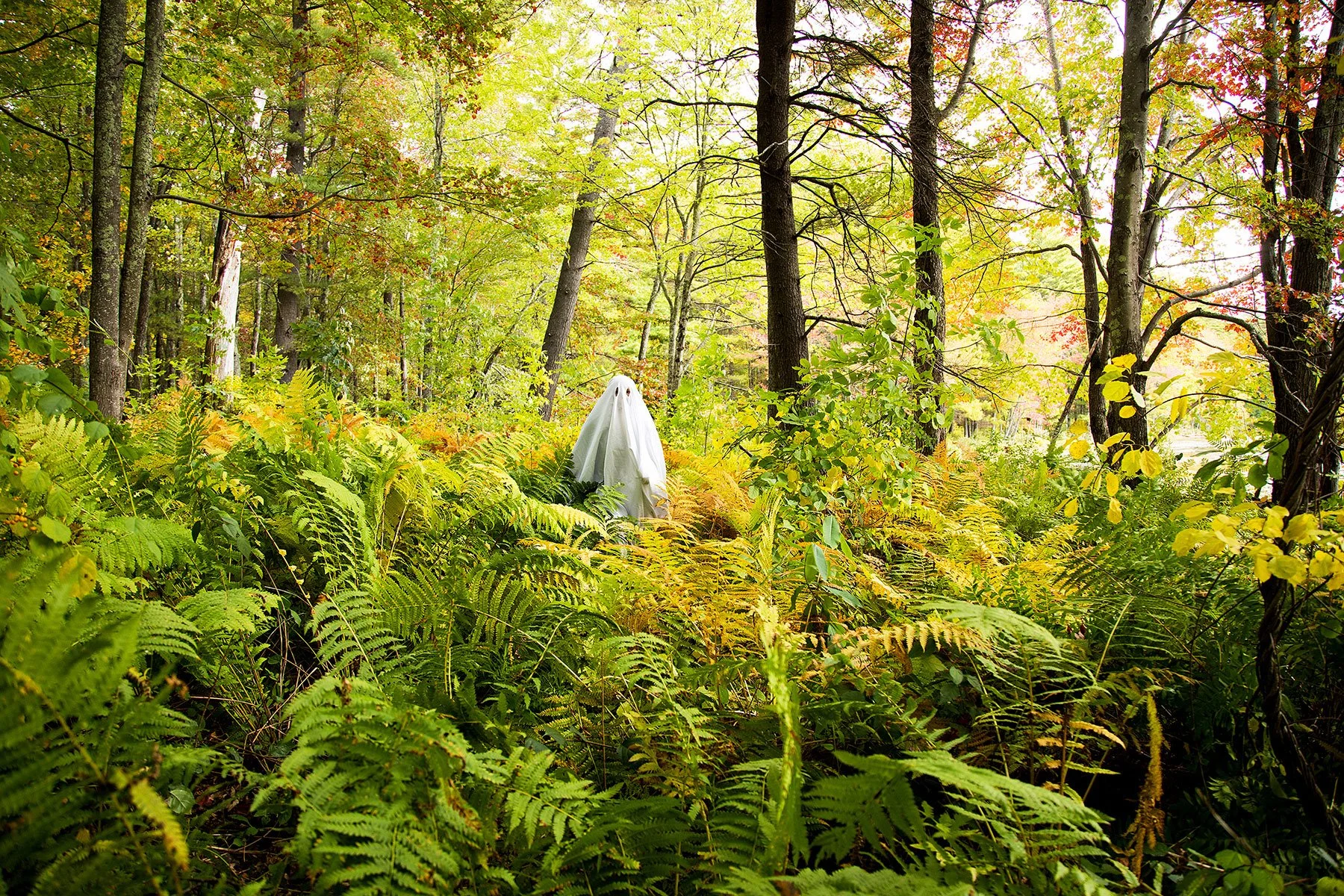
Julie K. Gray
Self-Portrait as Ghost in Ferns, Canterbury
Shaker Village
17.25 x 25.25 inches (framed)
C-print
2020
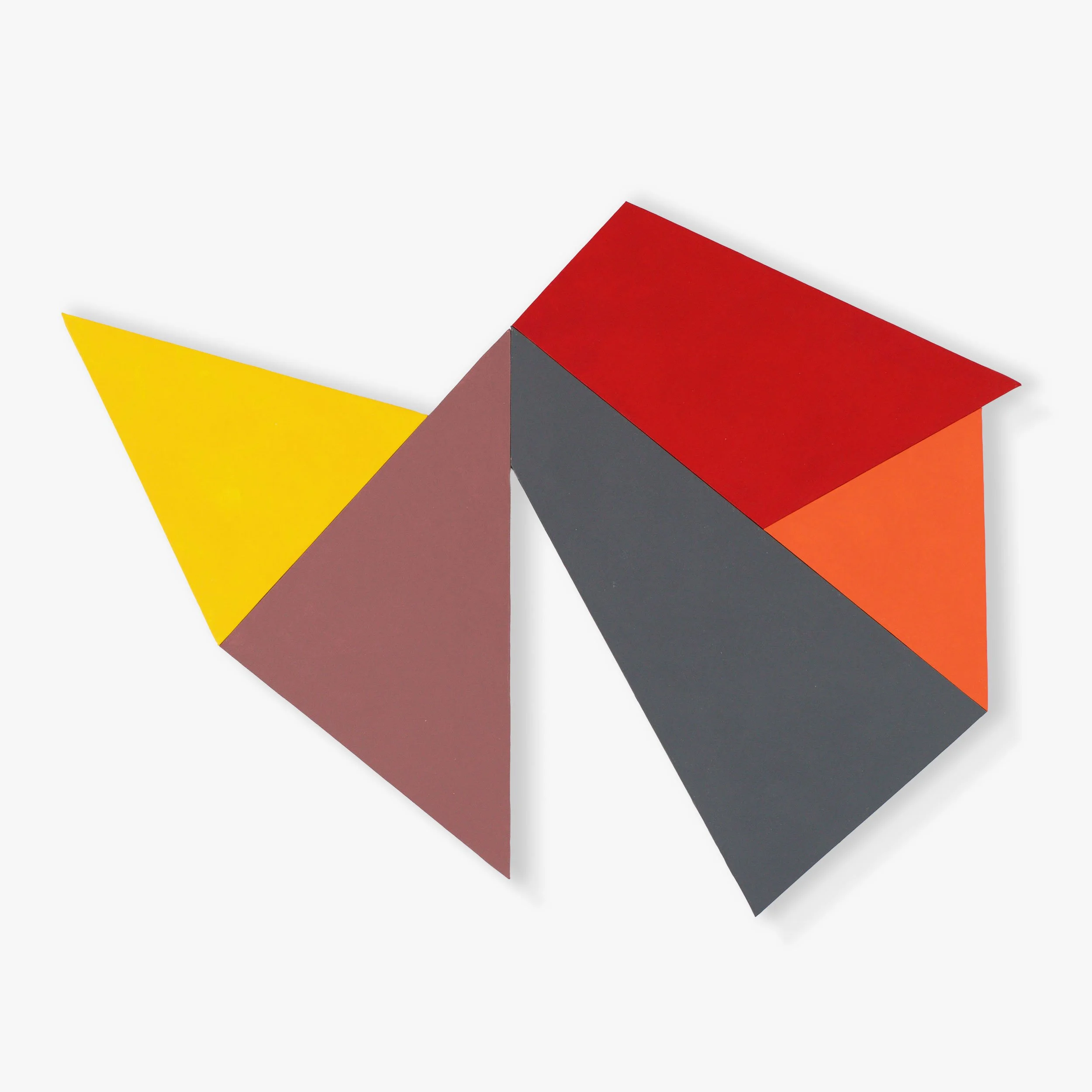
Ken Greenleaf
Perdido
28 x 34 inches
Acrylic on canvas on shaped support
2015
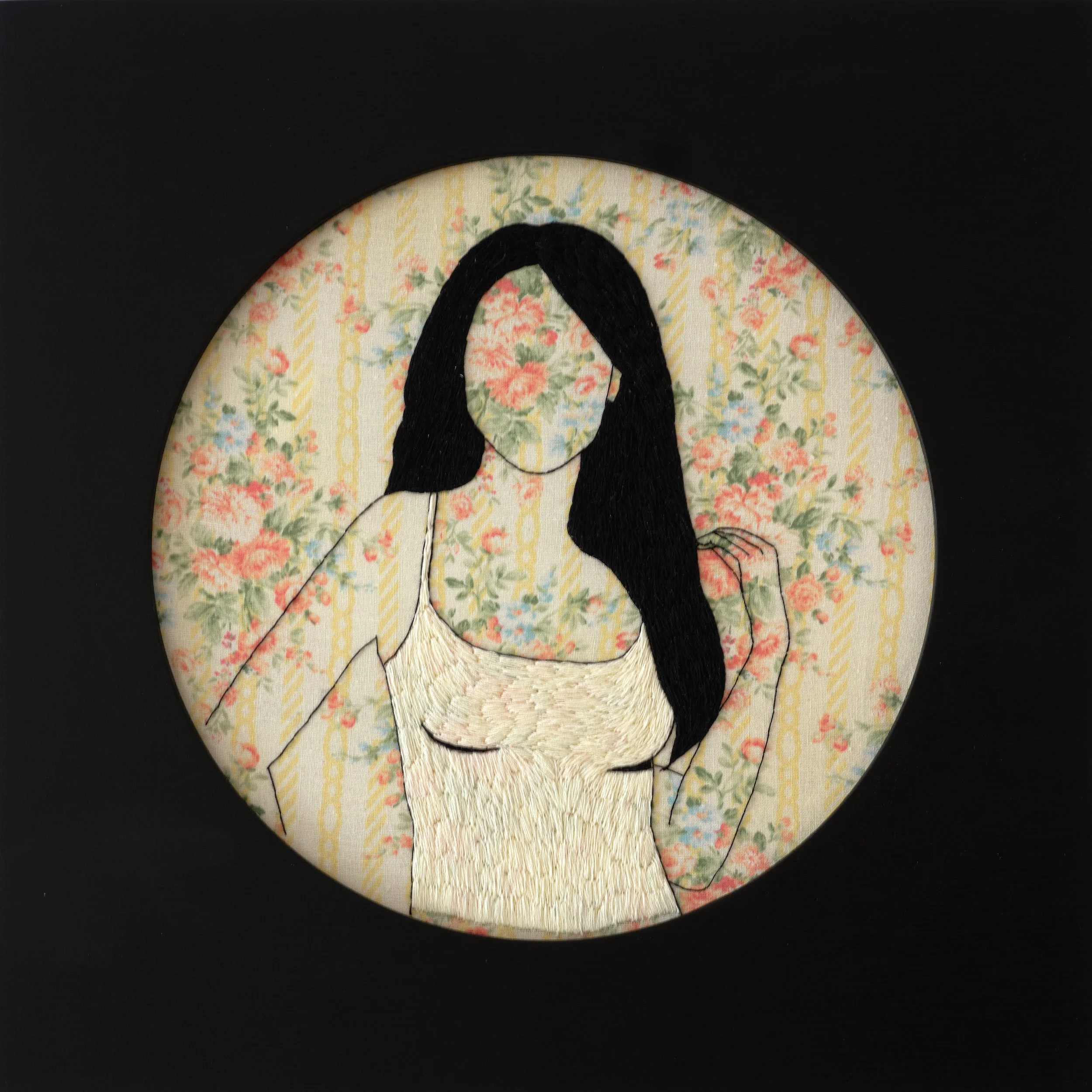
Lisa Holly Kelly
Floral girl
11 x 11 inches (framed)
Thread on bleached polycotton
2019
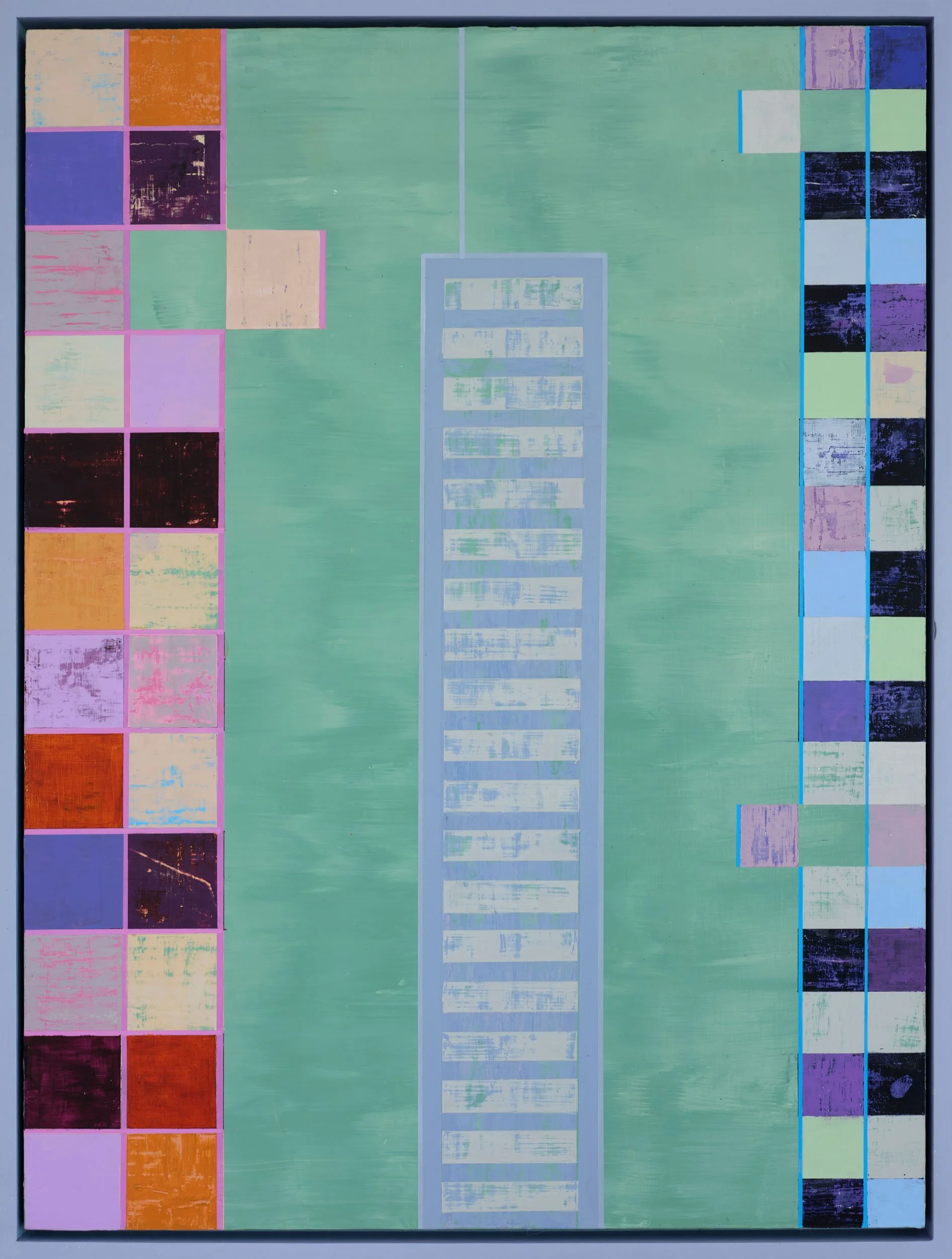
Gary Mitchell
Metropolis
25.25 x 19.125 inches (framed)
Acrylic on panel
2022
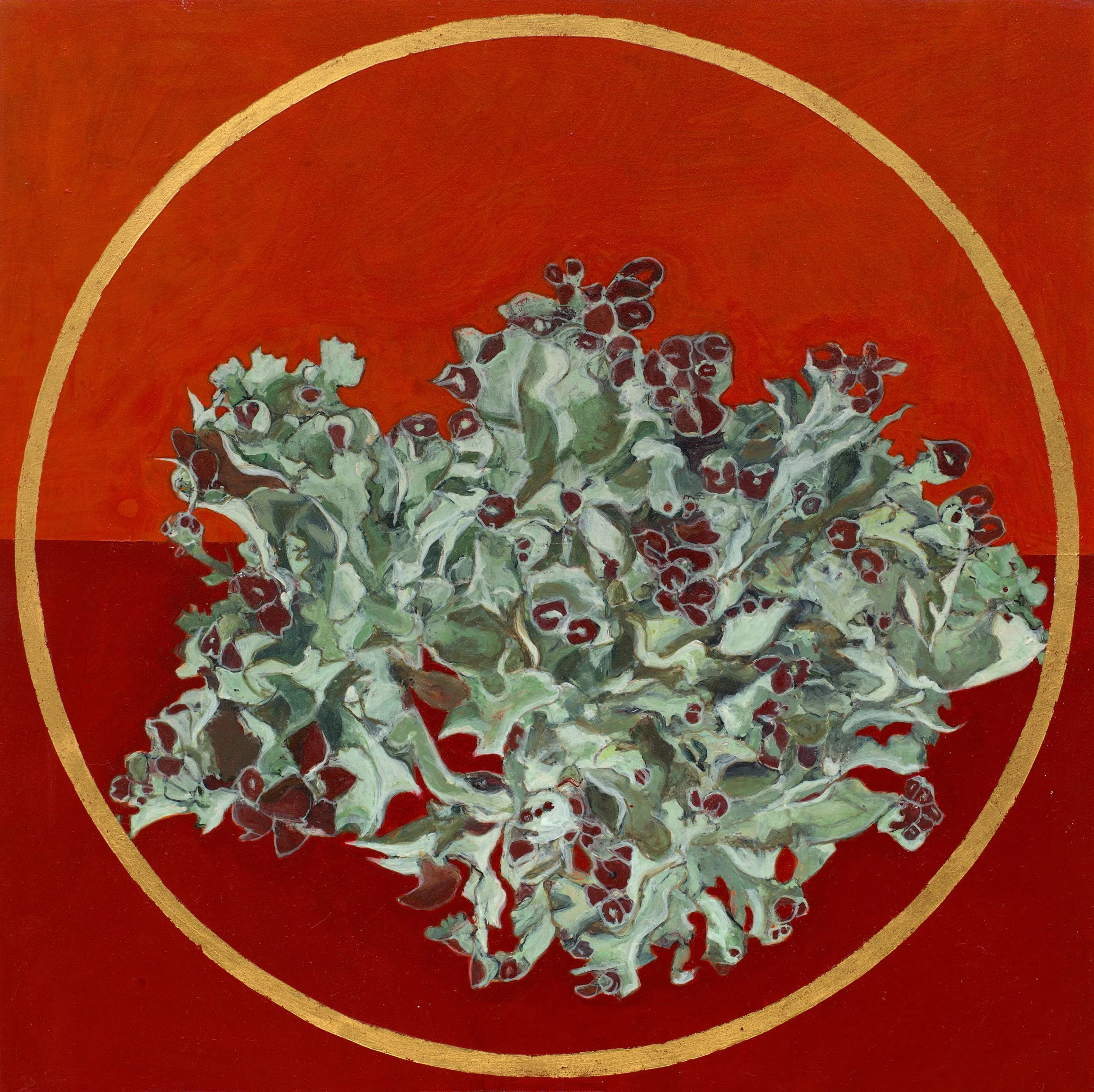
Vivien Russe
Lichen
10 x 10 inches
Acrylic and gold leaf on panel
2020
Kate Russo
Wiseguy
14 x 11 inches
Oil on panel
2014
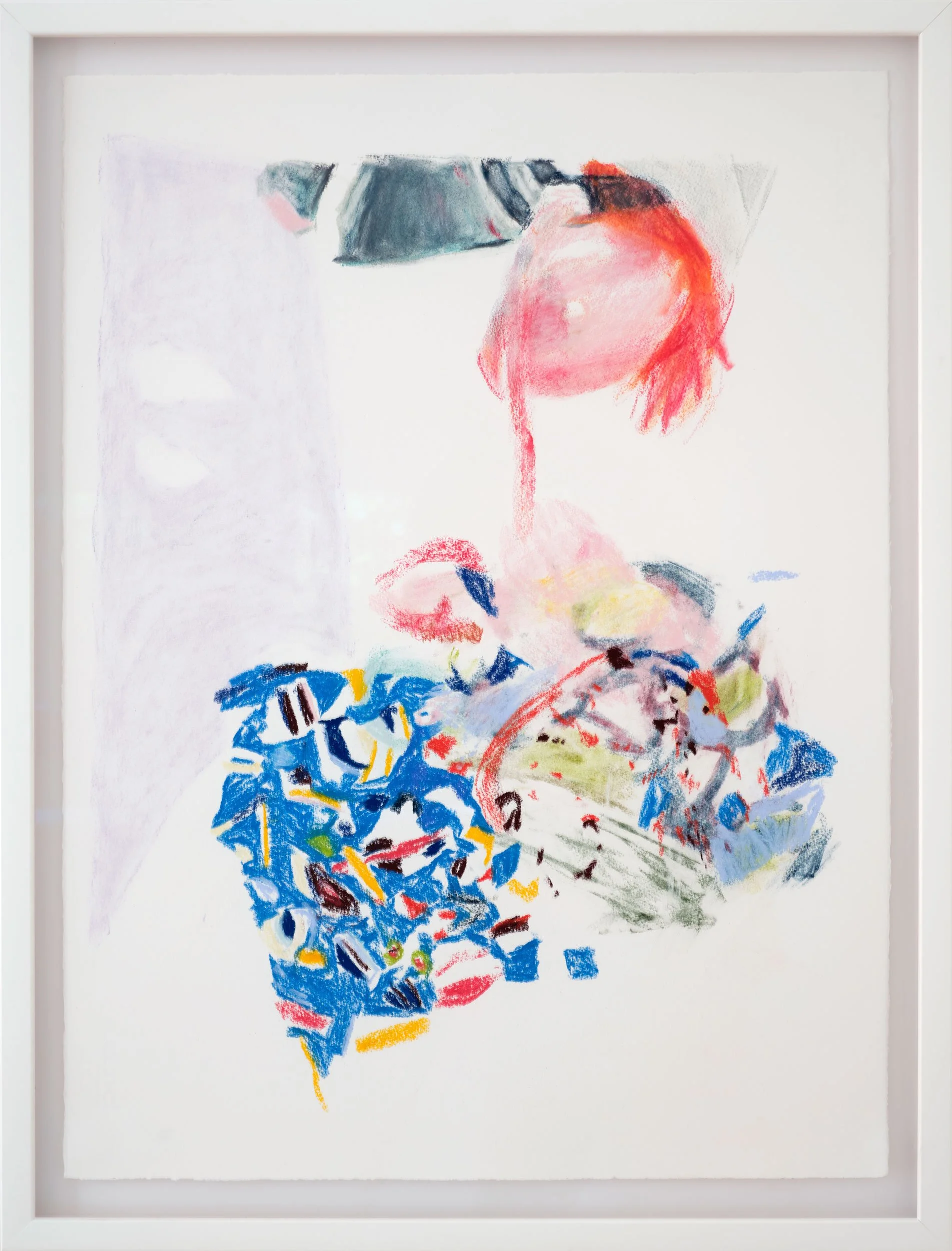
Andrea Sulzer
Rough Seas
33.625 x 25.625 inches (framed)
Pastel on paper
2022
You Take the Cake
Amy Stacey Curtis | James Parker Foley | Julie K. Gray | Ken Greenleaf | Lisa Holly Kelly | Garry Mitchell | Vivien Russe | Kate Russo | Andrea Sulzer
September 24 – October 30, 2022
Installation photography © Luc Demers