

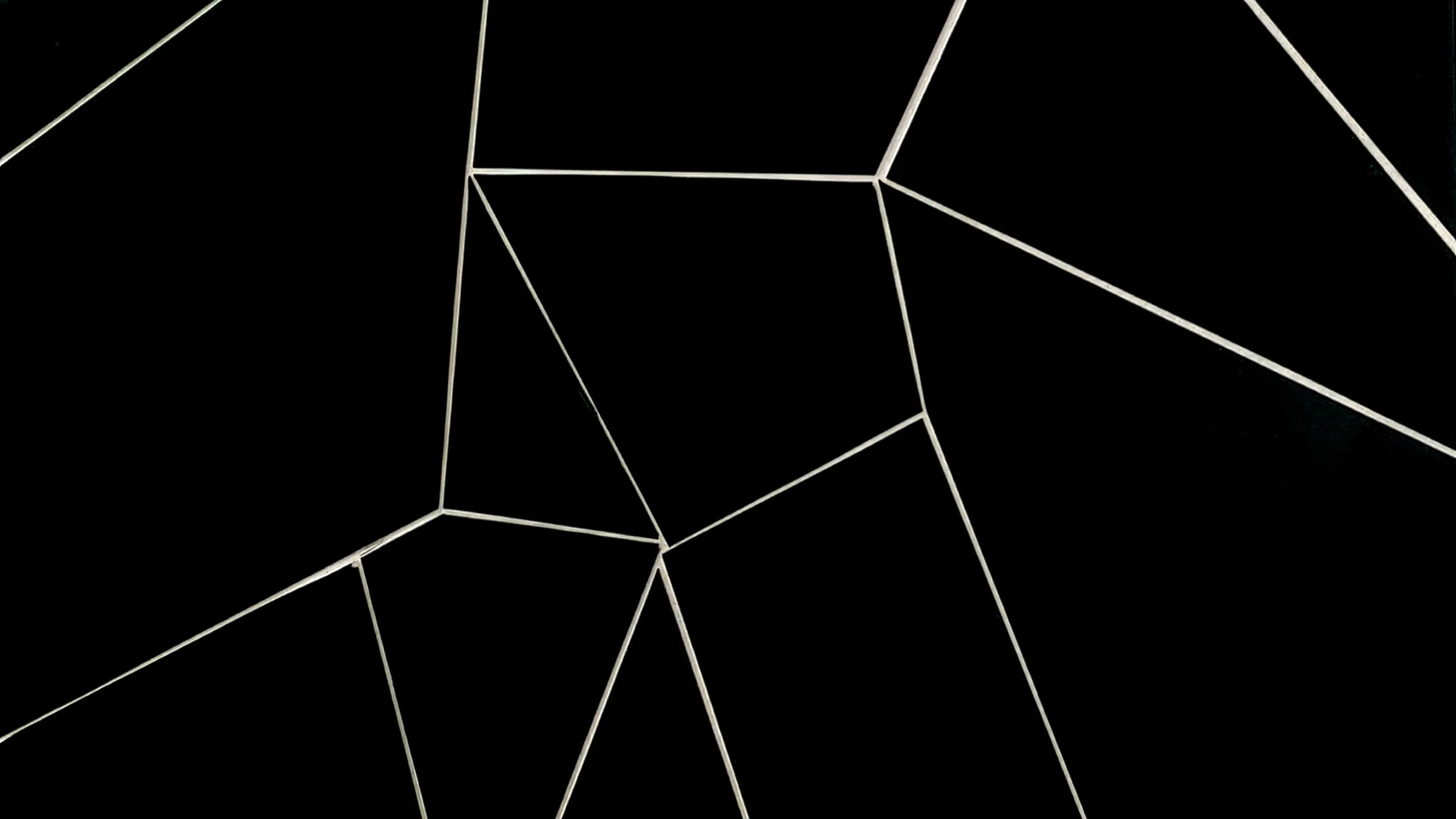
Ken Greenleaf
Waldoboro, Maine
Ken Greenleaf (b. 1945) is an acclaimed sculptor and modernist artist. While his work is embedded in a philosophical and theoretical framework, his method is intuitive and physical, grounded in sensory responses to shapes and materials. Greenleaf has spent the bulk of his life between Maine and New York City, and now resides in Midcoast Maine with his wife, Dozier Bell.
Greenleaf found success early in his career, represented by Tibor de Nagy and producing impressive steel sculptures that garnered widespread attention in the New York Times, Artforum, ARTNews, Art in America, and placement at multiple institutions, including the Whitney Museum of American Art. In the 1970s, while teaching at the School of the Visual Arts, Greenleaf became embedded in the vibrant downtown art scene and was inspired by figures like Clement Greenberg, with whom he struck up a relationship that would influence him for years to come. His early vision was also shaped by an apprenticeship with Isaac Witkin. Greenleaf writes, “Only later did it become clear to me that I was working from the empirical toward the transcendental, making sensory artistic resonance from industrial materials.” He remained active and connected, exhibiting in NYC through the early 90s when he began focusing more intently on his work as a critic.
Greenleaf served as an art critic for various publications for over 20 years, where he was known for his ruthless and considered eye. Outside the arts, he worked in a shop making harpsichords, in commercial fishing, in boatbuilding, in newspaper reporting, and in public television production.
Since returning to Maine in the early 90s, Greenleaf’s artwork has shifted primarily toward two-dimensional works created with a sculptor’s sensibility. His focus has been more inward as he continues to create work that, at its simplest, centers on the relationships among shapes in space. Greenleaf is invested in witnessing the mind work. “My intention is simply to make the best work I can,” he writes, “with the most thorough economy of means. I seek an art without narrative, rhetoric, or illusion. Art is, by its nature, an abstraction, and I wish to go directly to its nature.”
Selected Works
![4-Polarity
46 x 24 inches
Acrylic on canvas on shaped support [Shaped Canvases]](https://images.squarespace-cdn.com/content/v1/69df952ced2431242d7919b8/2935cca6-4629-4d3c-a242-42855565b0e7/KenGreenleaf_4-Polarity_square_new.jpg)
4-Polarity
46 x 24 inches
Acrylic on canvas on shaped support [Shaped Canvases]
![Lotus Blossom
36 x 55 inches
Acrylic on canvas on shaped support
2016 [Shaped Canvases]](https://images.squarespace-cdn.com/content/v1/69df952ced2431242d7919b8/dabdd5f1-3509-4a52-8993-ab722df7f9c8/KenGreenleaf_Lotus-Blossom_square_new.jpg)
Lotus Blossom
36 x 55 inches
Acrylic on canvas on shaped support
2016 [Shaped Canvases]
![Perdido
28 x 34 inches
Acrylic on canvas on shaped support
2015 [Shaped Canvases]](https://images.squarespace-cdn.com/content/v1/69df952ced2431242d7919b8/b9ad6e53-c57d-4c44-aff8-8c5d830cb5ba/KenGreenleaf_Perdido_square_new.jpg)
Perdido
28 x 34 inches
Acrylic on canvas on shaped support
2015 [Shaped Canvases]
![Section
25 x 24 inches
Acrylic on canvas on shaped support
2010 [Shaped Canvases]](https://images.squarespace-cdn.com/content/v1/69df952ced2431242d7919b8/faf21316-63f8-4ce2-b919-448da854cfb5/KenGreenleaf_Section_square_new.jpg)
Section
25 x 24 inches
Acrylic on canvas on shaped support
2010 [Shaped Canvases]
![Salient
23 x 25 inches
Acrylic on canvas on shaped support
2010 [Shaped Canvases]](https://images.squarespace-cdn.com/content/v1/69df952ced2431242d7919b8/15e00315-c70a-426d-a1c5-0aefe9c86536/KenGreenleaf_Salient_square_new.jpg)
Salient
23 x 25 inches
Acrylic on canvas on shaped support
2010 [Shaped Canvases]
![Schema
22 x 24 inches
Acrylic on canvas on shaped support
2010 [Shaped Canvases]](https://images.squarespace-cdn.com/content/v1/69df952ced2431242d7919b8/e21f0c9e-75b5-45f2-9fa3-c448770a1d56/KenGreenleaf_Schema_square_new.jpg)
Schema
22 x 24 inches
Acrylic on canvas on shaped support
2010 [Shaped Canvases]
![Higgs
25 x 24 inches
Acrylic on canvas on shaped support
2010 [Shaped Canvases]](https://images.squarespace-cdn.com/content/v1/69df952ced2431242d7919b8/3de5d71f-ddde-4c94-9aab-d8ee938d1581/KenGreenleaf_Higgs_square_new.jpg)
Higgs
25 x 24 inches
Acrylic on canvas on shaped support
2010 [Shaped Canvases]
![Gluon
23.5 x 24 inches
Acrylic on canvas on shaped support
2010 [Shaped Canvases]](https://images.squarespace-cdn.com/content/v1/69df952ced2431242d7919b8/a624e898-ab67-4c67-be6f-51528ea309ba/KenGreenleaf_Gluon_square_new.jpg)
Gluon
23.5 x 24 inches
Acrylic on canvas on shaped support
2010 [Shaped Canvases]
![Trajectory
23 x 25 inches
Acrylic on canvas on shaped support
2010 [Shaped Canvases]](https://images.squarespace-cdn.com/content/v1/69df952ced2431242d7919b8/3d58feeb-6243-41d0-a92f-29c27b574be6/KenGreenleaf_Trajectory_square_new.jpg)
Trajectory
23 x 25 inches
Acrylic on canvas on shaped support
2010 [Shaped Canvases]
![Untitled
19 x 21.5 (framed)
Charcoal and acrylic on paper
2022 [Works on Paper]](https://images.squarespace-cdn.com/content/v1/69df952ced2431242d7919b8/a752cec0-8e25-4920-86e8-1b4532712569/Greenleaf_Untitled-%2802%29_NEW.jpg)
Untitled
19 x 21.5 (framed)
Charcoal and acrylic on paper
2022 [Works on Paper]
![Untitled (Black Collage 11)
20.25 x 20.25 (framed)
Gouache on Fabriano collaged on Shinzen paper
2014 [Works on Paper]](https://images.squarespace-cdn.com/content/v1/69df952ced2431242d7919b8/21c299bd-8cc7-4537-adf8-1bab3e893f03/Greenleaf_Black-Collage-11.jpg)
Untitled (Black Collage 11)
20.25 x 20.25 (framed)
Gouache on Fabriano collaged on Shinzen paper
2014 [Works on Paper]
![Untitled
16.5 x 19 inches (framed)
Charcoal on paper
2011 [Works on Paper]](https://images.squarespace-cdn.com/content/v1/69df952ced2431242d7919b8/b68b7d0a-f802-4d84-bd68-5729a5dcc8d5/KenGreenleaf_Untitled%28Black-Line-01%29.jpg)
Untitled
16.5 x 19 inches (framed)
Charcoal on paper
2011 [Works on Paper]
exhibits
-
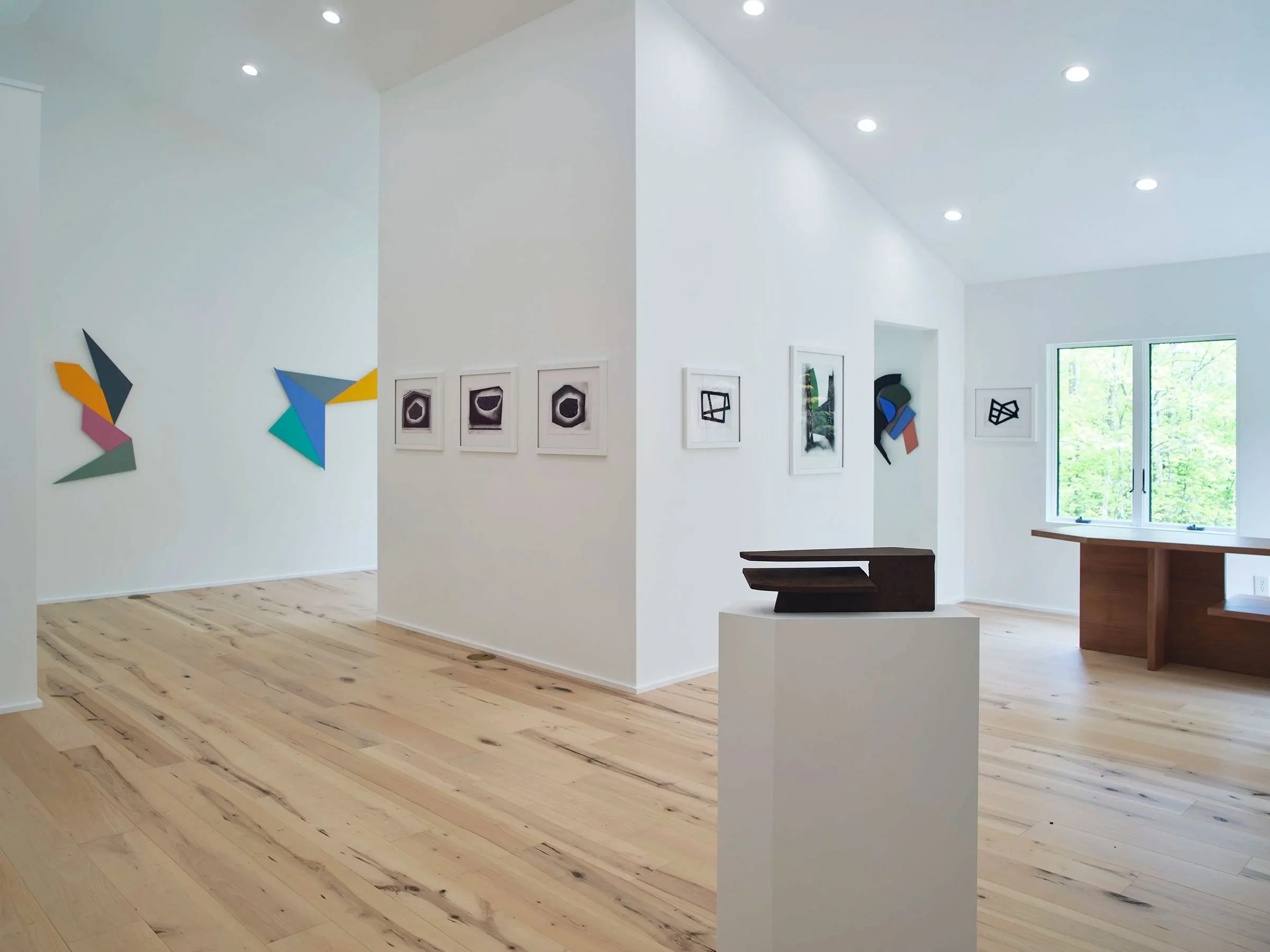
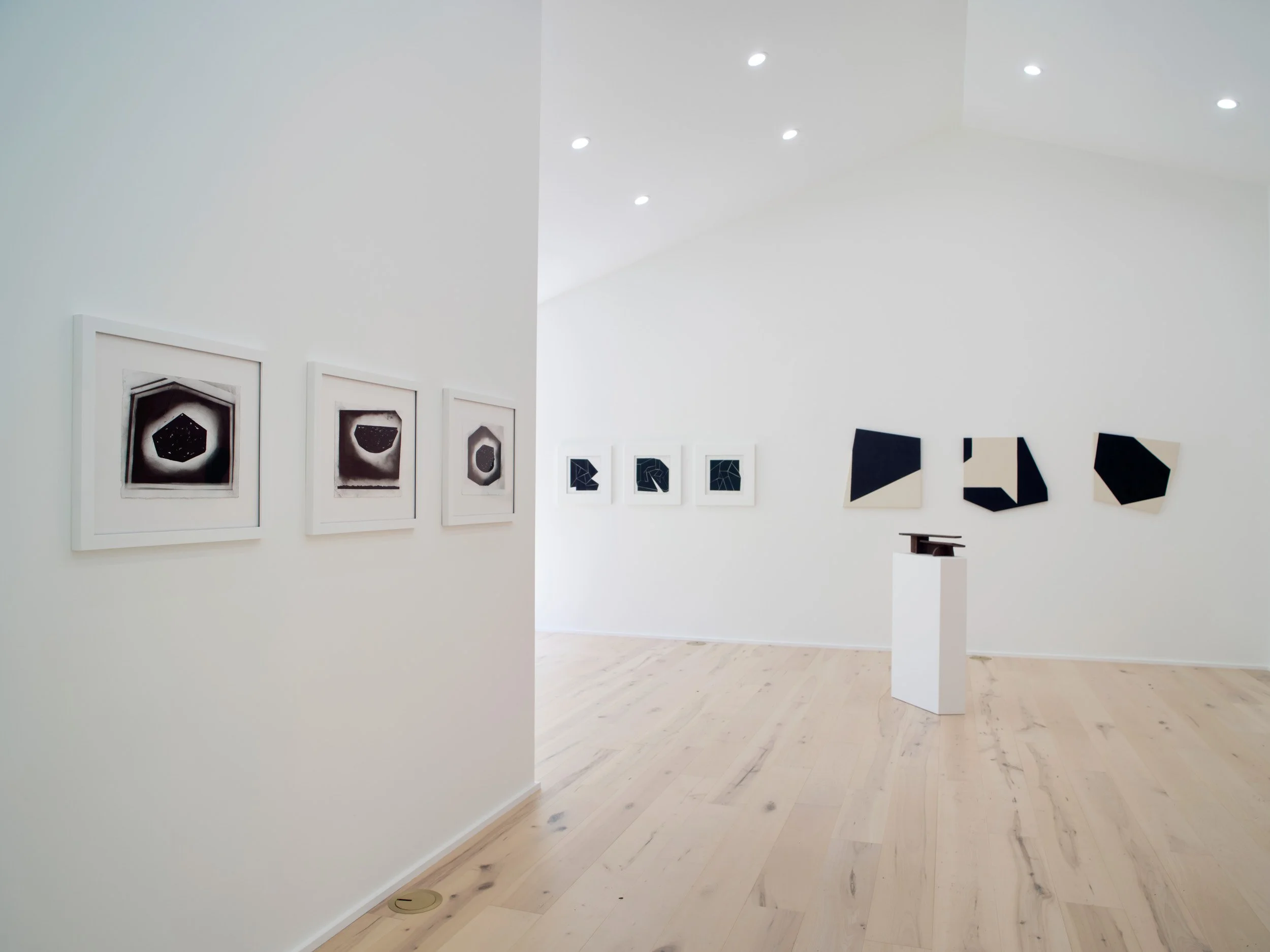
A Solo Exhibition
Ken Greenleaf
May 20 – June 5, 2023 [link:/greenleaf-a-solo-exhibition]
Artist Statement
Sometime around twenty-five years ago, I realized that the work I had been pursuing for the previous decades had come to an end, and that whatever I undertook from that point forward would be something else entirely. I had started writing reviews for a Maine newspaper and with a little practice and some good editors I got pretty handy with it. Forty-odd reviews a year gave me plenty to think about. Most of what I saw was not especially engaging, but it made me consider why that was so.
I came to realize that some of the basic fundamentals that had driven my own efforts were actually pretty empty. Especially the idea that abstraction was a useful means of expressing an inner life. Motherwell [1] and Rosenberg had got it wrong. That lode had petered out under the shallow overburden of an apparent need for self-expression. The good work that came out of, say, American abstraction of the 1950’s was just that — good work. Not a path to deeper understanding of the philosophical necessities of individual artistic identity. To recycle a phrase gleaned from an AJ Liebling footnote, the way to make art is to do it well, and how you do it is your own business.
I found myself continually questioning what I wanted to get out the whole process of making art. My distance from the art world and its conversations and mutual interactions helped me go wherever I wanted and could technically and materially handle. I thought about the artists who had survived my mental housecleaning and came up with damned few. Art history, and particularly modern history, is, I realized, fractal rather than linear, so there are no special imperatives. There are plenty of good, powerful, and even admirable artists, but my direct interest list was cooked down to what I care about for my own purposes. The top range of my list in my lifetime included Sol Lewitt, Robert Smithson and Ellsworth Kelly.
As I thought about it, I came to realize that my (or anybody’s) work was not about me but about the viewer. Art is abstract by nature, and how it is experienced is determined by the viewers and their expectations. For me, now, what I do is simply what I do, make of it what you will.
That led me back, directly, to Kasimir Malevich. And the black square. He had taken the entire enterprise to its deepest philosophical nature, devoid of all content except the experience of the encounter by the viewer. He had defined the core. And I think it scared him. Of course, he lived in a scary time in Russia. He had to back off — Lenin hated abstract art and Stalin liked to shoot the avant-garde… literally. But Malevich had engendered a group of some amazing artists. Like Lyubov Popova, who in her short life made paintings that could find a place anywhere in the 20th century. [2] And he left an important conceptual legacy.
[1] A book of Motherwell’s writing shows he believed contemporary abstraction expressed the emotional and unconscious condition of the artist, as if that were the foundation of what he and the others were undertaking. That idea was way too simplistic.
[2] This is a very simplified version of that complex time around the revolution - I’m extracting a sliver for my own purposes.
CV
Born: Damariscotta, ME | 1945
Resides: Waldoboro, ME
-
2023
Sarah Bouchard Gallery, Woolwich, ME2021
Berry Campbell, New York, NY2014
Berry Campbell, New York, NY2012
Intercept, Center for Maine Contemporary Art, Rockport, ME2011
Drawing the Line, June Fitzpatrick Gallery, Portland, ME2010
Caldbeck Gallery, Rockland, ME2009
Charcoal Drawings, Gold/Smith Gallery, Boothbay Harbor, ME1994
O’Farrell Gallery, Brunswick, ME1992
Gleason Fine Art, Boothbay Harbor, ME
Stark Gallery, NY1990
Stark Gallery, NY1989
John Davis Gallery, NY1987
John Davis Gallery, New York1985
Sculptor’s Guild Outdoors, Houston and Broadway, NY1983
Monumental Sculpture Series, Harry Lebau Jewish Center, Union, NJ1981
Tibor de Nagy Gallery, NY1980
Tibor de Nagy Gallery, NY
Barridoff Gallery, Portland, ME1978
Tibor de Nagy Gallery, NY
B.R. Kornblatt Gallery, Baltimore, MD1976
Tibor de Nagy Gallery, NY1974
Tibor de Nagy GaIlery, NY1973
Tibor de Nagy Gallery, NY
Walter Kelly Gallery, Chicago, IL
LoGiudice Gallery, NY -
2021
A Gathering of Aces, Sarah Bouchard Gallery, Woolwich, ME2019
Corey Daniels Gallery, Wells, ME
Greenhut Galleries, Portland, ME2018
Corey Daniels Gallery, Wells, ME2016
Group Show, curated by Noah Becker, Berry Campbell Gallery, NY2015
You Can’t Get There From Here, Biennial, Portland Museum of Art, Portland, ME2014
The Art of Collage, Art Gallery, University of New England, Portland, ME2013
Charcoal!, Schick Art Gallery, Skidmore College, Saratoga Springs, NY2012
Ken Greenleaf, Serge Momot and Constantin Rudeshko, Bottega Gallery, Kyiv, Ukraine
Caldbeck Gallery, Rockland, ME
Lucy Mink, John Bonner and Ken Greenleaf, McGowan Fine Art, Concord, NH
National Academy Annual Exhibition, NY
Sideshow Gallery, Brooklyn, NY2011
Works on Paper, Danese Gallery, NY
Sideshow Gallery, Brooklyn, NY
Armory show, NY2009
Aucocisco Gallery, with Richard Van Buren and Scott Davis, Portland, ME
Over Under, Annual Invitational Show, Greenhut Galleries, Portland, ME1995
Plans and Elevations, with Maggi Brown, Main Gallery, University of Rhode Island, RI1994
Recent Acquisitions, Edwin A. M. Ulrich Museum, Wichita State University, Wichita, KS
Original Place, with Dozier Bell, Farnsworth Museum, Rockland, ME1993
Southern Vermont Art Center, Manchester, VT
Inaugural Exhibition, Gleason Fine Art, Portland, ME1992
Contemporary Sculpture at Chesterwood, Stockbridge, MA1991
Beyond Geometry, Maine Contemporary Art, Rockport, ME1990
Opening Invitational, Stark Gallery, NY1988
Ten Americans, Carnegie Museum of Art, Pittsburgh, PA
Daisy Craddock and Ken Greenleaf, John Davis Gallery, NY1987
John Davis Gallery, NY1986
Schulman Sculpture Park, White Plains, NY1985
Made in the USA, Modern Art Consultants, curated by Phyllis Tuchman, NY
Sculpture 1985, Sculptors’ Guild, NY1984
The Intuitive Response, Robeson Center Gallery, Rutgers University, Newark, NJ1983
A Century of Modern Sculpture, Museum of Fine Art, Houston, TX1978
Sculpture at Sand’s Point, Nassau Museum of Fine Art, Port Washington, NY
Recent Acquisitions, Portland Museum of Art, Portland, ME
Art on Paper, Weatherspoon Gallery, Albright-Knox Gallery, Buffalo, NY
Selected Works from the Tibor de Nagy Gallery, Mint Museum of Art, Charlotte, NC1976
Maine Coast Artists, Rockport, ME
Painting and Sculpture Today, Indianapolis Museum of Art, IN1975
Sculpture Now Gallery, NY1974
Ken Greenleaf and Robert Goodnough, Watson/ de Nagy Gallery, Houston, TX
South Houston Gallery, American International Sculpture Symposium, NY
Recent Acquisitions, Whitney Museum of American Art, NY
Geometry, Museum of Fine Art, Houston, TX
Painting and Sculpture Today, Indianapolis Museum of Art, IN1973
Biennial: Contemporary American Painting and Sculpture, Whitney Museum of American Art, NY1972
LoGiudice Gallery, NY
Gallery of the School of the Art Institute of Chicago, IL -
Ulrich Museum of Art, Wichita State University, Wichita, Kansas
Whitney Museum of American Art, New York
Lannan Foundation, Boca Raton, Florida
Sidney Lewis, Richmond, Virginia
Portland Museum of Art, Portland, Maine
Bates College, Lewiston, Maine
Smith-Gilbert Gardens, Kennesaw, Georgia
Farnsworth Museum, Rockland, Maine
Indianapolis Museum of Art, Indianapolis, Indiana
Museum of Fine Art, Houston, Texas
-
Anderson, Laurie. Review, ArtNews, March, 1973
Ashberry, John. Review, New York Magazine, April 1976
Bradley, Tom. Article, Portland Press Herald August 1980
Bradford, Katherine. Review, Maine Times September 17, 1978
Caldwell, John. “Ten Americans” exhibition catalog, Pittsburgh: Carnegie Museum of Art, 1988
Cox, Peter. Review, Maine Times August 1980
Donadio, Emmie. Article, Arts Magazine, April 1976
Frank, Peter. Review. ArtNews, October 1978
Gilbert-Rolfe, Jeremy. Review, Artforum, January, 1974
Keyes, Bob. Article, Portland Press Herald, April 23, 2015
Kany, Daniel. Review, Maine Sunday Telegram, November 30, 2014
Kany, Daniel. Review, Maine Sunday Telegram, August 19, 2012
Kany, Daniel. Review, Maine Sunday Telegram, December 20, 2009
Kany, Daniel. Review, Maine Sunday Telegram, August 29, 2010
Konau, Britta. Review, Portland Phoenix, August 29, 2012
Konau, Britta. Review, The Free Press, January 15, 2013
Larmon, Annie Godfrey. Interview, Portland Phoenix, December 18, 2009
Little, Carl. Review, Art New England, February/March 1995
McWilliams, Margot B. Review, Maine Sunday Telegram, August 30, 1992
Mellow, James R. Sunday Review, The New York Times, December 2, 1973
Moorman, Margaret, Review, ArtNews, November, 1987
Muir, Brice. Review, Maine Times, August 1992
“New York Day by Day”, The New York Times, June 29, 1983
Niss, Bob. Article, Portland Evening Express, July 1980
Plagens, Peter. Review, The Wall Street Journal, December 19, 2014
Raynor, Vivien. Review, The New York Times, July 1980
Shirey, David L. Review, The New York Times, July 1980
Siegel, Jeanne. Review, Art in America, November 1976
Tuchman, Phyllis. Review ARTnews, January 1975
Wallach, Amei. Review, Newsday, March 1976
Press
Inquire
To inquire about available works or learn more about Ken Greenleaf, please get in touch.