

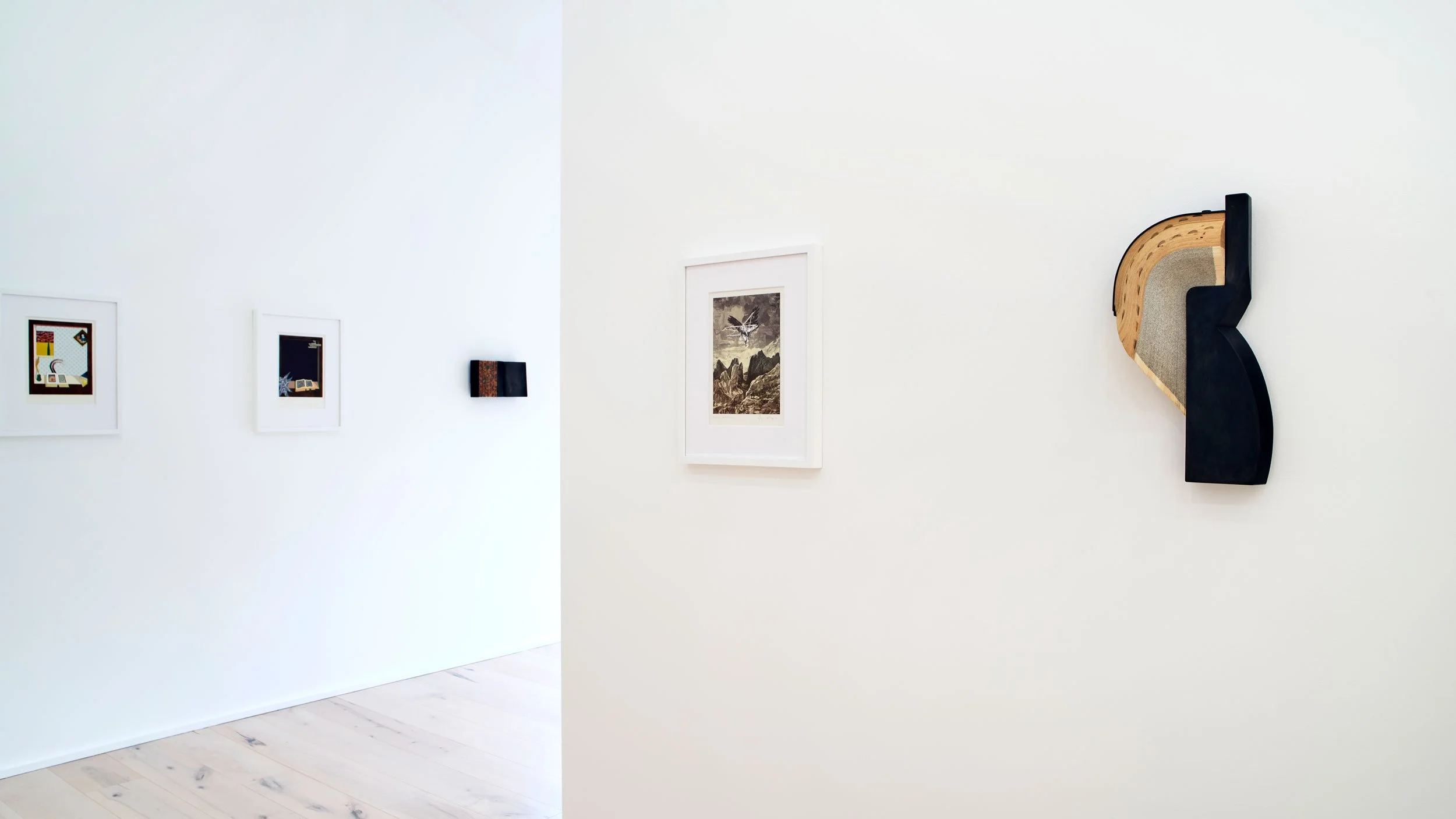
To-morrow, the world answers everything
Andrew Hayes + Tom Phillips
April 12 – May 18, 2025
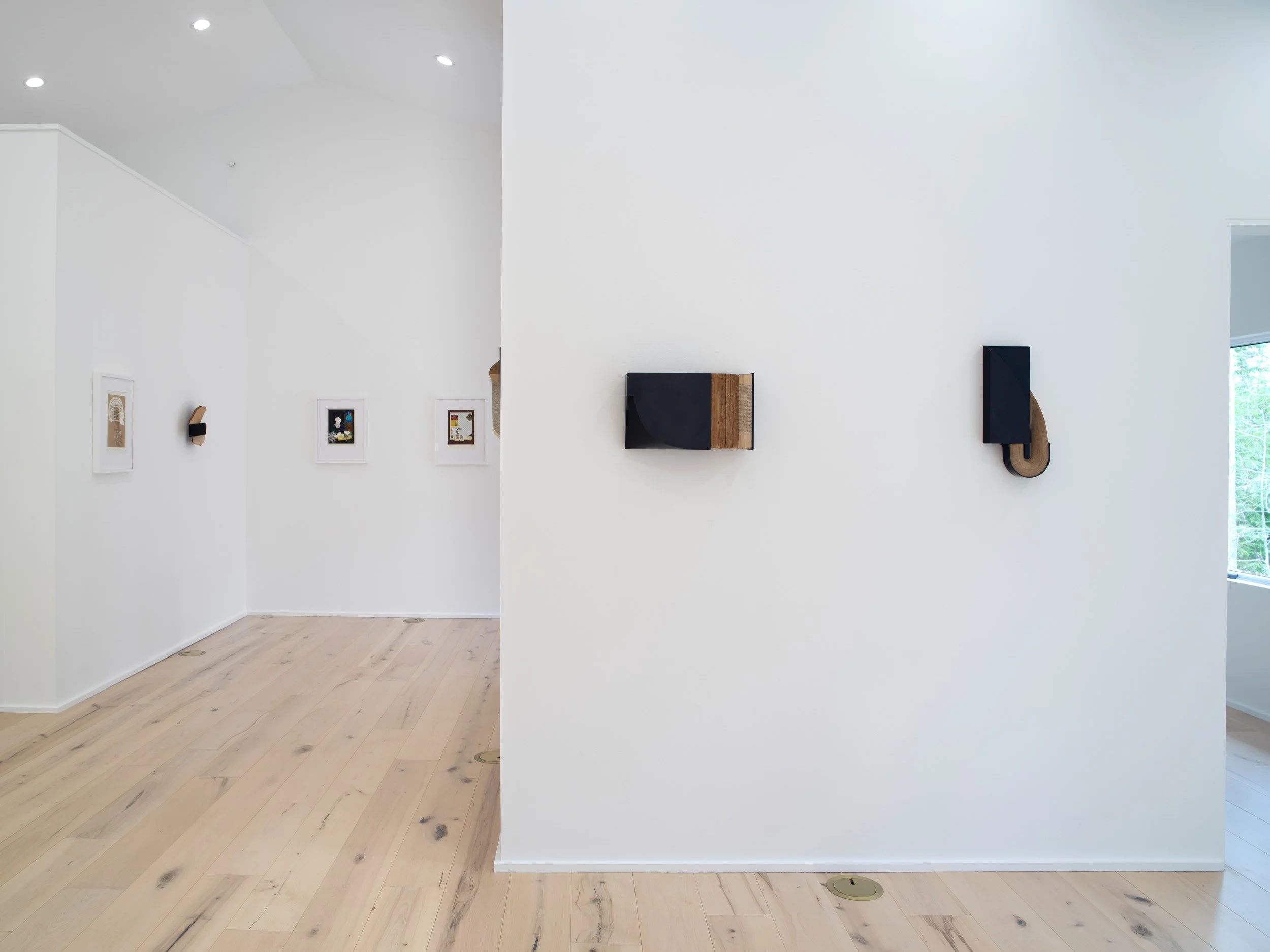
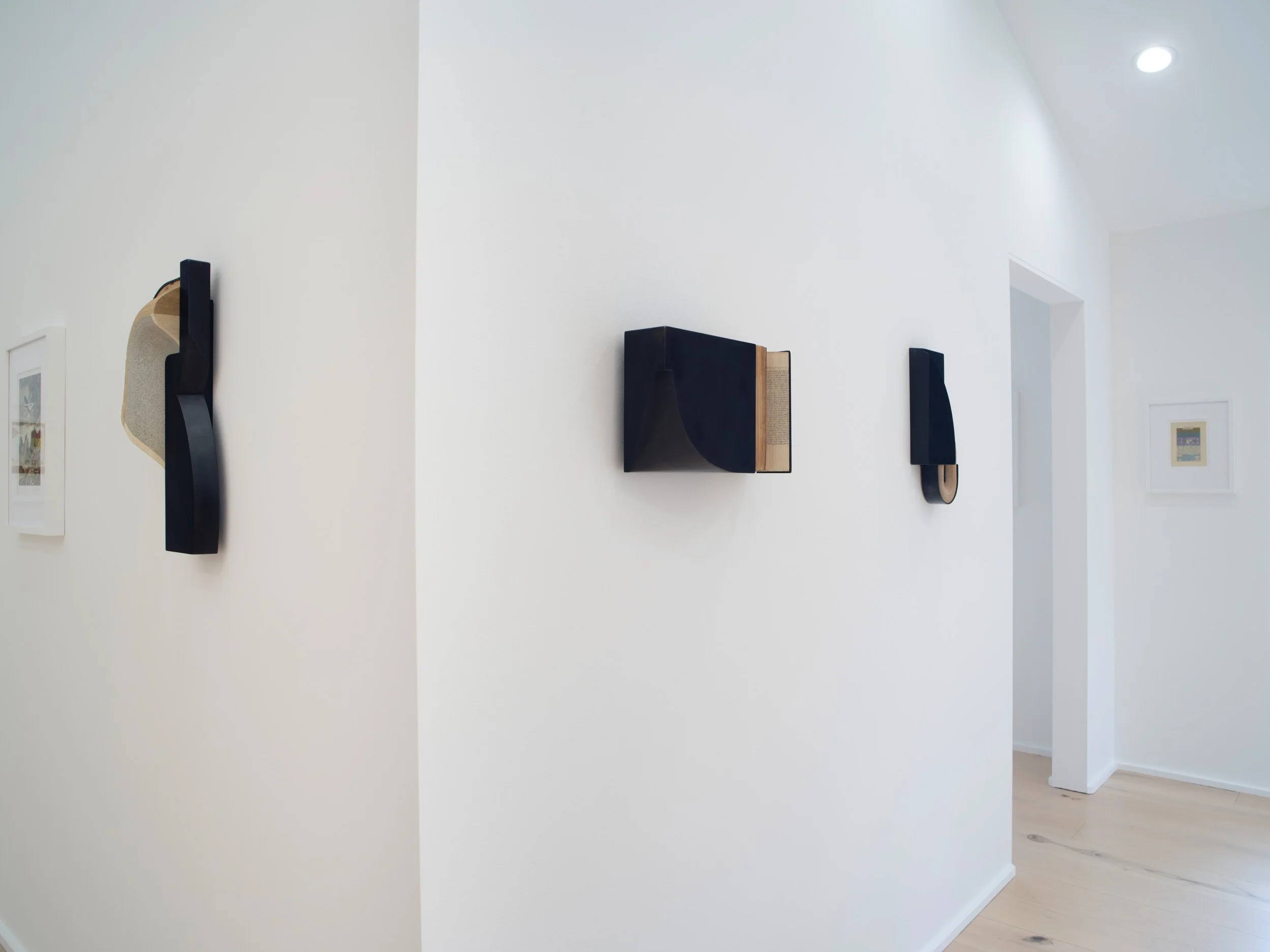
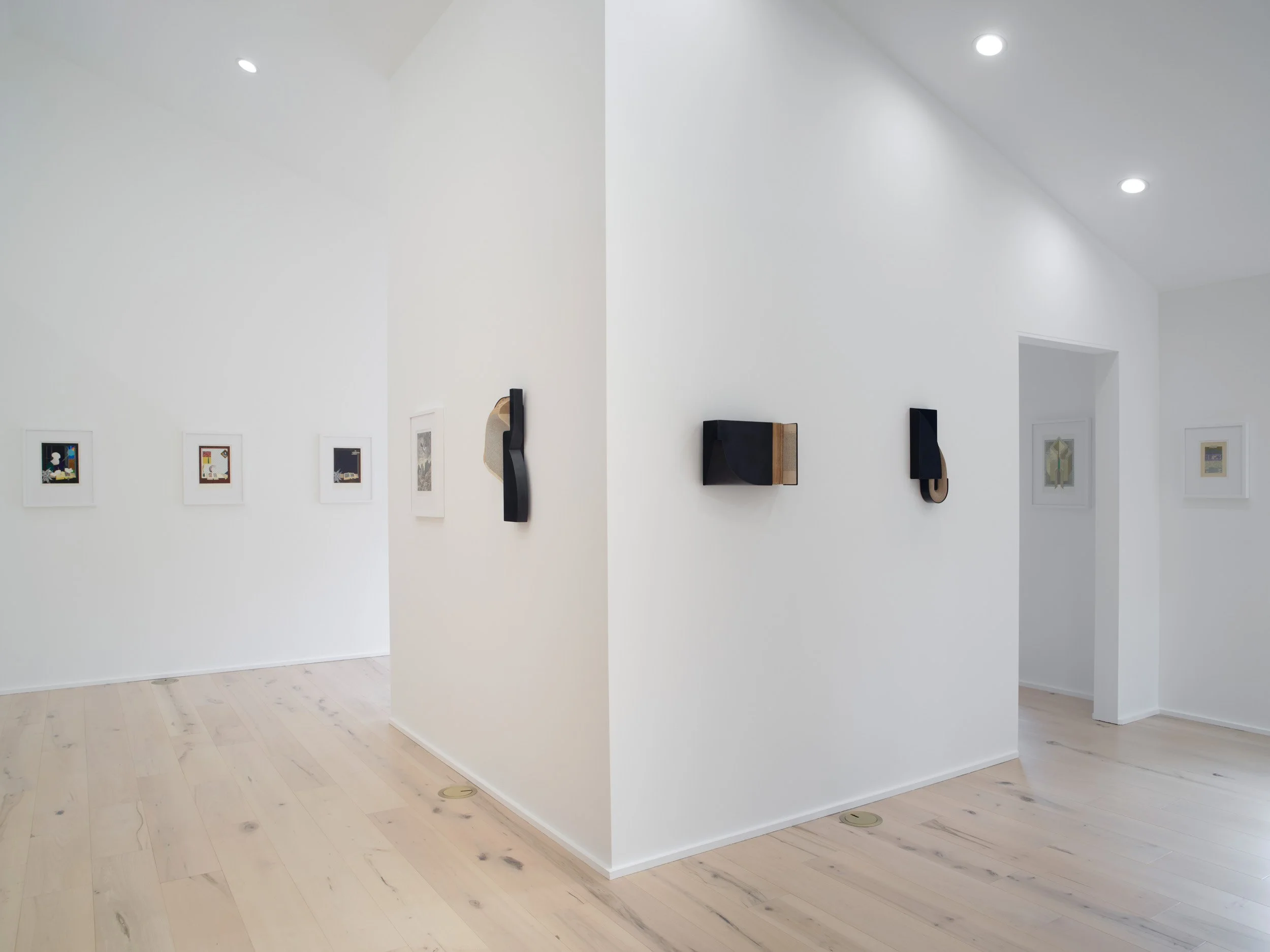
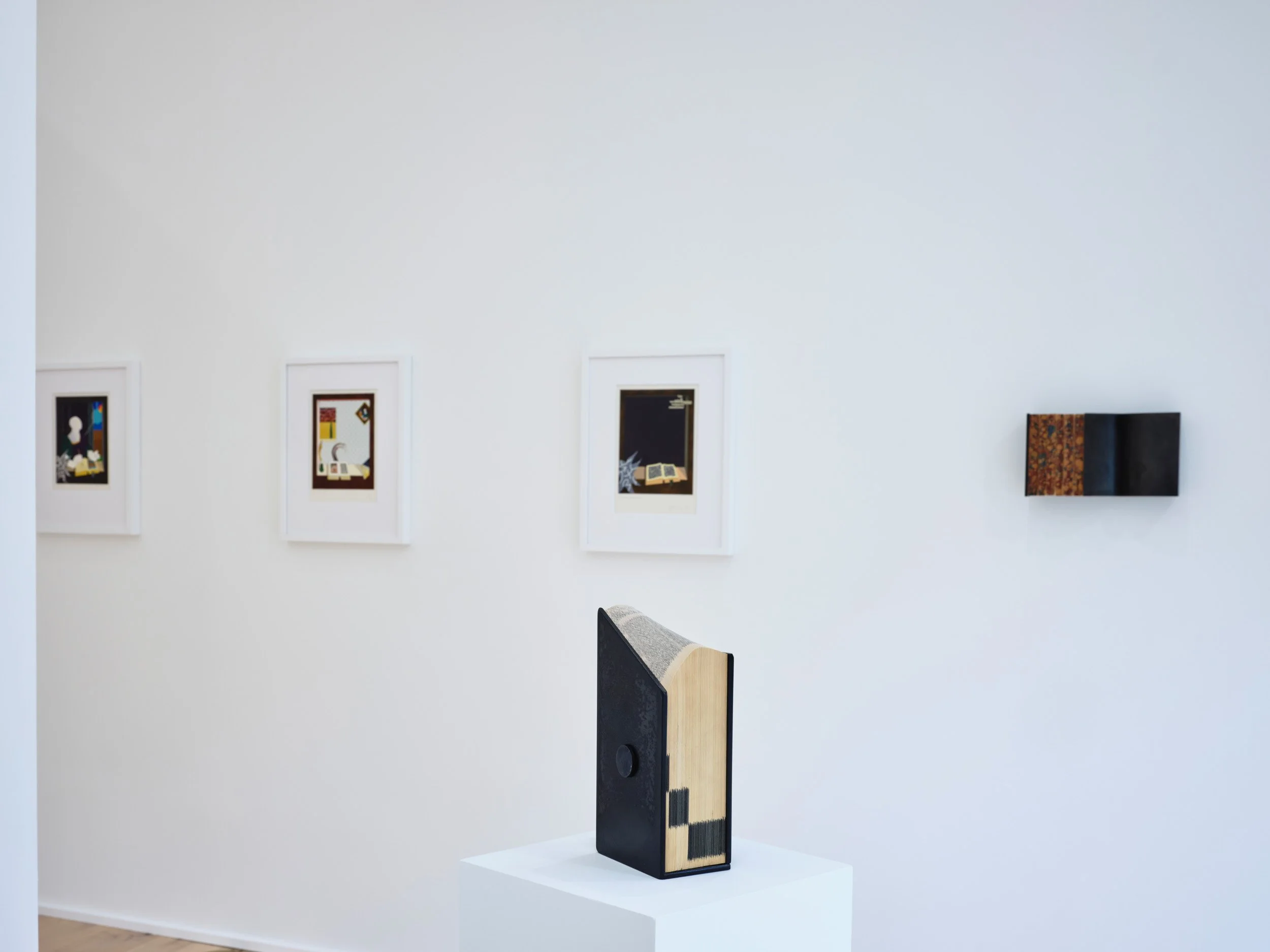
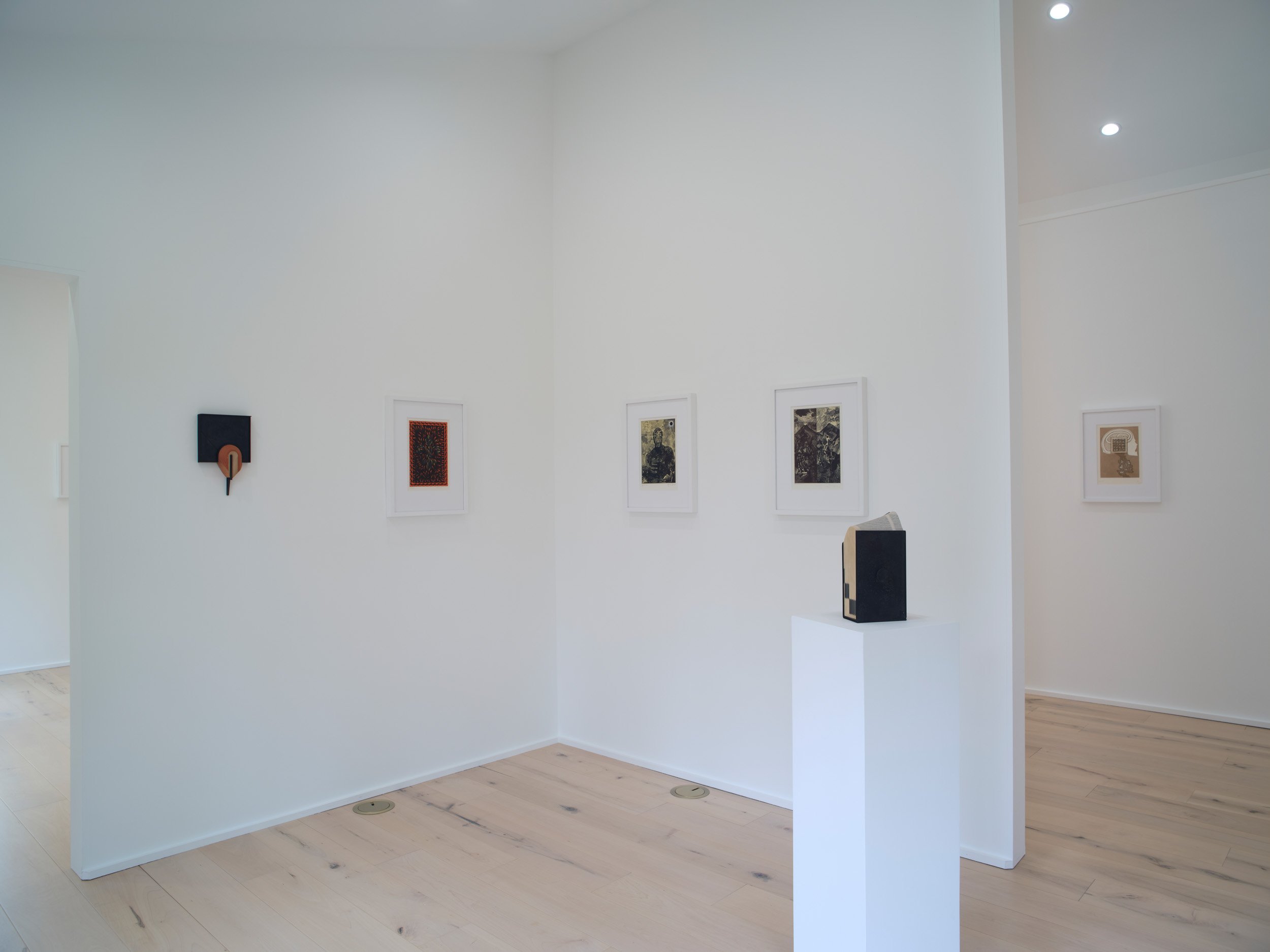
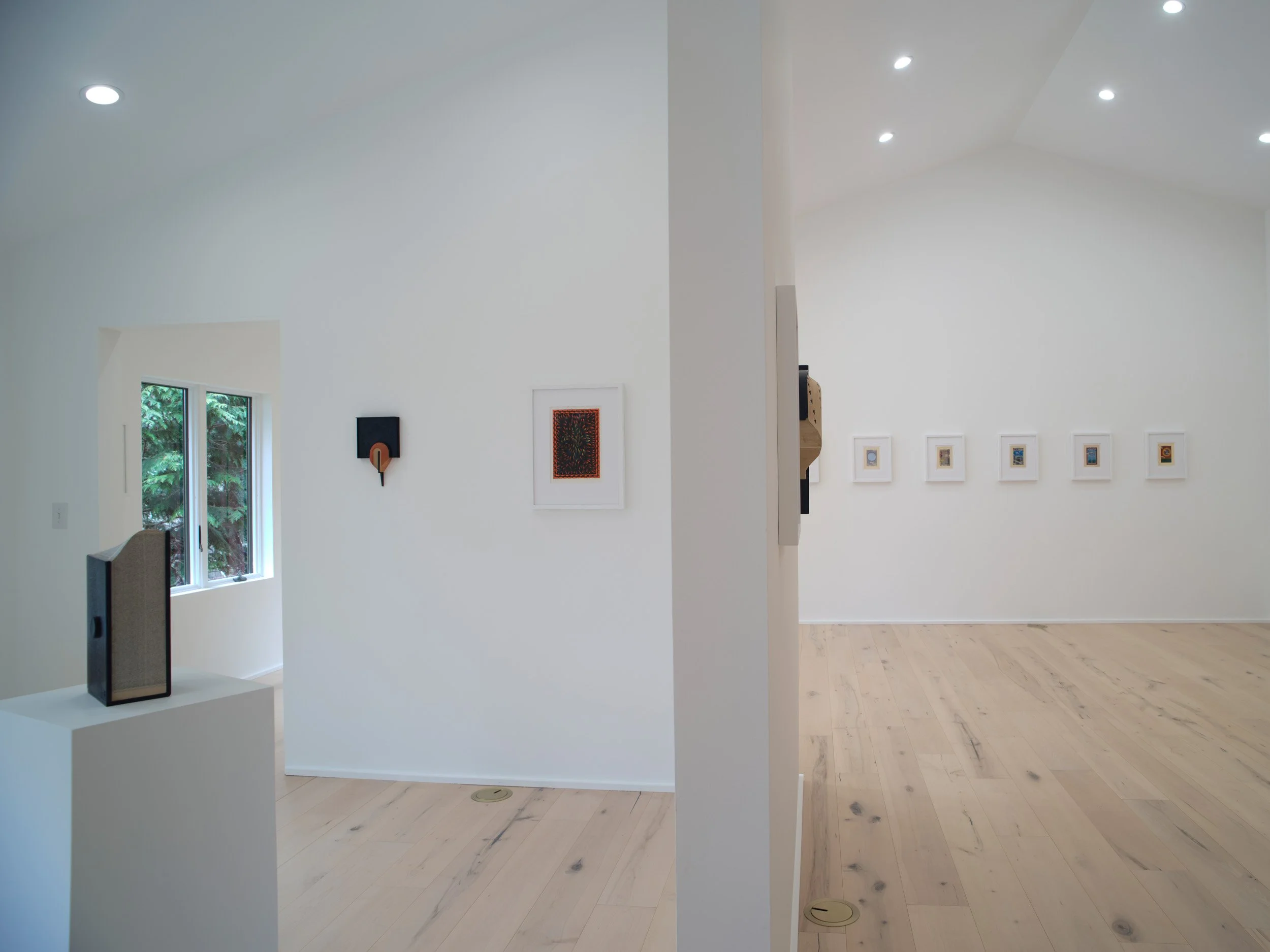
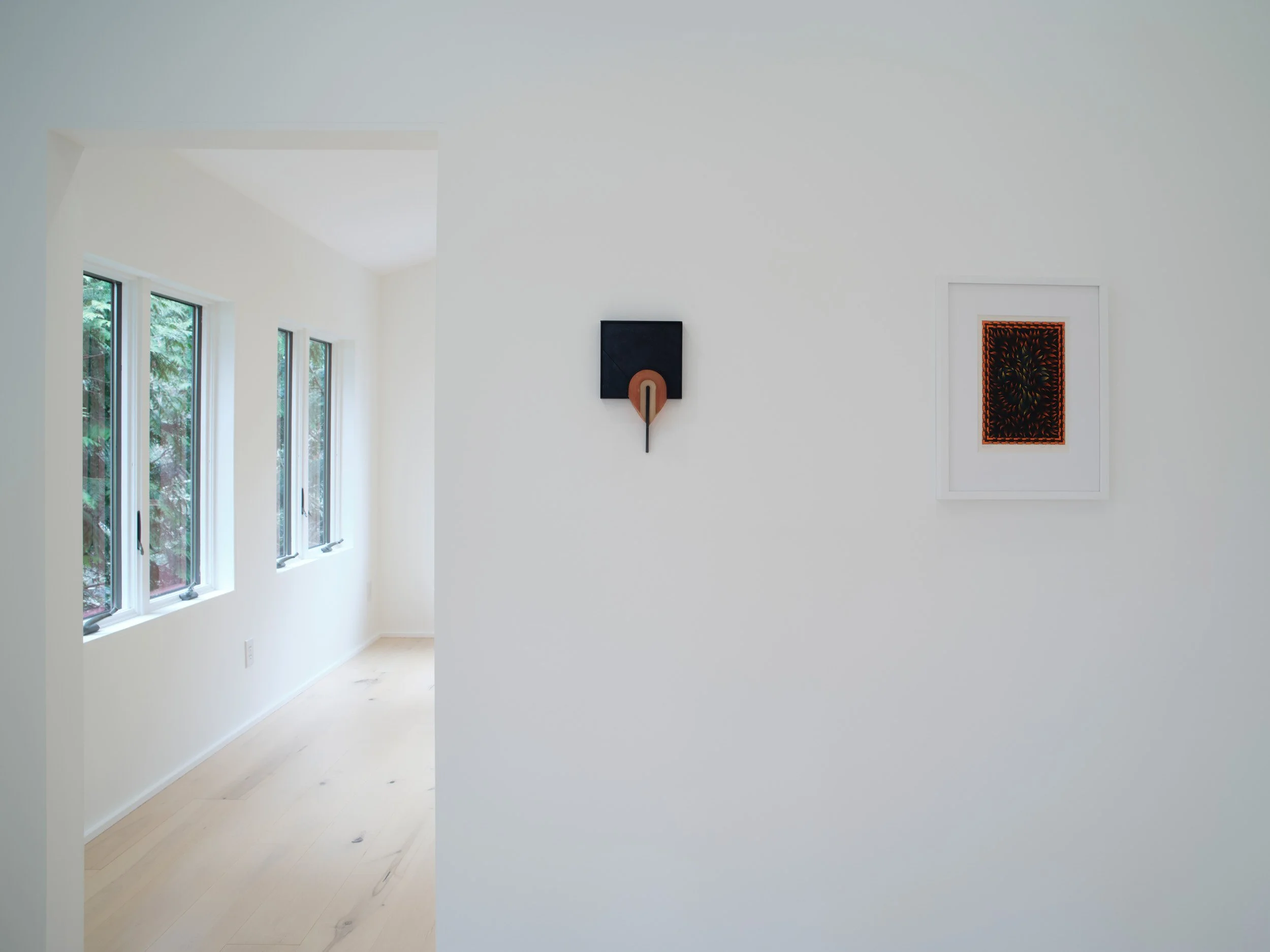
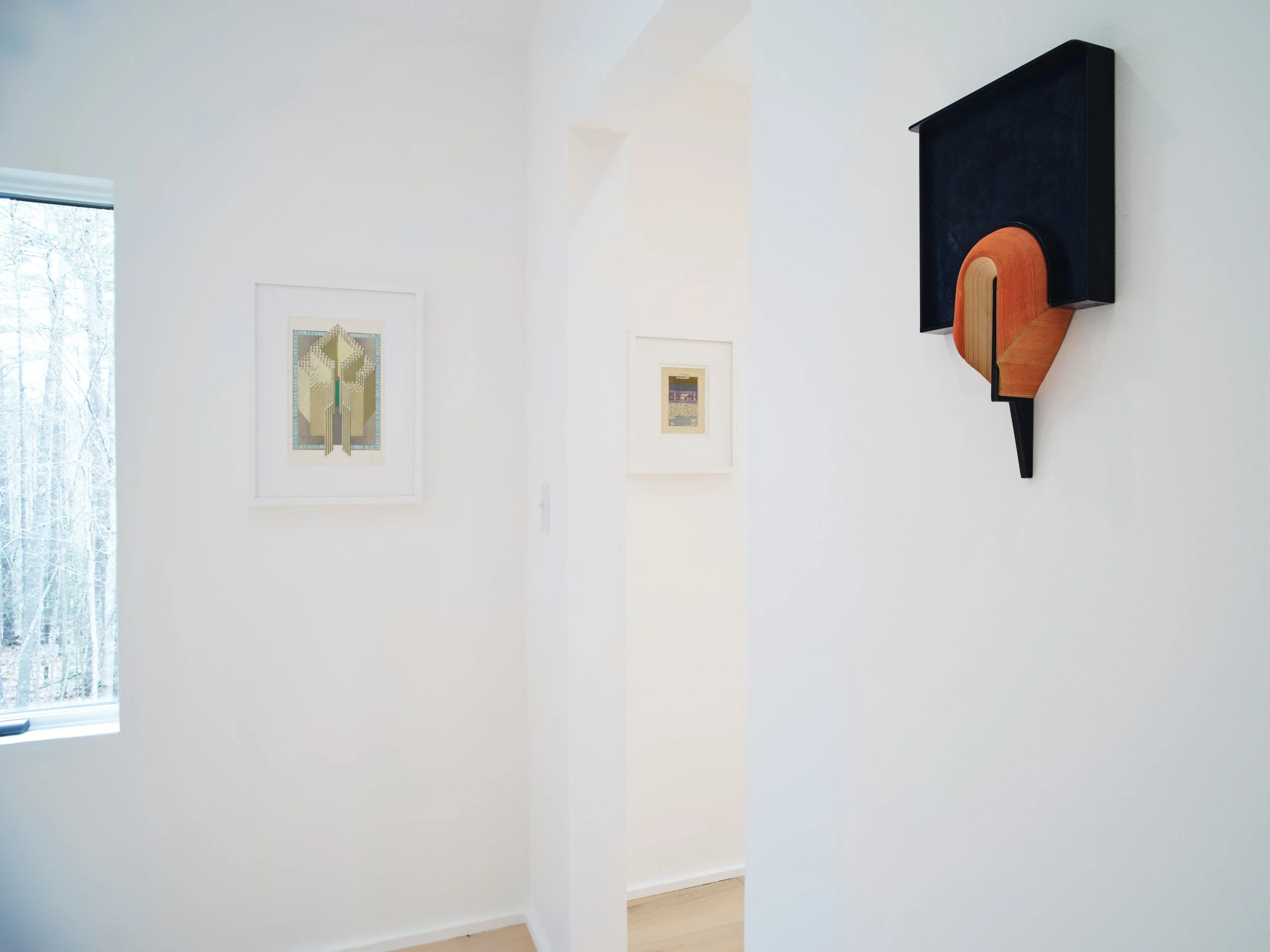
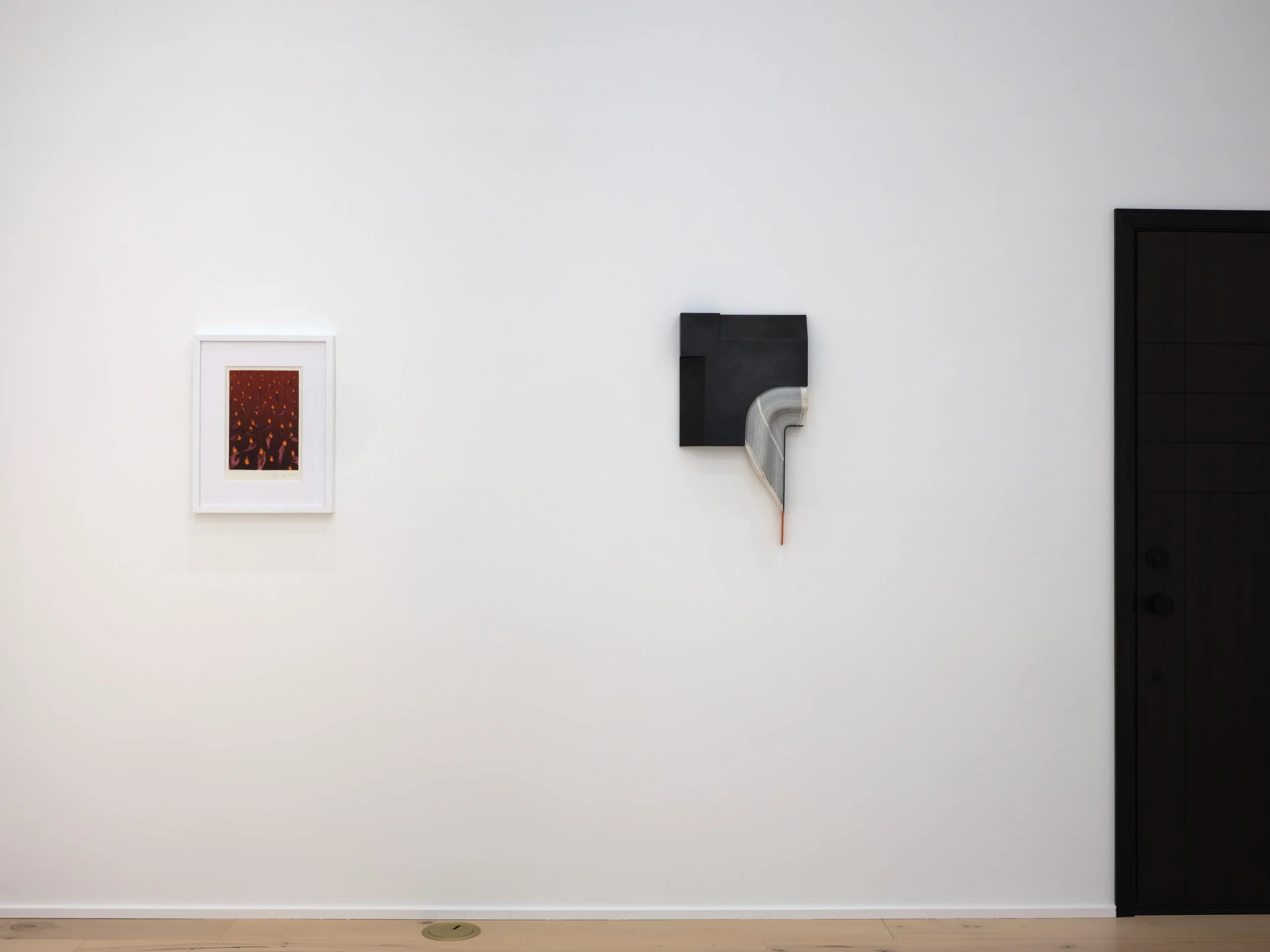
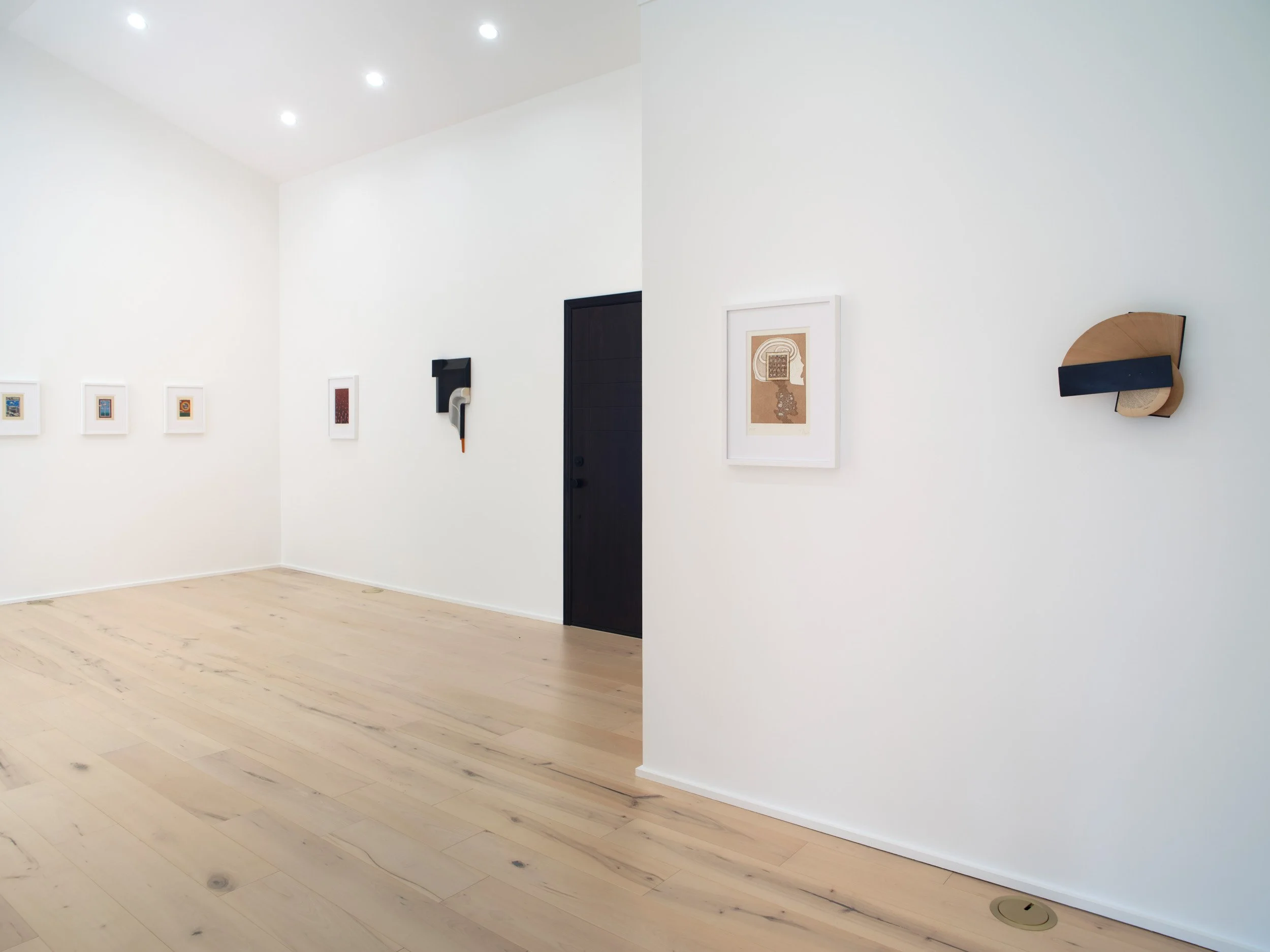
Sarah Bouchard Gallery is honored to present the work of Andrew Hayes (Asheville, NC) and Tom Phillips (London, UK) in to-morrow, the world answers everything. Each artist transforms discarded books into an affirmation of the spirit and intellect.
Tom Phillips (1937-2022) was a true polymath. A painter, poet, and composer, Phillips has exhibited worldwide. His work is in the British Museum, the Tate, New York's Museum of Modern Art, and the Bibliotheque Nationale in Paris. His books include A Humument and an illustrated translation of Dante's Inferno. He is survived by his wife, the music critic Fiona Maddocks.
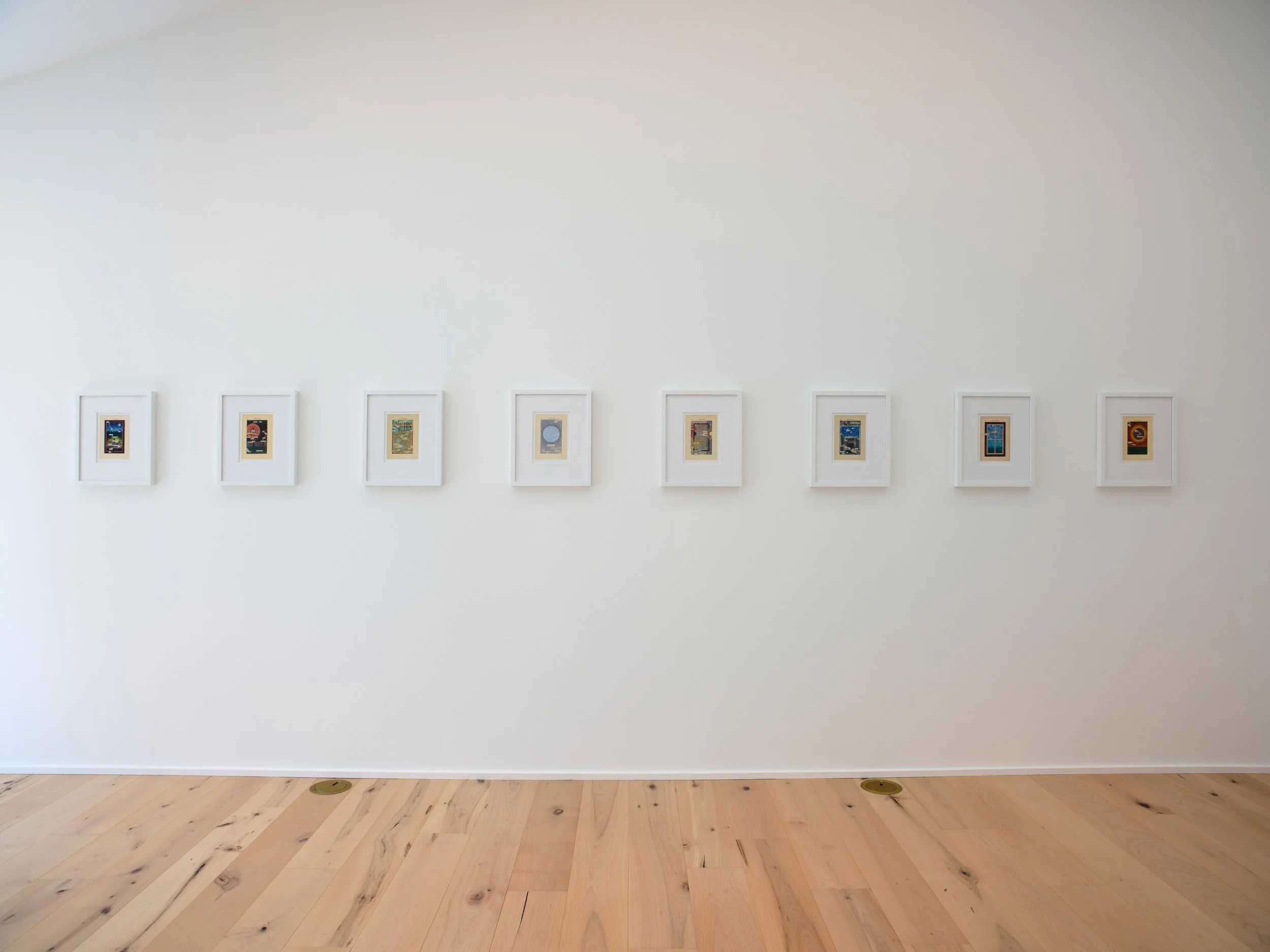
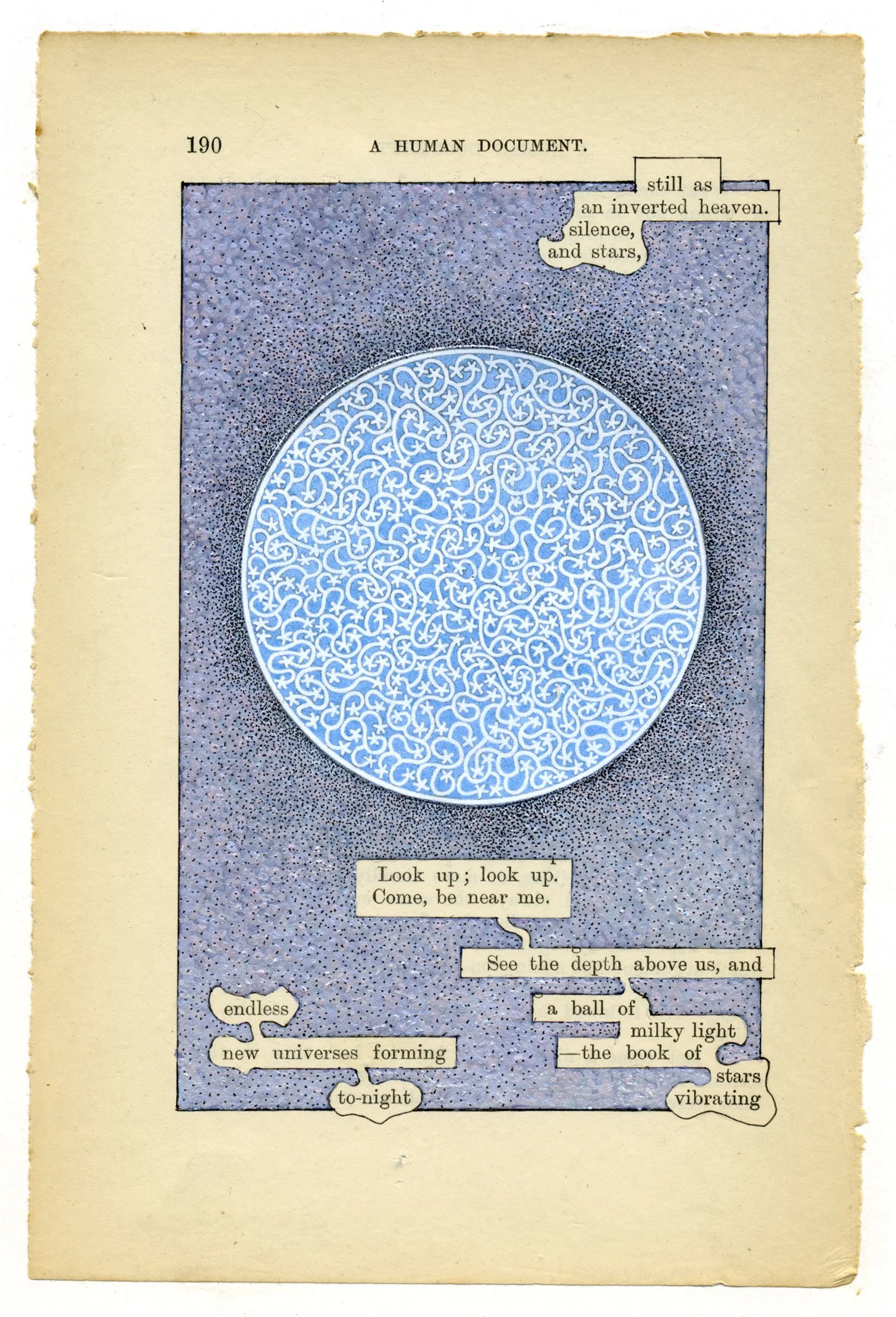
Phillips was a pivotal force in the London art scene for over six decades, his work encompassing everything from commissioned portraits of the Monty Python team to mentoring Brian Eno on the ideas that would develop into ambient and generative music. Phillips channeled his varied life experience onto the humblest of surfaces — the pages of a forgotten Victorian novel — to coax poetry and spirit out of paint, collage, and the printed word. His longest ongoing project, A Humument, began in 1966 with a self-imposed challenge to make art from the first used book he found for three pence. It would become an enduring thread in his work for the next sixty years. We are honored to present a selection of these works alongside pieces from Phillips’ stunning reinterpretation of Dante’s Inferno.
Andrew Hayes is a sculptor based in Asheville, North Carolina. He bends paper and steel to transform each material into pure visual potential. The lines and form of his work are subtle and transportive. Transcending written language, these pieces exude an ease and inner harmony that trick us into believing steel and books are natural bedfellows — destined for one another. Hayes earned his metal in the industrial welding trade and refined his technique and vision at the Penland School of Craft under the tutelage of Hoss Haley.
Both artists are in notable collections all over the world. A portion of the proceeds from the sale of Hayes’ work will support artists impacted by Hurricane Helene. The sale of Phillips’ work will support the ongoing care and preservation of his artwork and legacy.
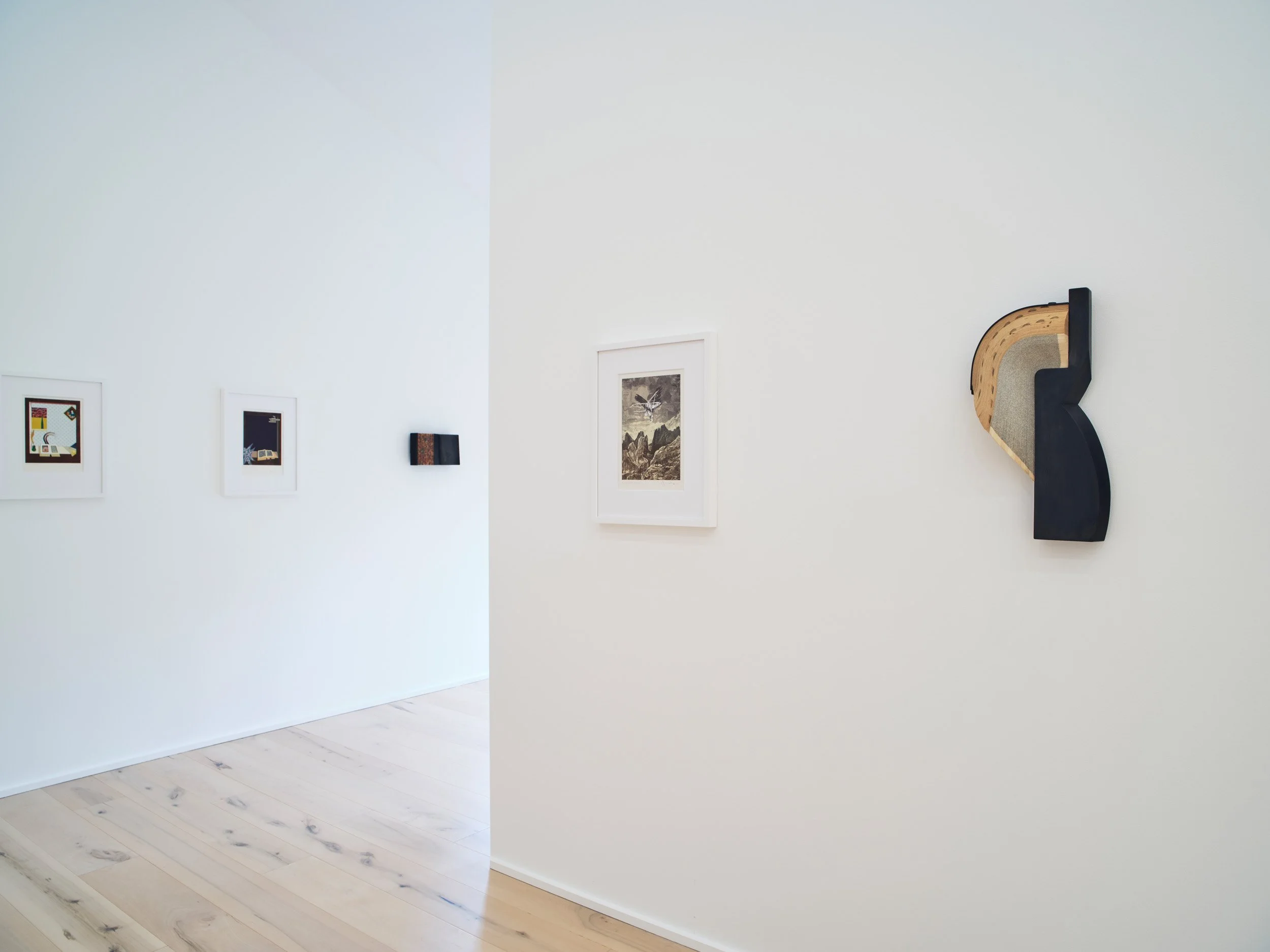
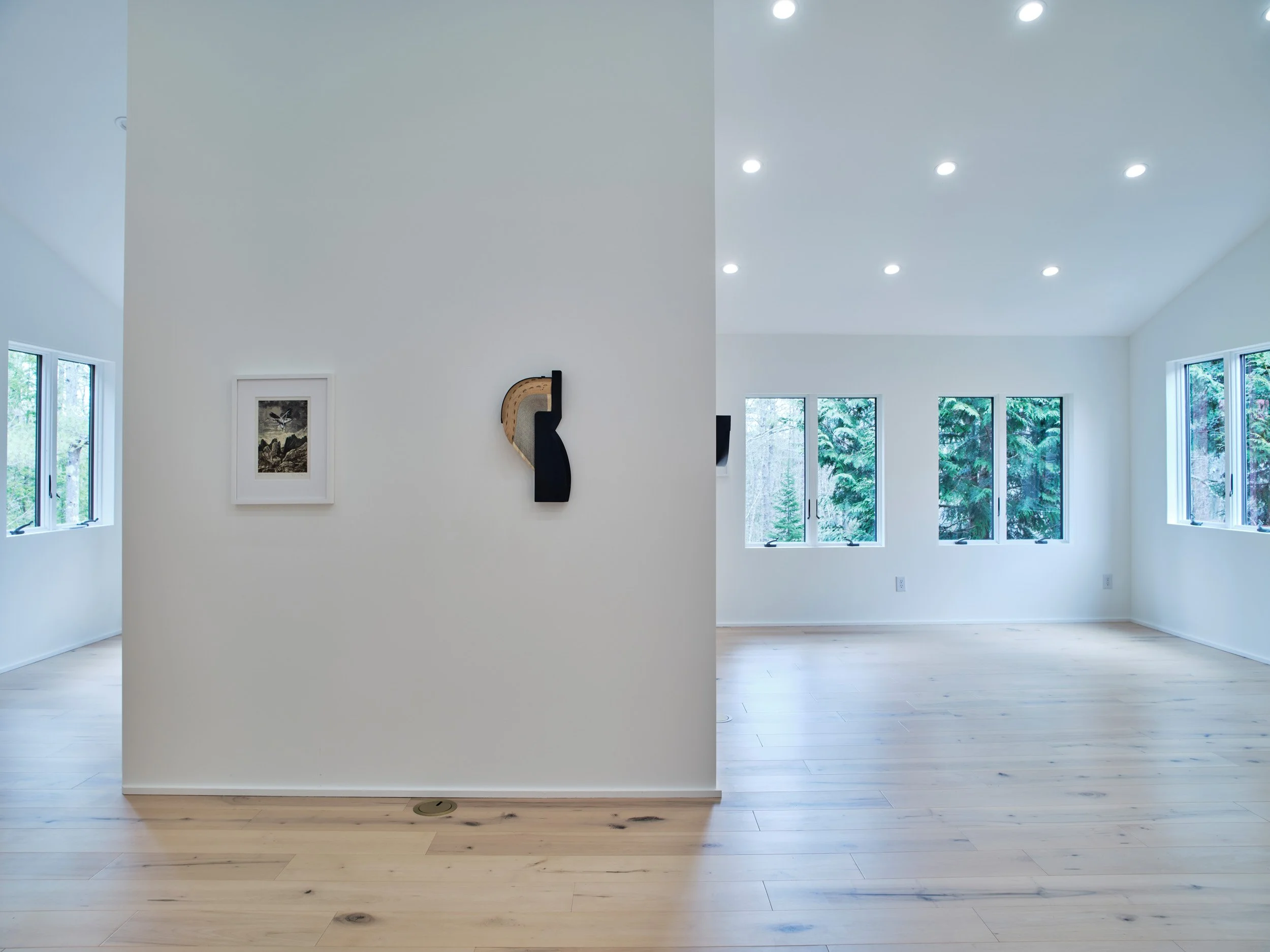
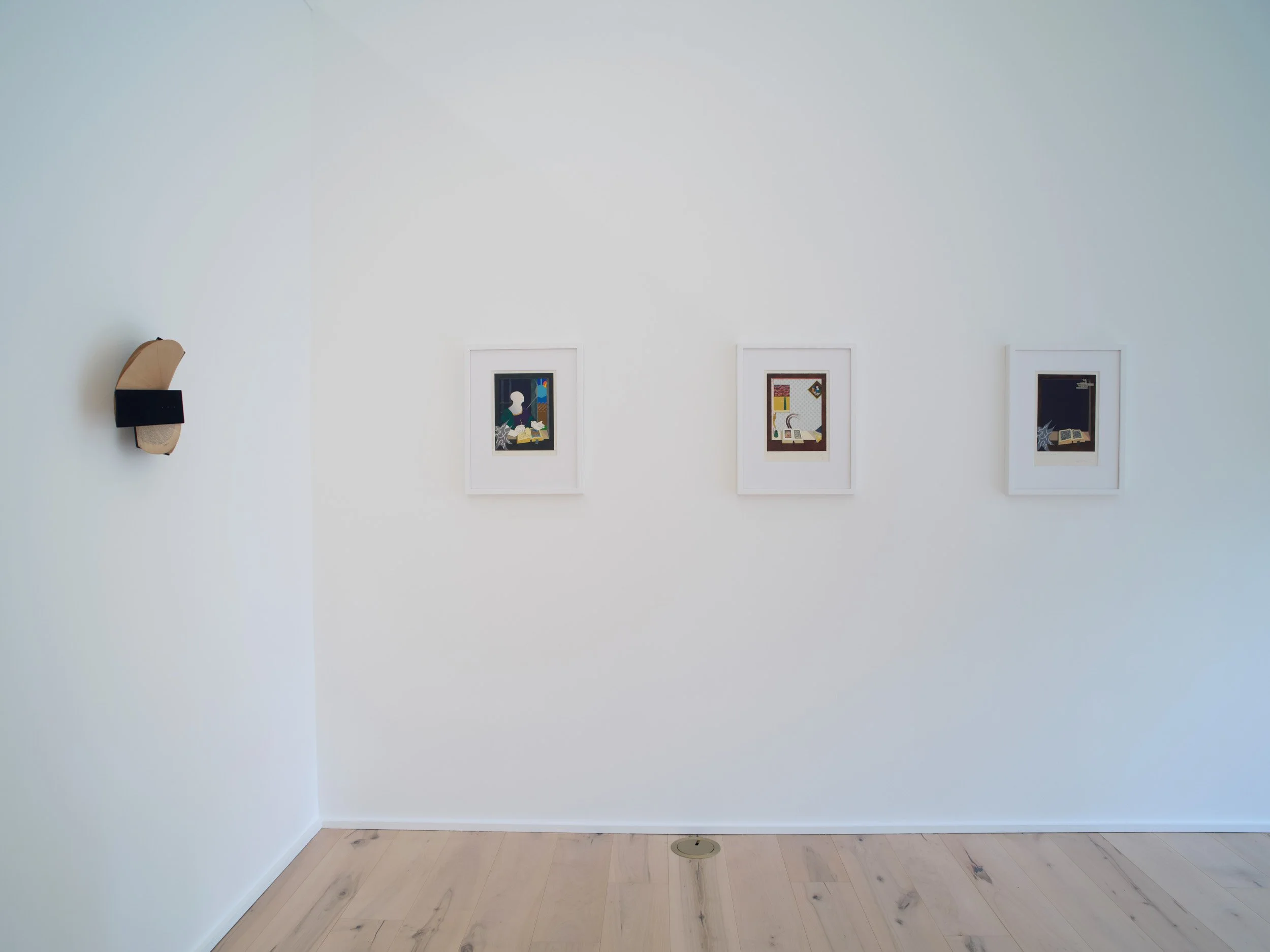
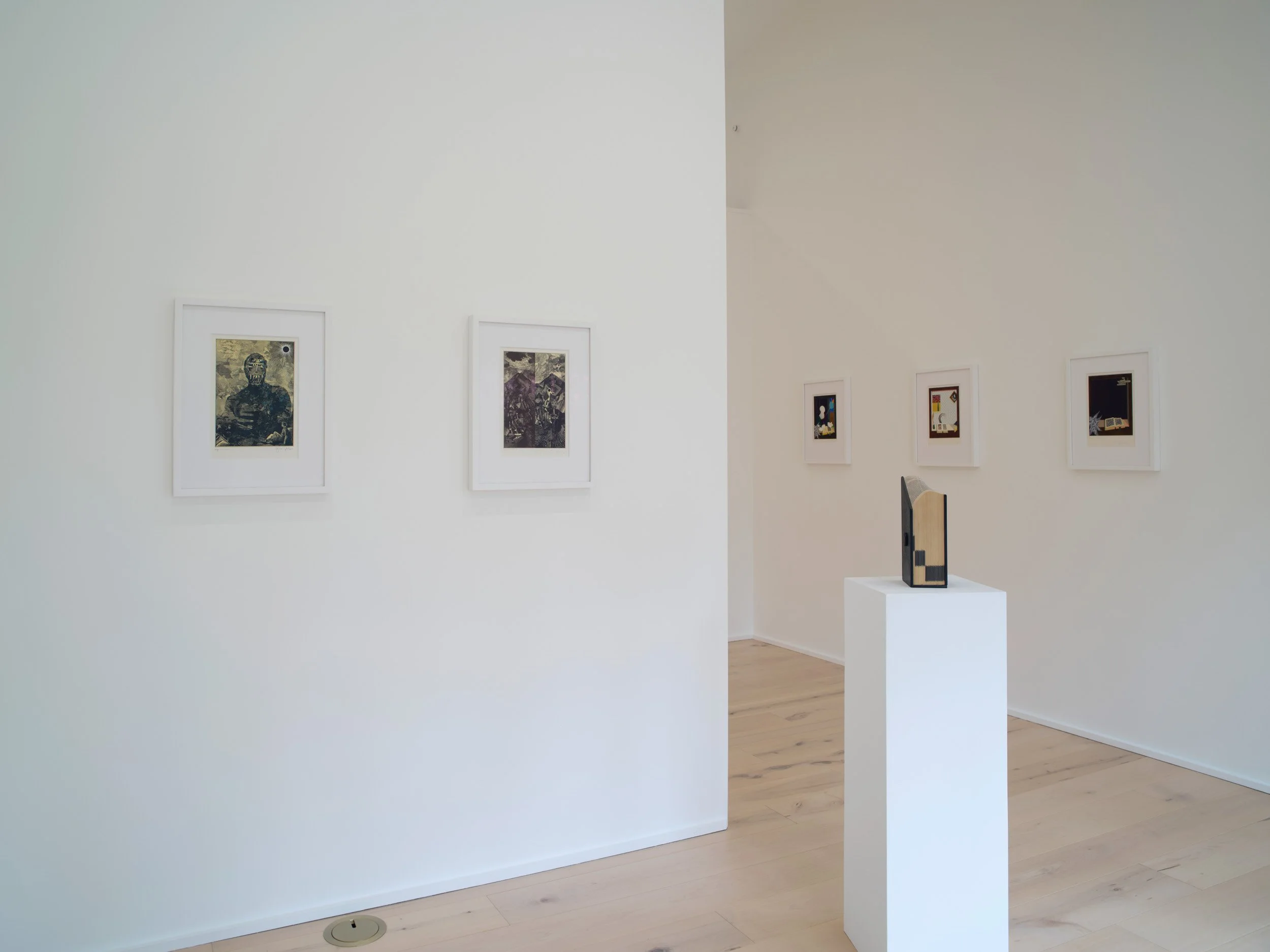
Andrew Hayes
-
Born in Tucson, AZ, Andrew Hayes has forged an artistic path that reflects both his dedication to craftsmanship and his innovative spirit. After studying sculpture at Northern Arizona University, Andrew transitioned from academia to the hands-on world of metal fabrication, immersing himself in the industrial welding trade. This experience provided him with a solid foundation in materials and techniques, fueling his desire to cultivate a distinctive artistic voice.
Andrew's journey took a transformative turn when he applied for the Core Fellowship at Penland School of Crafts. During this pivotal time, he delved into a diverse array of materials and techniques, with book-making becoming a significant element of his artistic exploration. His creativity flourished, leading to deeper conceptual and technical investigations.
In the fall of 2014, Andrew returned to Penland as an artist in residence, further refining his practice and continuing to experiment with book forms alongside his metalwork. In early 2018, he established his studio in Asheville, North Carolina, where he has since created a body of work that has garnered national recognition.
Andrew's sculptures have been exhibited widely, including notable solo exhibitions at Seager Gray Gallery, Hunterdon Art Museum in Clinton, NJ, and The Metals Museum, TN. His work is held in prominent collections, such as the Yale Art Museum, Black Mountain College, Wingate University, and The MFA in Houston, TX showcasing the impact of his artistic contributions within the contemporary art landscape. Through his blend of traditional craftsmanship and modern artistry, Andrew Hayes continues to inspire and captivate audiences across the nation.
-
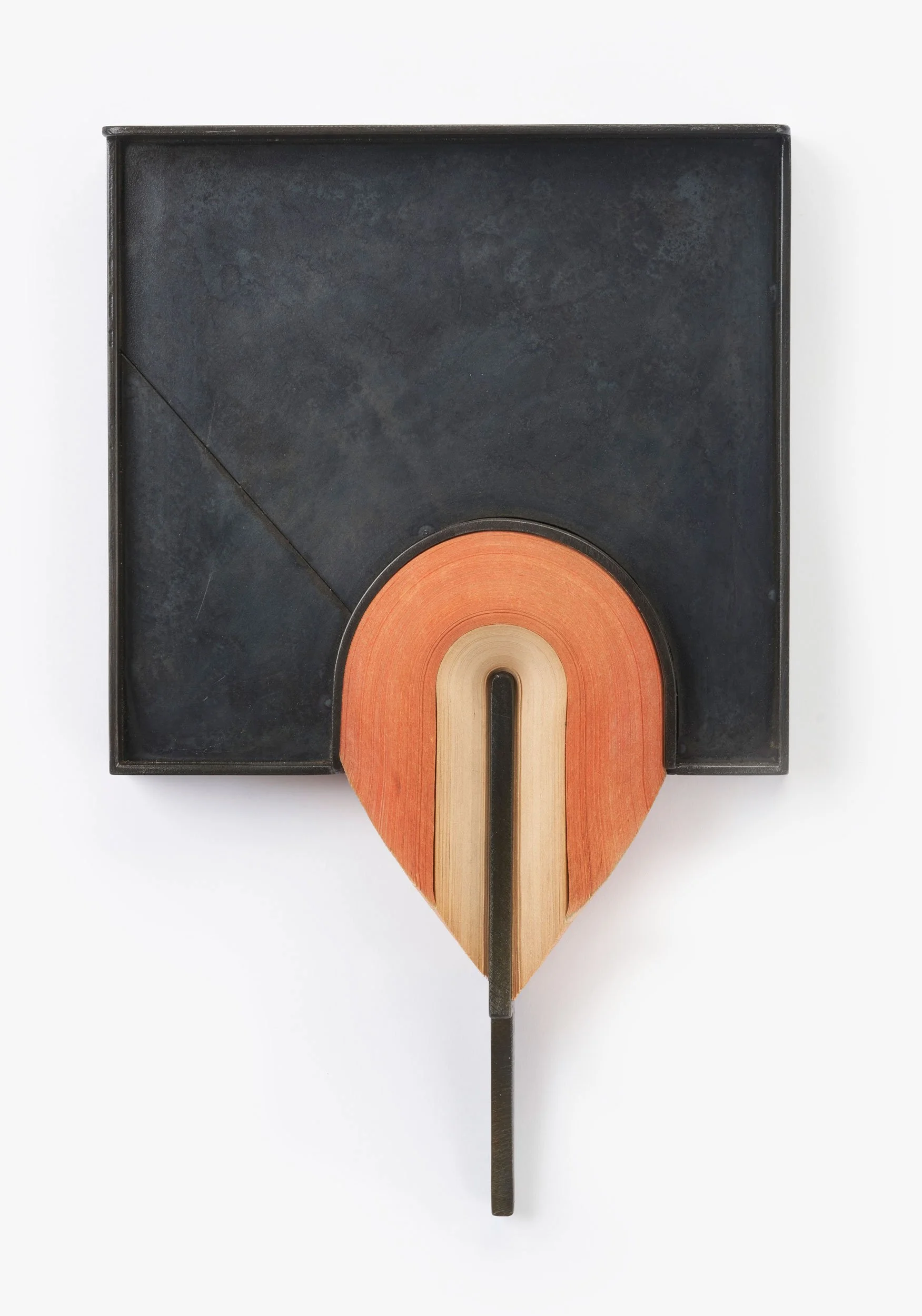
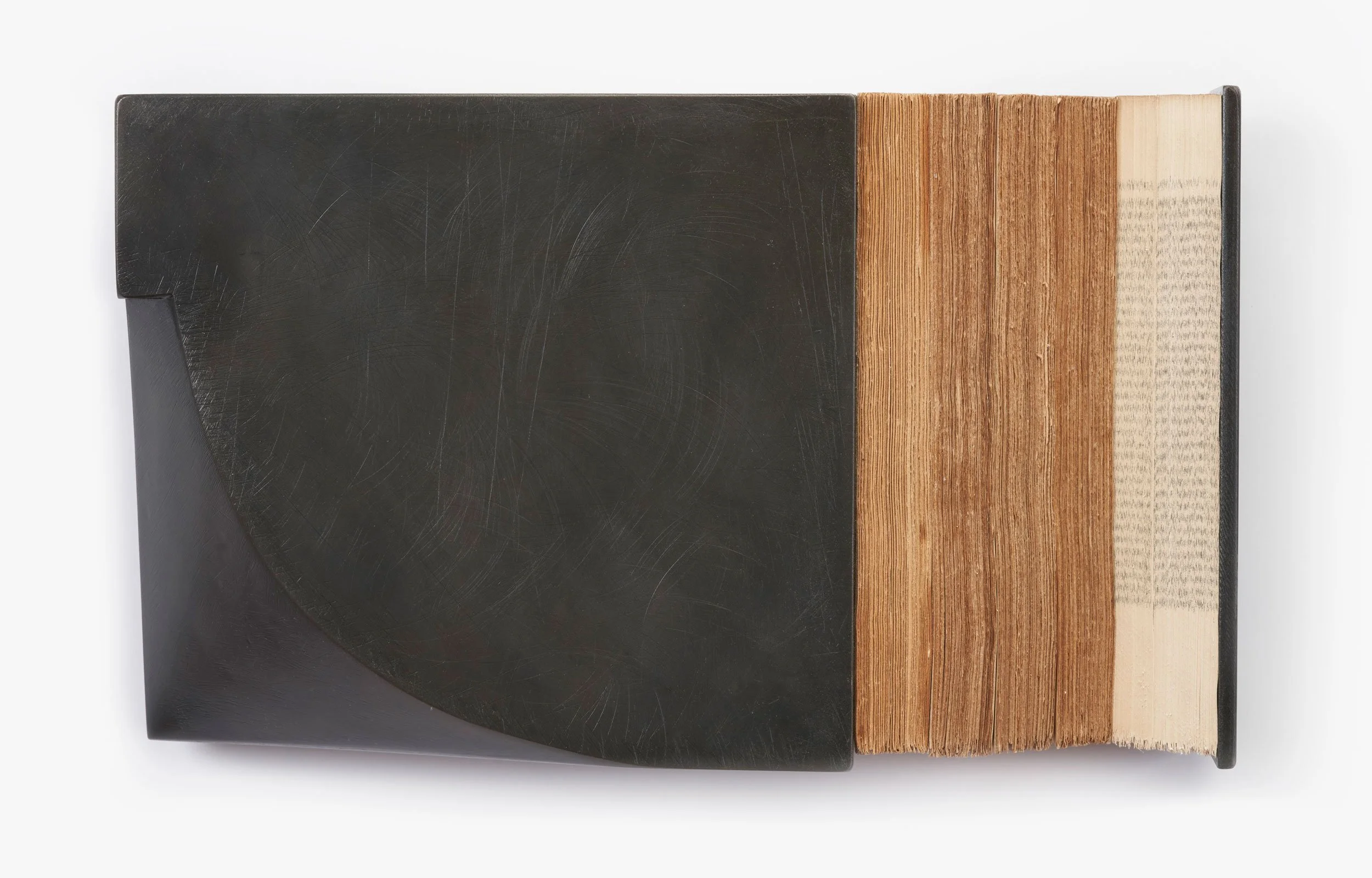
I work with book paper and steel — two materials that hold very different meanings in our daily lives. The book represents education, growth, and escape, while steel, often invisible, forms the structural backbone of our constructed environment. Through my work with these contrasting materials, I explore their meanings and discover a harmonious interplay between their flexibility, history, mass, and density.
I begin by cutting pages from old, discarded books, detaching them from their bindings. This unbound paper invites exploration and transformation into new sculptural shapes. I employ steel to provide structure and support to the delicate forms created by the loose pages. The integration of steel — a symbol of industry and architecture — into the quiet, contemplative realm of the book excites me. As I brace the book paper with steel, the latter becomes graceful, amplifying its subtle colors and surface textures.
In this process, I rediscover the poetic possibilities of both materials. Together, book paper and steel create something new and unified — a reimagining of the book that takes on a mysterious life beyond the shelf.
Tom Phillips
-
Tom Phillips was born in South London in 1937. Alongside his regular studies at Oxford, he attended drawing classes and lectures on Renaissance iconography. He then enrolled at the Camberwell School of Art, in the neighborhood where he lived and worked nearly all his life — taught by Frank Auerbach and, later, Charles Howard. He would go on to become an accomplished artist, musician, writer, scholar, curator, and teacher.
Phillips's first one-man exhibition was a sold-out show at the AIA Gallery in London in 1965. Four years later, he won a John Moores prize. Even so, in the late 1960s, Phillips was better known for his musical activities (both classical and with Cornelius Cardew's Scratch Orchestra), including his own compositions performed by the pianist John Tilbury.
During Phillips’ teaching career at Ipswich, Bath, and Wolverhampton art schools, he introduced Brian Eno, his best student, to the ideas that helped Eno develop ambient and generative music. Philips created concrete poetry for John Cage and developed Irma: The Score, an entire opera extracted from the pages of his most enduring work, A Humument. A new production of Irma, directed by Netia Jones, premiered at the South London Gallery in September 2017.
Tom Phillips’ works are now in specialist collections across the world, including the Sackner Archive of Concrete and Visual Poetry (University of Iowa Library), the Palazzo Butera (Palermo), National Gallery of Australia (Canberra), National Art Library (V&A, London), and the Ashmolean Museum, with an archive of his papers in the Bodleian Library (both Oxford).
-
A Humument began in 1966 when artist Tom Phillips set himself a task: to find a second-hand book for threepence and alter every page by painting, collage, and cut-up techniques to create an entirely new version. The book he found was an 1892 Victorian obscurity, A Human Document, by W.H. Mallock. Phillips transformed it into A Humument. The first version was printed by the Tetrad press in 1973, and Phillips continued to transform, revise, and develop it right up to the end of his life. The "final version" was published in 2016, but Phillips returned to the work and was underway on a new version at the time of his death in 2022.
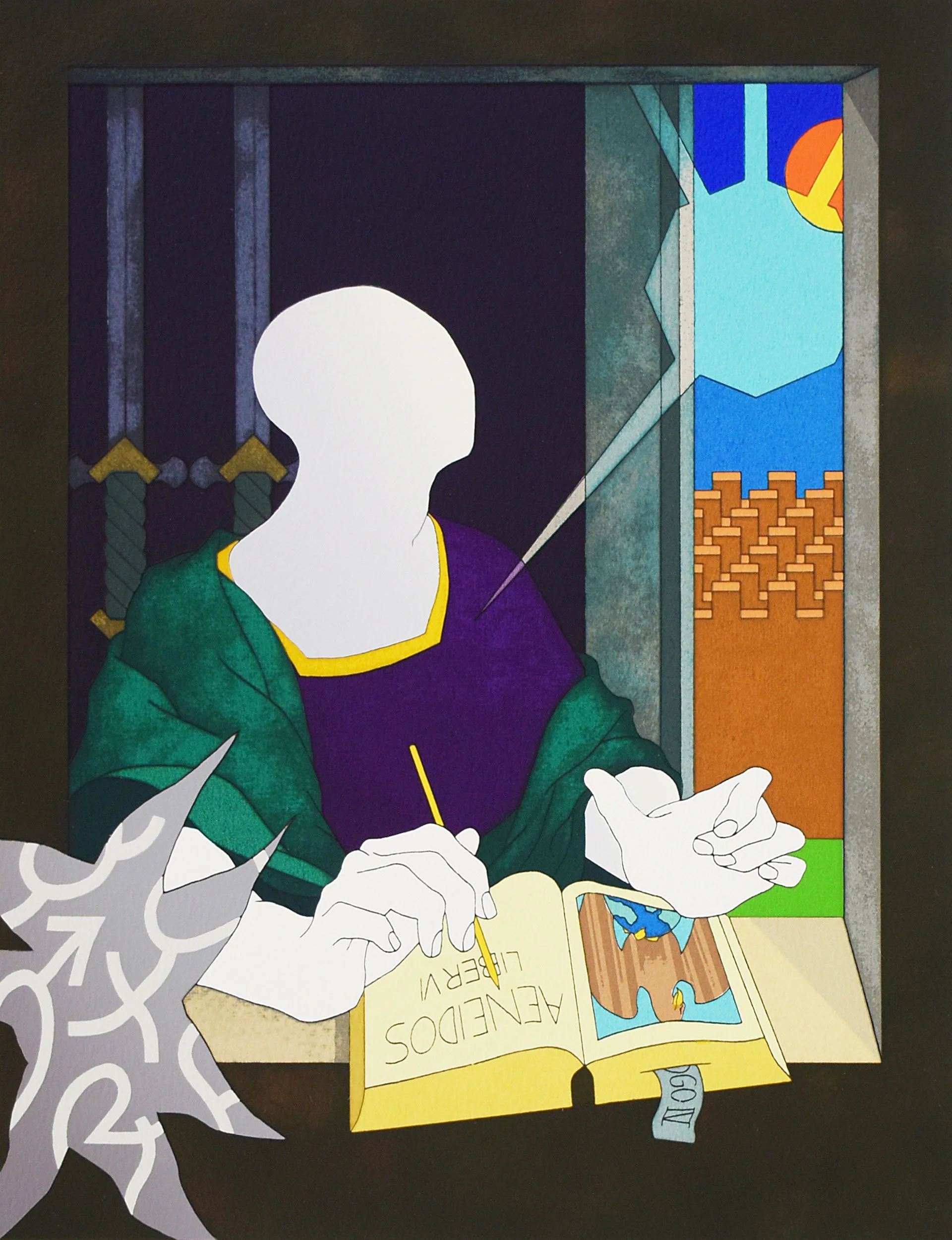
Regarding the interpretation of Dante’s Inferno, Phillips intended that his illustrations give a visual commentary to Dante's texts. As he writes in his notebook, “The range of imagery matches Dante in breath, encompassing everything from Greek mythology to the Berlin Wall, from scriptural reference to a scene in an abattoir, and from alchemical signs to lavatory graffiti. And the range of modes of expression is similarly wide, including, as it does, early calligraphy, collage, golden section drawings, maps, dragons, doctored photographs, references to other past artworks, and specially programmed computer-generated graphics.
I have tried in this present version of Dante's Inferno which I have translated and illustrated to make the book a container for the energy usually expended on large scale paintings...” The artist thus tries to reveal the artist in the poet and the poet helps to uncover/release the poet in the artist.
Selected Works
![Andrew Hayes
Cloister
11.5 x 7.5 x 2 inches
Fabricated steel and book paper
2025 [sold]](https://images.squarespace-cdn.com/content/v1/69df952ced2431242d7919b8/bee5a269-4ddc-4cf0-a10e-3f1e4500aa63/AH_Cloister_11x.5x7.5x2_2_web.jpg)
Andrew Hayes
Cloister
11.5 x 7.5 x 2 inches
Fabricated steel and book paper
2025 [sold]
Andrew Hayes
Crest
15 x 9 x 4 inches
Fabricated steel and book paper
2025
![Andrew Hayes
Scarp
16 x 7.5 x 3 inches
Fabricated steel and book paper
2025 [sold]](https://images.squarespace-cdn.com/content/v1/69df952ced2431242d7919b8/2e03d8f2-0100-46e3-a1e2-73737e37cf50/AndrewHayes_Scarp.jpg)
Andrew Hayes
Scarp
16 x 7.5 x 3 inches
Fabricated steel and book paper
2025 [sold]
Tom Phillips
Canto II/1: Virgil in his Study
20.25 x 16 (framed)
Signed, limited edition silkscreen
1983
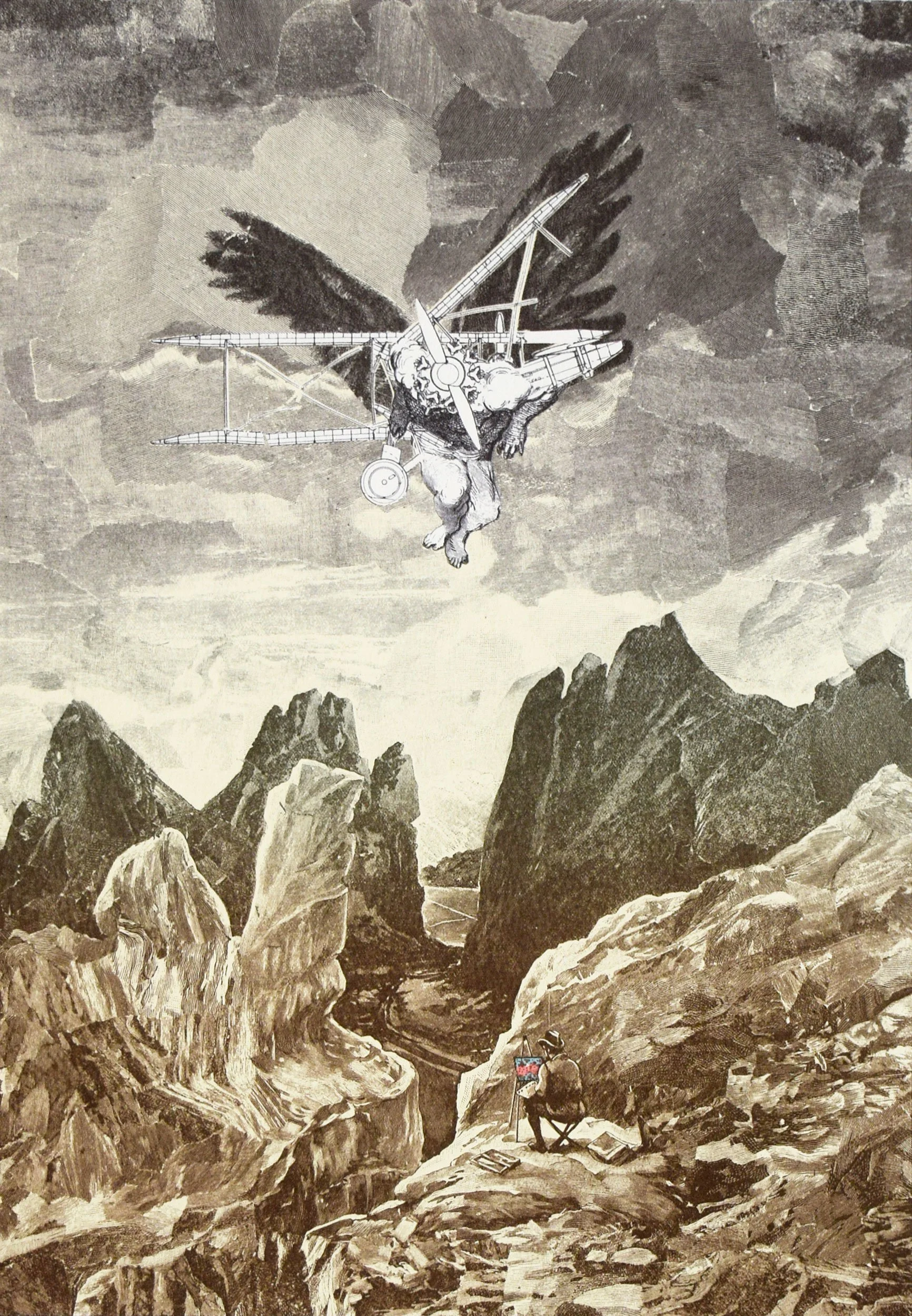
Tom Phillips
Canto XXIX/1: Flying Man
20.5 x 16 (framed)
Signed, limited edition silkscreen
1983
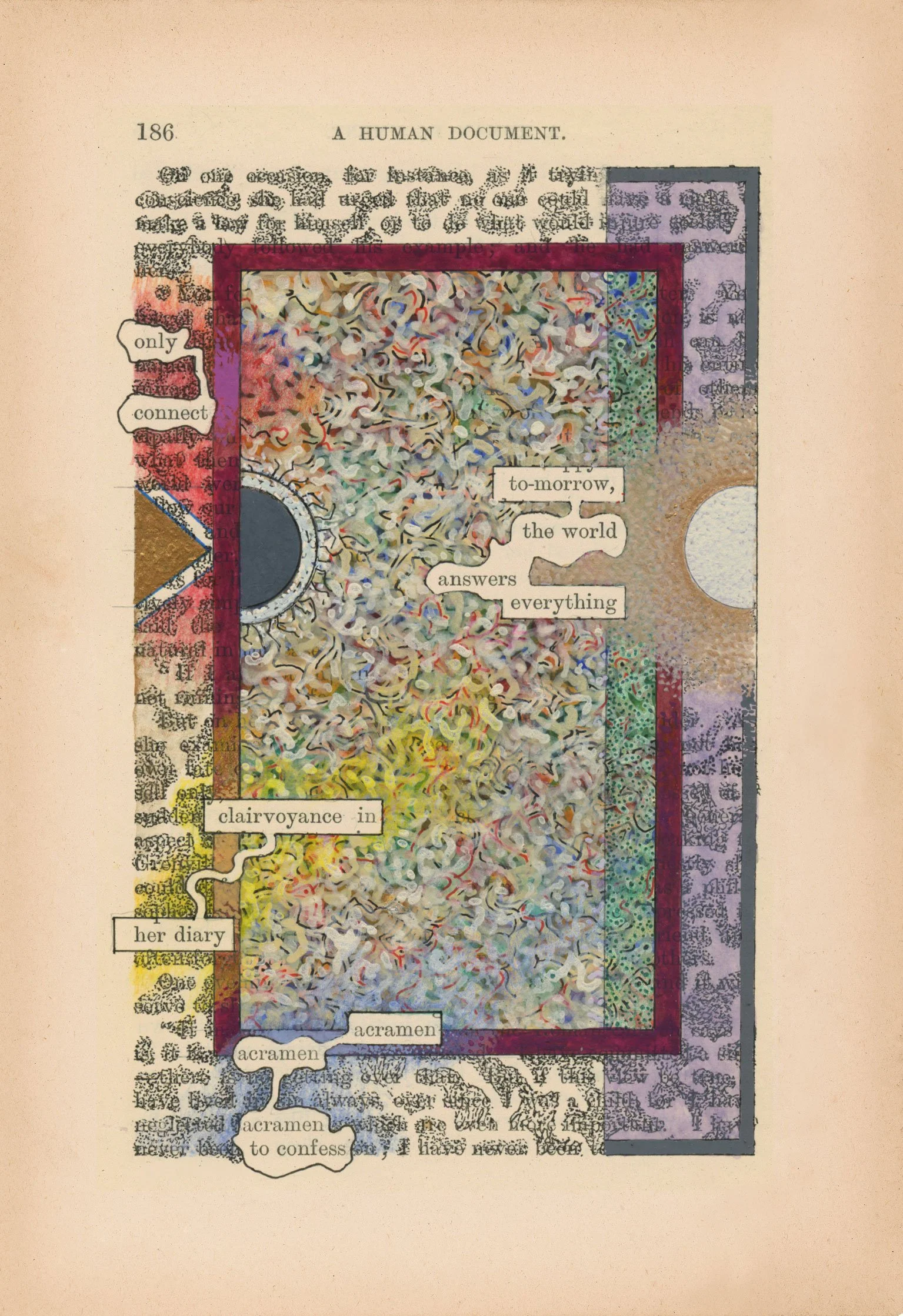
Tom Phillips
Clairvoyance (p. 186 A Humument)
15.75 x 13.25 (framed)
Signed, limited edition silkscreen
2019
Press
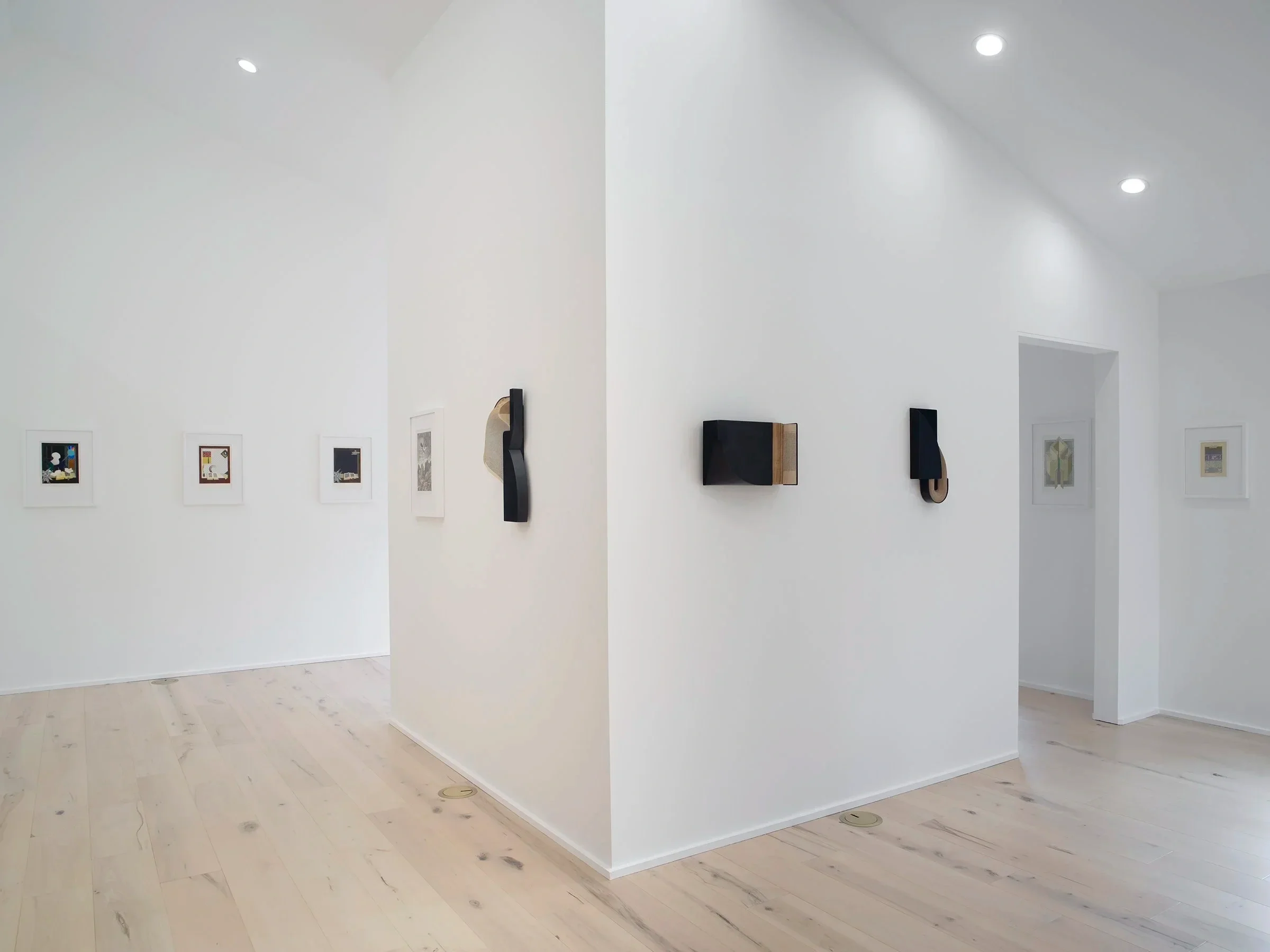
To-morrow, the world answers everything
Andrew Hayes + Tom Phillips
April 12 – May 18, 2025
Installation photography © Luc Demers