

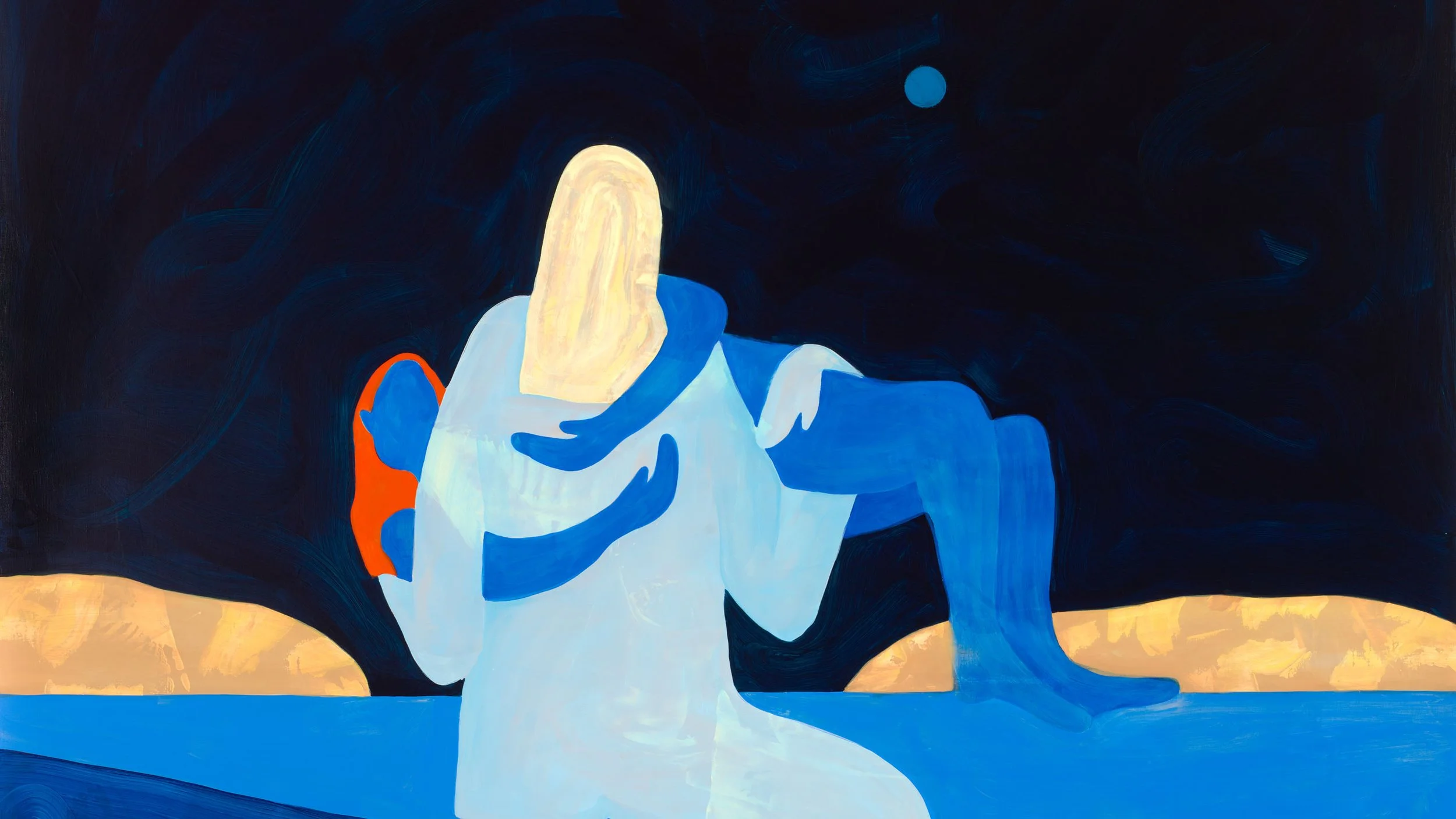
james parker foley
Portland, ME
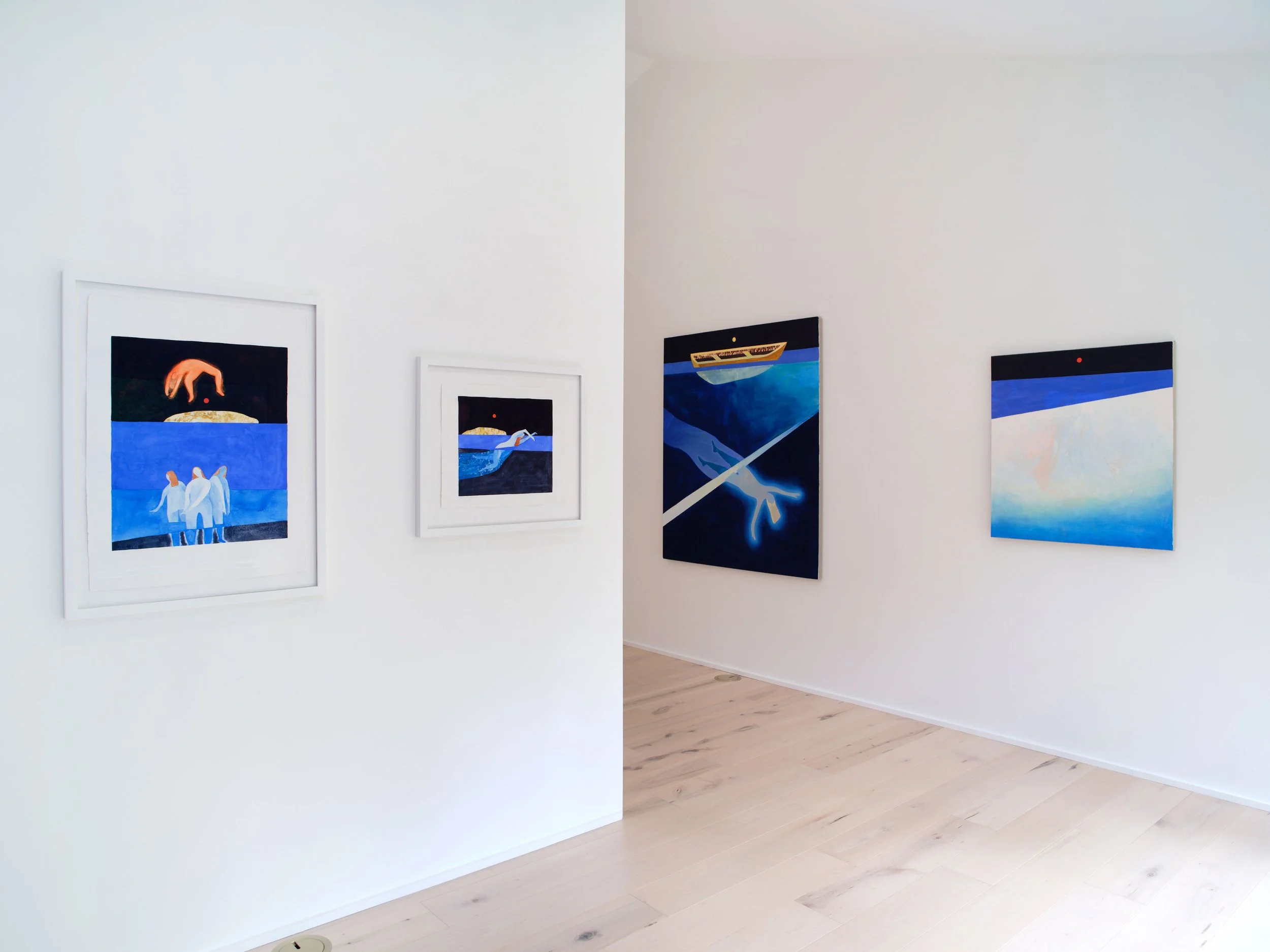
James Parker Foley (b. 1993) is an oil painter known for his brilliant blue figures floating, swimming, and wading through surreal landscapes. He has exhibited extensively in the Northeast at venues such as Sarah Bouchard Gallery, New System Exhibitions, the Portland Museum of Art, Spring/Break Art Fair New York, and Transmitter. His work has been featured in New American Paintings, Maine Magazine, Down East, and the Portland Press Herald. Foley’s work can be found in significant public and private collections, including nine works in the collection of the Bowdoin College Museum of Art.
James earned his M.F.A. at Maine College of Art in 2020 and his B.A. in Environmental Humanities at Sterling College in Vermont in 2015. He has completed residencies on Monhegan Island (2021), Jx Farms (2022), Monson Arts (2023), and Hewnoaks (2024, 2025). He received a Springboard Grant from the Maine Arts Commission and a 2026 Kindling Fund Grant to support his ongoing project, Ultraviolet Arts, which hosts a residency for trans artists. James is a gay transsexual whose practice is grounded within an intimate community of queer artists in Portland, Maine. He is represented by Sarah Bouchard Gallery.
Selected Works
![Dory Beneath Suspended Woman
60 x 52 inches
Oil on linen
2023 [oil paintings]](https://images.squarespace-cdn.com/content/v1/69df952ced2431242d7919b8/c210d0b1-2dd7-4aff-82c9-51ef22fea254/JamesParkerFoley_DoryBeneathSuspendedWoman_o-l.jpg)
Dory Beneath Suspended Woman
60 x 52 inches
Oil on linen
2023 [oil paintings]
![Getting Carried Away
60 x 52 inches
Oil on linen
2023 [oil paintings]](https://images.squarespace-cdn.com/content/v1/69df952ced2431242d7919b8/d072b0fa-4cd3-4174-96d7-3df879774150/JamesParkerFoley_GettingCarriedAway_o-l.jpg)
Getting Carried Away
60 x 52 inches
Oil on linen
2023 [oil paintings]
![As Above, So Below
60 x 52 inches
Oil on linen
2023 [oil paintings]](https://images.squarespace-cdn.com/content/v1/69df952ced2431242d7919b8/c0fb7017-2b35-4b5f-8af1-16ca491b3418/JamesParkerFoley_AsAboveSoBelow_o-l.jpg)
As Above, So Below
60 x 52 inches
Oil on linen
2023 [oil paintings]
![Approaching Infinite Density
72 x 60 inches
Oil on linen
2023 [oil paintings]](https://images.squarespace-cdn.com/content/v1/69df952ced2431242d7919b8/f5bc42ad-157a-40f7-a295-1f1a91913a89/JamesParkerFoley_ApproachingInfiniteDensity_o-l.jpg)
Approaching Infinite Density
72 x 60 inches
Oil on linen
2023 [oil paintings]
![Wader with Harness
35.5 x 27.5 inches
Oil on linen
2024 [oil paintings]](https://images.squarespace-cdn.com/content/v1/69df952ced2431242d7919b8/c80bb332-c8a3-4af9-ba54-55b03db31657/JamesParkerFoley_WaderWithHarness_o-l.jpg)
Wader with Harness
35.5 x 27.5 inches
Oil on linen
2024 [oil paintings]
![Heatwave
35.5 x 27.5 inches
Oil on linen
2024 [oil paintings]](https://images.squarespace-cdn.com/content/v1/69df952ced2431242d7919b8/66a95fe8-bf46-4d27-b05a-8c9772145d75/JamesParkerFoley_HeatWave_o-l.jpg)
Heatwave
35.5 x 27.5 inches
Oil on linen
2024 [oil paintings]
![Head Above Water
35.5 x 27.5 inches
Oil on linen
2024 [oil paintings]](https://images.squarespace-cdn.com/content/v1/69df952ced2431242d7919b8/6a81961a-0063-4506-9045-6b0bcd4af9b7/JamesParkerFoley_HeadAboveWater_o-l.jpg)
Head Above Water
35.5 x 27.5 inches
Oil on linen
2024 [oil paintings]
![Purse Code
14 x 17 inches
Colored pencil on paper
2024 [works on paper]](https://images.squarespace-cdn.com/content/v1/69df952ced2431242d7919b8/6e074d65-feb5-4829-ad8b-805ae885a41e/JamesParkerFoley_PurseCode_2.jpg)
Purse Code
14 x 17 inches
Colored pencil on paper
2024 [works on paper]
![Head Above Water (no. 2)
14 x 11 inches
Colored pencil on paper
2024 [works on paper]](https://images.squarespace-cdn.com/content/v1/69df952ced2431242d7919b8/432dec77-fdd0-4c67-a463-276855970d44/JamesParkerFoley_HeadAboveWater2_paper.jpg)
Head Above Water (no. 2)
14 x 11 inches
Colored pencil on paper
2024 [works on paper]
![Beyond Two Hills (no. 2)
10 x 8 inches
Gouache on paper
2024 [works on paper]](https://images.squarespace-cdn.com/content/v1/69df952ced2431242d7919b8/2780226d-7d97-401d-892f-db9b7015a7e7/JamesParkerFoley_BeyondTwoHills2.jpg)
Beyond Two Hills (no. 2)
10 x 8 inches
Gouache on paper
2024 [works on paper]
![Eclipse Above Two Stones
10 x 8 inches
Gouache & graphite on paper
2024 [works on paper]](https://images.squarespace-cdn.com/content/v1/69df952ced2431242d7919b8/1fcad020-6a63-4bfd-b568-b3c7e999db25/JamesParkerFoley_EclipseAboveTwoStones.jpg)
Eclipse Above Two Stones
10 x 8 inches
Gouache & graphite on paper
2024 [works on paper]
![Beyond Two Hills (no. 3)
10 x 8 inches
Gouache on paper
2024 [works on paper]](https://images.squarespace-cdn.com/content/v1/69df952ced2431242d7919b8/3afaa132-0cc0-46db-9cce-01b7c85c24b9/JamesParkerFoley_BeyondTwoHills3.jpg)
Beyond Two Hills (no. 3)
10 x 8 inches
Gouache on paper
2024 [works on paper]
![Dog Night (no. 1)
9 x 8.5 inches
Graphite on paper
2022 [works on paper]](https://images.squarespace-cdn.com/content/v1/69df952ced2431242d7919b8/dc3e3e33-6fb8-476a-851f-8e1b5ece0474/JamesParkerFoley_DogNight1.jpg)
Dog Night (no. 1)
9 x 8.5 inches
Graphite on paper
2022 [works on paper]
![Dog Night (no. 2)
9 x 8.5 inches
Graphite on paper
2022 [works on paper]](https://images.squarespace-cdn.com/content/v1/69df952ced2431242d7919b8/5a380799-62a4-4b30-a433-f49881255747/JamesParkerFoley_DogNight2_paper.jpg)
Dog Night (no. 2)
9 x 8.5 inches
Graphite on paper
2022 [works on paper]
![Dog Night (no. 4)
9 x 8.5 inches
Graphite on paper
2022 [works on paper]](https://images.squarespace-cdn.com/content/v1/69df952ced2431242d7919b8/102548ab-252f-4777-bb39-aa822f219391/JamesParkerFoley_DogNight4_paper_1.jpg)
Dog Night (no. 4)
9 x 8.5 inches
Graphite on paper
2022 [works on paper]
exhibits
-
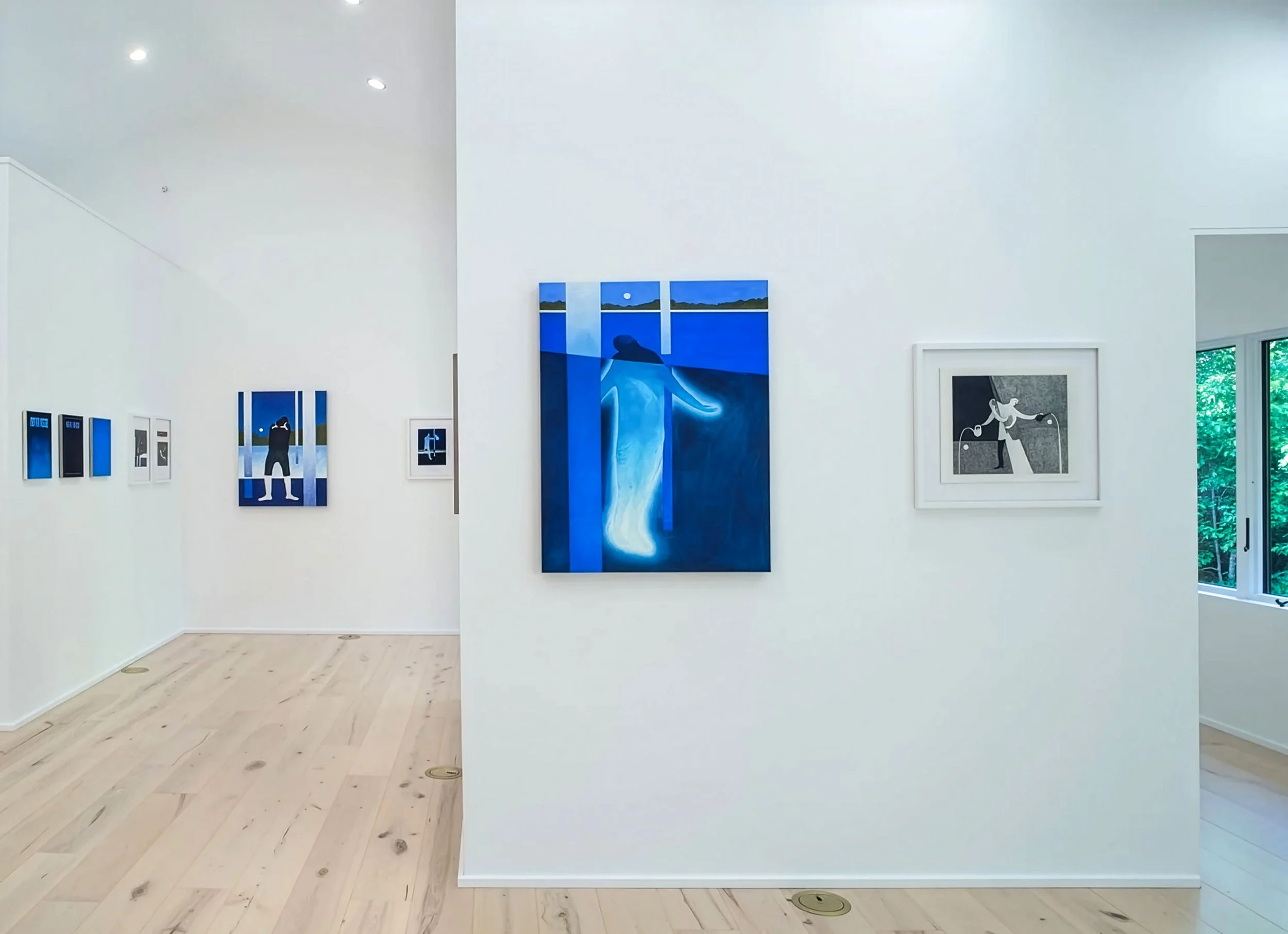
A Cruising Guide to the Maine Coast
James Parker Foley
July 5 – August 5, 2025 [link:/a-cruising-guide-to-the-maine-coast] -
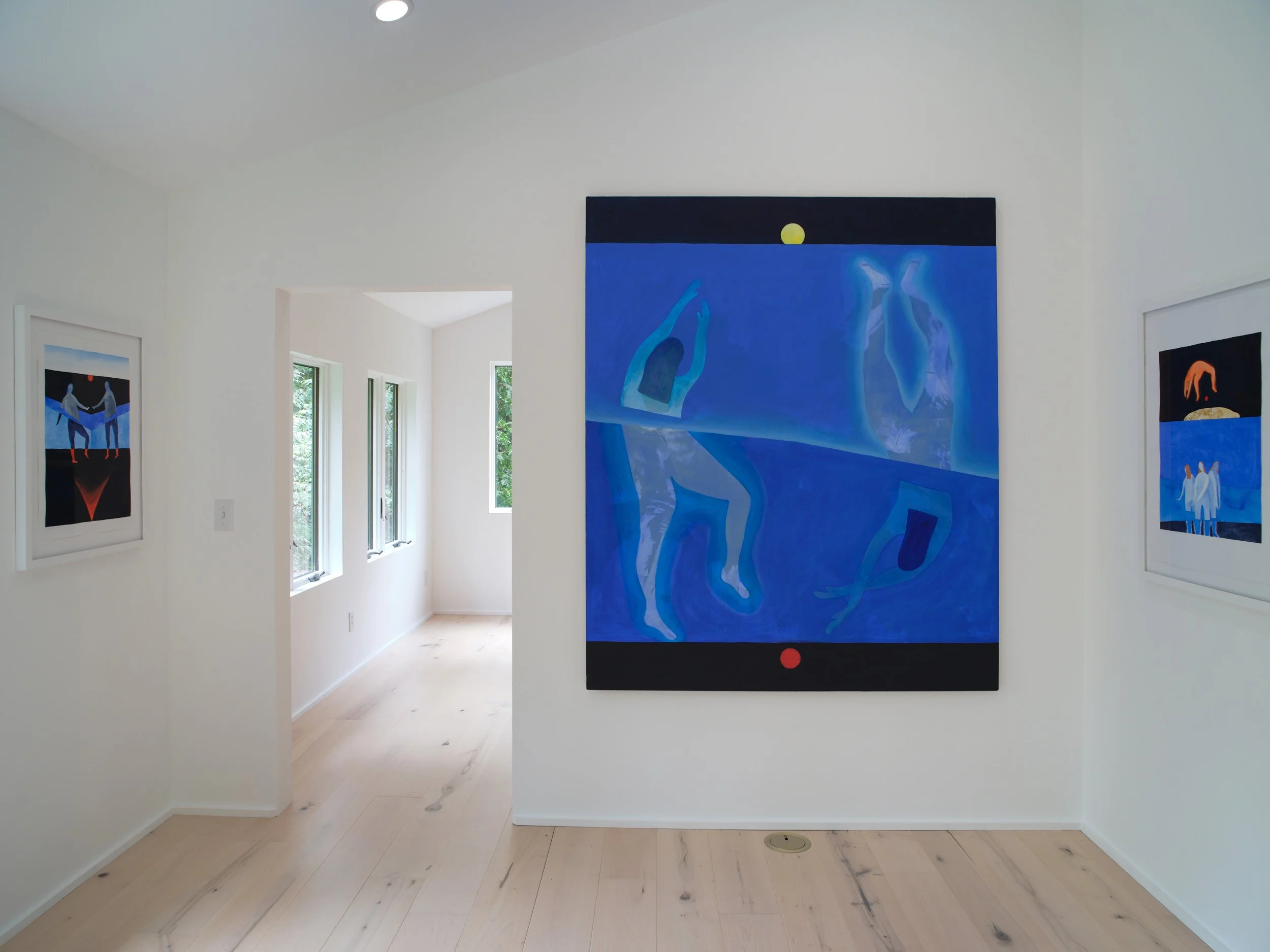
James Parker Foley
A Solo Debut
August 12 – September 17, 2023 [link:/foley-a-solo-debut]
Artist Statement
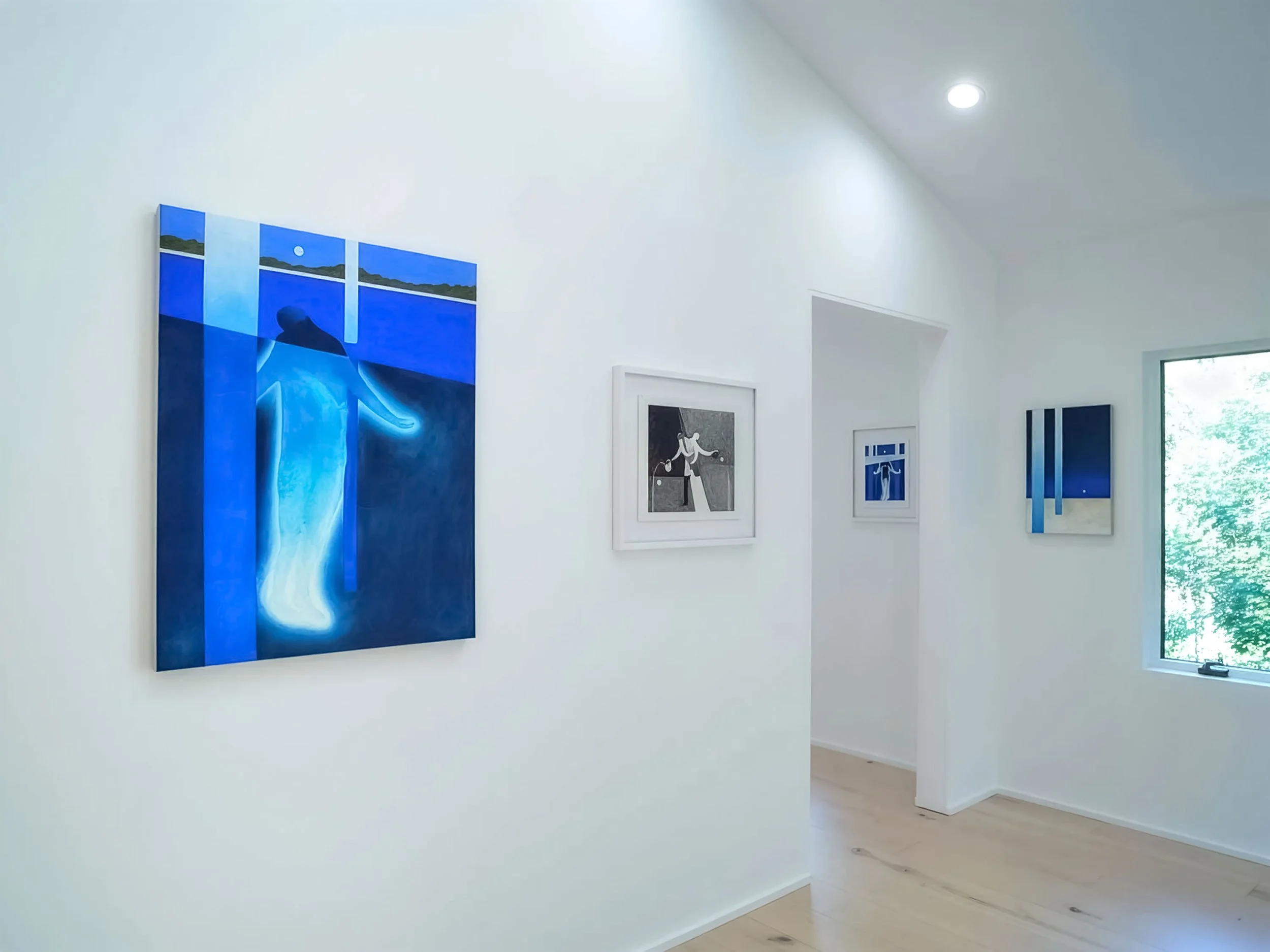
When working in the studio, I spend a lot of time in a place I might call my painting-ocean. It is a psychological space in which I am submerged in my own notions of space and time. Beneath its surface, the busy goings-on of the everyday are muffled. Cavernous possibility engulfs me. These paintings are about being in that space.
The experience of making this work was akin to diving into a deep and narrow pool not wide enough to turn around in, but with an opening on the other end. I knew ahead of time that going through would require tremendous energy, contained within a single breath. I did not know how deep the pool was, what was at the bottom, or if I’d come back.
As I was making the work, I found the boundary at the periphery of my painting-ocean. In my practice, interesting painting happens when I am working at the edge of my skill-set. I try to make work that I didn’t have the skills to make yesterday, but that I just might be capable of today.
It is on that periphery that I try to careen over the edge to see what is below. There, I am continually startled to find what seems to be a whole other painting-ocean. And getting to that deeper ocean requires both a deep breath and the trust that I will come out on the other side into a space with oxygen. This is what it means to go down for air.
In that sense, this is a show about trusting the work. It is about traveling between worlds: between the ocean of my practice so far and the ocean of my practice as it is yet to be. I decided, in the end, to make the show about neither of those spaces — it is neither history, nor fantasy — but instead, an investigation of the space between.
We think of the horizon as a line or boundary — and it is — but it is also a space. I found that by taking the horizon, pinching it between my fingers, and tipping it backward or forward, or a little to the side, I was able to expand its territory within the picture plane. I wanted this space — the space at the end of the deep and narrow pool — to become familial to me. I wanted to take discomfiting, transitional, in-between space and make it visible. This space only registers — optically — as space (as opposed to flat color) because of the figures (bodies or dories) passing through it. The horizon is visually defined in relationship to transition, to movement. The border is made not for passing through, but by passing through.
I sometimes take for granted the nature of the line between ocean and sky, between figure and ground. These edges are entire worlds unto themselves. The figures in these works are those of us on journeys through the in-between horizons. They are diligently going about the business of becoming themselves.
When everything feels upside down, or as though I am inside a deep and narrow pool, I think it’s good to remember that between being where I am and where I am heading is a place unto itself. The horizon is, after all, a remarkable place to be, because it exists while we pass through it.
-
Occasionally, I make a friend who is much older than me, and find that because we are from different generations, our friendship isn’t built on the convenience of a shared culture, but rather on shared affinities more profound and fundamental to each of our own selves. These friendships are incandescent — not just because they are genuine and rare — but also because they are, by their very nature, brief.
Some of the more beautiful things in life are like ships that pass in the night, fleeting and sublime. This is the best way I can describe what it has been like to work with both YInMn and Manganese blue in this body of work. YInMn and Manganese are splendid pigments from different generations, and to be a painter painting across the momentary bridge in time between them has been a real privilege.
Manganese is a brilliant, transparent, greenish blue that was primarily produced between the 1940’s and 70s. YInMn is a semi-opaque, warm blue that first synthesized in 2009, and became commercially available in 2020. They are historically opposed (there is a limited supply of Manganese pigment remaining, while YInMn production is just beginning) but also chromatically opposed — as far as blues go, they couldn’t be more different. Manganese is toward the green end of blue, and YInMn is toward the violet end of blue. Their opposing hues expand the palette of blue, chromatically, in both directions, creating a deeper, richer conversation within the world of my paintings.
To come into the studio every day and be able to slip back and forth — between past and future — is a privilege. I have come to regard my current place in time as engaging as where I am heading — and where I have been. Working with these materials shifts my perspective on a larger scale: I have more space to dispassionately assess the world around me. To borrow language from the world of paint, I feel that I’m living in a brilliant present, between a fugitive past and an opaque future.
CV
Born: Concord, NH | 1993
Resides: Portland, ME
-
2020
M.F.A. Studio Art, Maine College of Art, Portland, ME2015
B.A. Environmental Humanities, Sterling College, Craftsbury Common, VT -
2025
A Cruising Guide to the Maine Coast, Sarah Bouchard Gallery, Woolwich, ME2023
Sarah Bouchard Gallery, Woolwich, ME -
2026
Little Statues Rubber a Bow of Stars, 48 Avon St., Portland, ME
Alchemists, Eleventh Hour Art, Brooklyn, NY2025
Trove, Deanna Evans Projects, New York, NY2024
I was not born alone, Transmitter, Brooklyn, NY
As We Are, Portland Museum of Art, Portland, ME
American Honey, McColl Center, Charlotte, NC2023
To Know the Earth Through Roots, Field Projects, NY
How Do I Look?, Elizabeth Moss, Portland, ME
The Body’s Guest, Ice Cream SOcial at Studio 9D, New York, NY
Plum Lime Residency Finalists, MEPAINTSME (virtual)2022
Concordia, Kimball Jenkins School of Art, Concord, NH
Solace, Northern Daughters, Vergennes, VT
North Winds, New System Exhibitions, Portland, ME
You Take the Cake, Sarah Bouchard Gallery, Woolwich, ME
Courage in Retrospect, SPRING/BREAK Art Fair, New York, NY
Staycation Collective Pop-Up at Wolfpeach in Camden, ME
Summer Blend, Katzman Contemporary, Dover, NH
Draw Out The Song, Ocean House Gallery, South Portland, ME
Is It Cool If I Bring a Friend? Staycation Collective, Union, ME
Layered Truths, Abigail Ogilvy Gallery, Boston, MA2021
Everything Must Go, Staycation Collective, Rockport, ME
If Fluid Was a Song, Project V Gallery, Brooklyn, NY (virtual)
Laundry Day 3, New System Exhibitions, Portland, ME
Nor-Easterly, Katzman Contemporary Projects, Dover, NH
Madre, Shockboxx, Hermosa Beach, CA (virtual)
Sorry We Missed You MFA 2020 Institute of Contemporary Art, Portland, ME
Fresh Faces, Abigail Ogilvy Gallery, Boston, MA (virtual) -
2025
Hewnoaks, Lovell, ME2024
Hewnoaks, Lovell, ME2023
Monson Arts, Monson, ME2022
Jx Farms, Cleveland, MS2021
Monhegan Artist Residency, Monhegan, ME -
2026
Feature: “The New Wave” ︱Charlie Pike for Down East2024
Feature: Editor’s Selection | New American Paintings, Issue 171 (M.F.A.)2023
Review: ‘James Parker Foley Celebrates Figures in Transition’ | Portland Press Herald2022
Feature: Shifting Sequences: Artists to Watch | Maine Magazine
Interview: Artist Spotlight Interview | Abigail Ogilvy Gallery2021
Interview: James Parker Foley | Emerging Artist Collective -
2026
Artist Talk | Maine College of Art & Design, Portland, ME2025
Painting in Play (Panel with Meg Hahn, Holden Willard) | Portland Museum of Art, Portland, ME2024
Contemporary Figure Painting in Maine (panel with Sascha Braunig, Emilie Stark Menneg) | Ogunquit Museum of American Art, Ogunquit, ME2022
Artist Talk I Staycation Collective -
2026
The Kindling Fund2024
Springboard Grant, Maine Arts Commission -
2025–present
Ultraviolet Arts (a trans artist residency) | founder and facilitator
Monhegan Artist Residency | board member2026
Restraint, club magic x Trans Art Fest at Studio 9D, New York, NY (exhibition of emerging trans artists in a community space) | curator
Infinite Games, club magic, Portland, ME (fundraising exhibition for Ultraviolet Arts) | curator2025
t4tBody/Work (free bodywork for trans people in art spaces) | founder and collaborator2024
Lovers Canoeing (limited edition print fundraiser for Kindling Collective) | artist
Press
Inquire
To inquire about available works or learn more about James Parker Foley, please get in touch.